


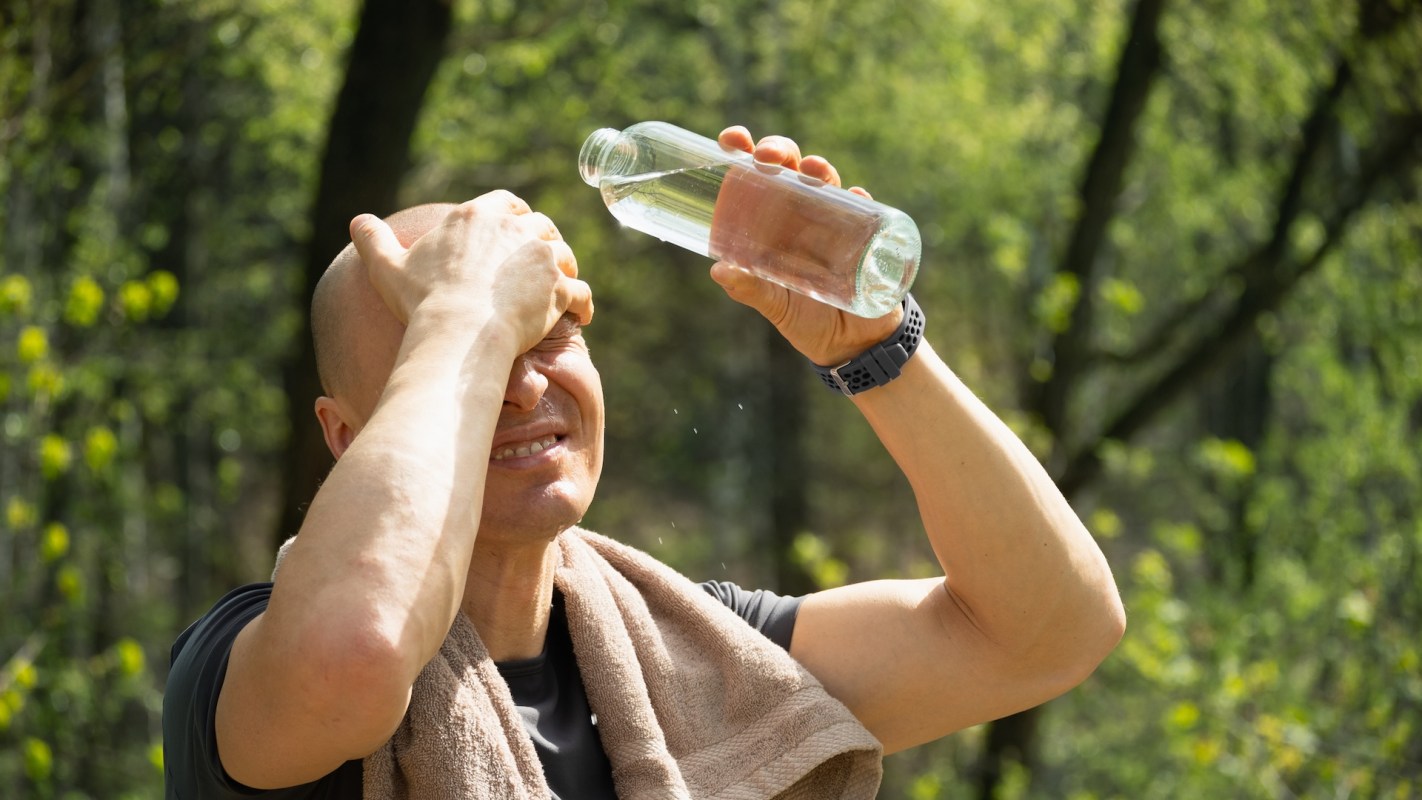
Record-breaking humidity has exacerbated this summer's heat for almost half of the country. This has been the muggiest first two months of meteorological summer in 44 years. Several central and eastern U.S. states have seen their stickiest start to summer on record.
Tampa, Florida, had something in common with Anchorage, Alaska; Buffalo, New York; and Honolulu until recently. In late July, Tampa was dropped from the list of cities with populations over 100,000 people that have never reached 100 degrees Fahrenheit. Tampa's airport reached the extreme heat benchmark this summer for the first time in 135 years of record for the city. The city soared to a scorching high of 100 for the first time on July 27.
Just a couple of days later, Tampa set another record. The heat index at the Tampa airport climbed to 119 degrees Fahrenheit on July 29, the worst on record. That day started off sweltering with a heat index of 104 degrees Fahrenheit at 8 AM.
The heat index, or feels-like temperature, gives a fuller picture of just how awful it can feel. When high heat meets high humidity, numbers on a thermometer can fall short. The heat index merges both to give a more realistic measure of discomfort. A temperature of 95 degrees Fahrenheit paired with 15% relative humidity feels slightly cooler, around 91 degrees Fahrenheit. But at 45% relative humidity, that same heat can feel like an oppressive 102 degrees Fahrenheit.
Heat index levels have been lifted higher amid a summer that has seen record-high mugginess.
"Summertime heat that's being boosted by climate change is now also getting this extra piece," a meteorologist, Shel Winkley with Climate Central, told CNN. "It's like a one-two punch. A lot of us are very lucky that we get to go from our air-conditioned home, to our air-conditioned car, to our air-conditioned workplace, but that's not everybody."
TCD Picks » Quince Spotlight
💡These best-sellers from Quince deliver affordable, sustainable luxury for all




Meteorologists track atmospheric moisture using several measures, including dew point, humidity, and relative humidity. Many favor dew point, which is the temperature air must cool to, at constant pressure, to reach saturation, when relative humidity hits 100% and condensation can form.
A CNN analysis of dew point temperatures this summer found that through July 22, central and eastern U.S. states had their highest dewpoints for the first two months of summer since 1981.
"It's been the second-most humid summer for the US as a whole in the same timeframe," reported CNN.
Scientists with Climate Central have found the fingerprints of our overheating planet on the most important factor driving the higher humidity levels this summer. Unusually warm sea surface temperatures in the Atlantic and Gulf were made up to 500 times more likely due to our warming world, according to researchers from Climate Central.
|
How concerned are you about your energy bills increasing this summer? Click your choice to see results and speak your mind. |
 Very 😰
 As water temperatures rise, so does the amount of moisture evaporating into the atmosphere, driving up dew points. Summer weather patterns sweep warm, moist air off the surface of the water, around the backside of a ridge of high-pressure that normally sets up shop over the Atlantic Ocean near Bermuda, into regions east of the Rocky Mountains.
As dew points rise, so do the risks to health from extreme heat, which they can contribute to. Climate Research says that "human-caused climate change" fueled a dangerous heat wave that hit the U.S. from July 21 through July 25. The extreme heat that impacted nearly 160 million people was made at least three times more likely because of our warming world.
"This is not your grandmother's heat wave," said Dr. Kristina Dahl, VP of science at Climate Central, referring to the July heat wave. "Yes, July is usually a hot month, but climate change is making this heat wave significantly hotter — and therefore more dangerous — than heat waves of the past."

Join our free newsletter for weekly updates on the latest innovations improving our lives and shaping our future, and don't miss this cool list of easy ways to help yourself while helping the planet.






