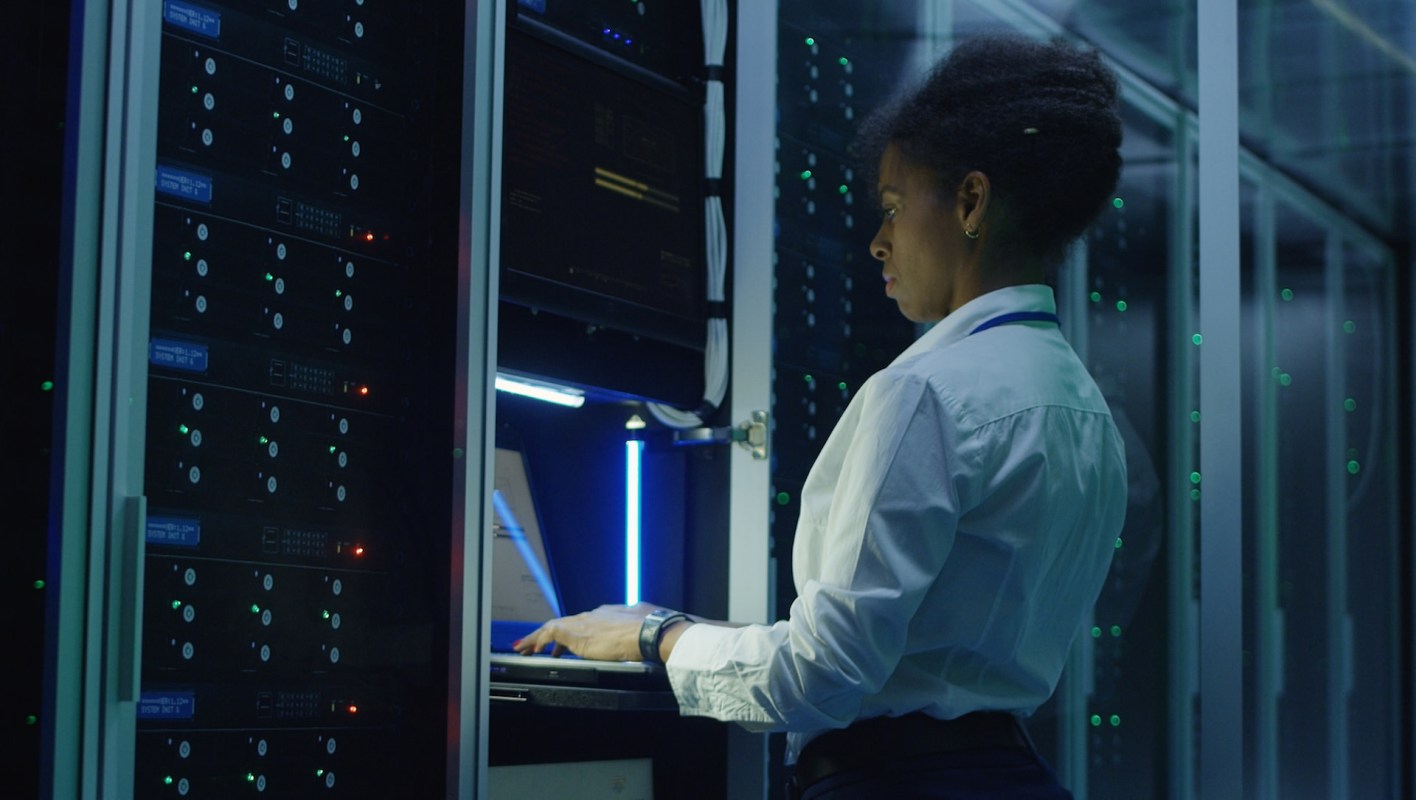
A breakthrough from the University of California San Diego could solve a pressing issue threatening the stability of electrical grids worldwide as artificial intelligence continues to take center stage as an emerging technology.
In June, UC San Diego announced that a team of engineers developed a new type of cooling technology that could drastically improve the energy efficiency of power-hungry data centers.
As it stands, cooling accounts for around 40% of a data center's energy consumption. However, the world is increasingly relying on data centers to store, manage, and process digital data, and the expansion of AI and cloud computing is contributing to soaring demand.
The researchers, who published their findings in Joule, noted that energy consumption for data center cooling is projected to skyrocket 160% over the next five years.
A growing number of data centers rely on non-polluting, renewable power, alleviating some of the concerns over their impact on public health and the environment. (For instance, the University of Cambridge found that 52.4% of bitcoin mining now uses sustainable sources.)
Yet regardless of energy source, the massive energy demands of data centers can lead to higher electric bills and stress aging electrical grids, increasing the risk of blackouts.
TCD Picks » Quince Spotlight
💡These best-sellers from Quince deliver affordable, sustainable luxury for all




What's more, a large data center dependent on water for cooling can go through 5 million gallons each day, according to the Environmental and Energy Study Institute — a worrying volume given that "only 0.5% of all water is accessible and safe for human consumption."
To address these issues, UC San Diego engineers said they used a low-cost fiber membrane to passively remove heat through evaporation, which requires much less energy and could reduce water usage compared to many current cooling systems.
While the concept isn't new — laptops and air conditioners depend on this method — previous attempts to cool high-power electronics with evaporation have resulted in problematic clogs or unwanted boiling, as the fiber membrane needs to have correctly proportioned pores to be effective. The team found its solution by repurposing fiber membranes designed for filtration.
"We recognized that their unique structural characteristics — interconnected pores and just the right pore size — could make them ideal for efficient evaporative cooling," said project co-lead Renkun Chen, a professor in the Department of Mechanical and Aerospace Engineering.
|
Do you think our power grid needs to be upgraded? Click your choice to see results and speak your mind. |
 Definitely 👍
 According to the university release, the mechanically reinforced fiber membranes remained stable over hours of testing and achieved heat fluxes exceeding 800 watts of heat per square centimeter — a record-breaking performance for this type of cooling system.
"This success showcases the potential of reimagining materials for entirely new applications," Chen said.
Chen's team is now tinkering with the membrane to optimize its performance and will test it on prototypes of cold plates, which help transfer heat away from server components like CPUs and GPUs. If all goes well, the team will commercialize the tech through its startup company.

Join our free newsletter for weekly updates on the latest innovations improving our lives and shaping our future, and don't miss this cool list of easy ways to help yourself while helping the planet.