


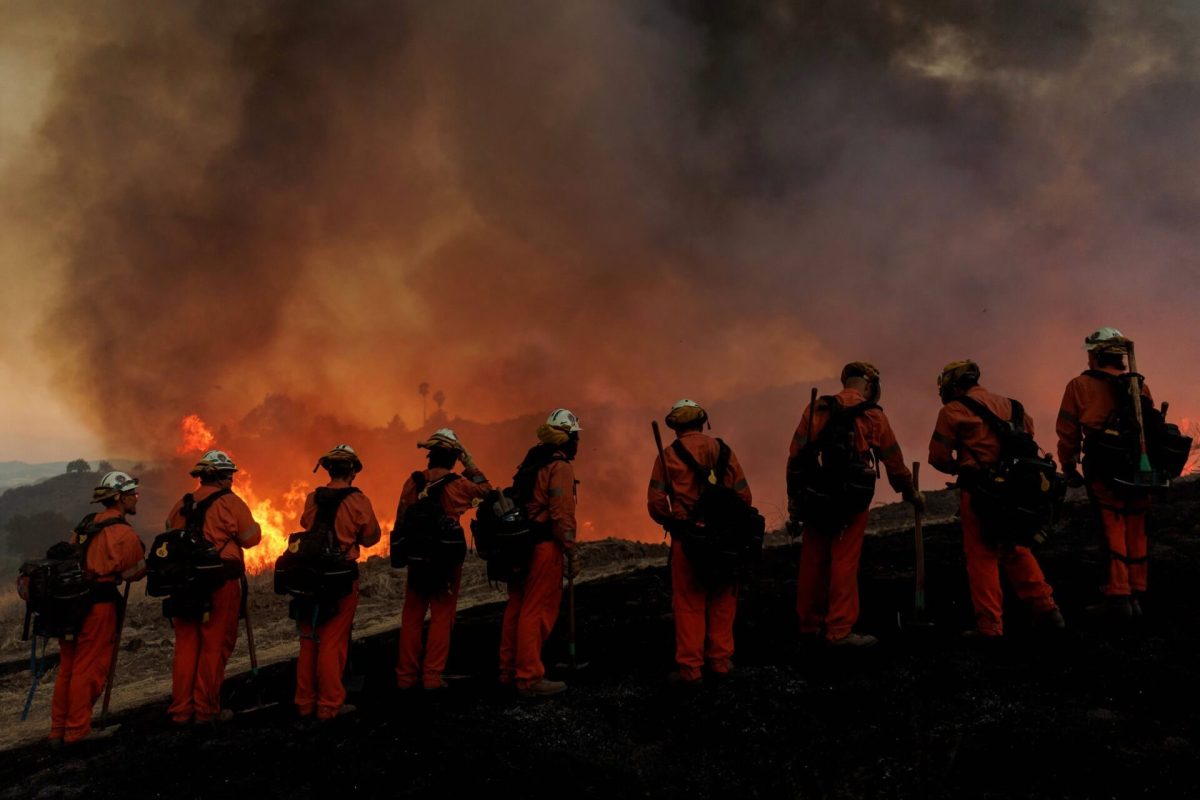
Close to 17,000 people in Ventura and Los Angeles Counties were ordered to evacuate due to the fast-moving Canyon Fire, according to New York Times reports.
What's happening?
According to the California Department of Forestry and Fire Protection (aka Cal Fire), the Canyon Fire ignited around 1:25 p.m. on Thursday, Aug. 8.
Per the Times, the blaze was initially confined to 30 acres in the vicinity of the Lake Piru reservoir in Ventura County.
By Thursday night, the wildfire had "exploded in size" to 4,856 acres, and firefighters struggled to contain it.
Cal Fire published an update on the fire at 10:48 a.m. local time, warning those affected that the Canyon Fire was spreading at a "rapid rate … threatening 60kv powerlines as well as the communities of Hasley Canyon and Hathaway Ranch."
As the Times indicated, roughly 17,000 people were ordered to evacuate.
TCD Picks » Quince Spotlight
💡These best-sellers from Quince deliver affordable, sustainable luxury for all




"Immediate threat to life. This is a lawful order to LEAVE NOW. The area is lawfully closed to public access," Cal Fire's incident update implored.
"If you're in Santa Clarita, Hasley Canyon, or Val Verde, take evacuation orders seriously — when first responders say GO, leave immediately. Keep aware —please don't risk lives," Los Angeles County Supervisor Kathryn Barger tweeted.
Why is the Canyon Fire concerning?
An Aug. 8 general update from the National Interagency Coordination Center indicated that 42,670 fires burned in 2025 to date, exceeding the ten-year average of 35,620 fires.
A series of out-of-season wildfires devastated swaths of Los Angeles in January due to atypical weather conditions and an abundance of dry brush throughout the West.
|
Do you worry about the quality of the air inside your home?
Click your choice to see results and speak your mind. |
 Yes — often 😬
 In July, historic structures were destroyed in a brushfire on the Grand Canyon's North Rim, and the Gifford Fire quickly became California's second-largest blaze of the year in August. As of Aug. 8, it had yet to be contained.
While wildfires are not technically "weather," they fall under the umbrella of extreme weather.
Wildfires, floods, hurricanes, and heatwaves have always been a part of standard weather patterns, but extreme weather has not. As the planet gets hotter, volatile climate patterns act as an accelerant — and intense weather becomes more frequent, more extreme, and deadlier.
In July, the European Commission published a report about extreme weather and its pronounced impacts on the continent.
"According to the IPCC, hot extremes that used to strike once a decade now happen nearly three times as often and are 1.2˚C [about 2.2 degrees Fahrenheit] hotter," the Commission said of extreme heat, citing the Intergovernmental Panel on Climate Change.
As incidents of extreme weather become more commonplace worldwide, awareness of key climate issues is a critical safety measure.
What's being done about it?
The Red Cross set up evacuation centers for residents of Ventura County and Los Angeles County.
On Friday, KABC reported that the Canyon Fire had been contained to 25%.

Join our free newsletter for good news and useful tips, and don't miss this cool list of easy ways to help yourself while helping the planet.







