


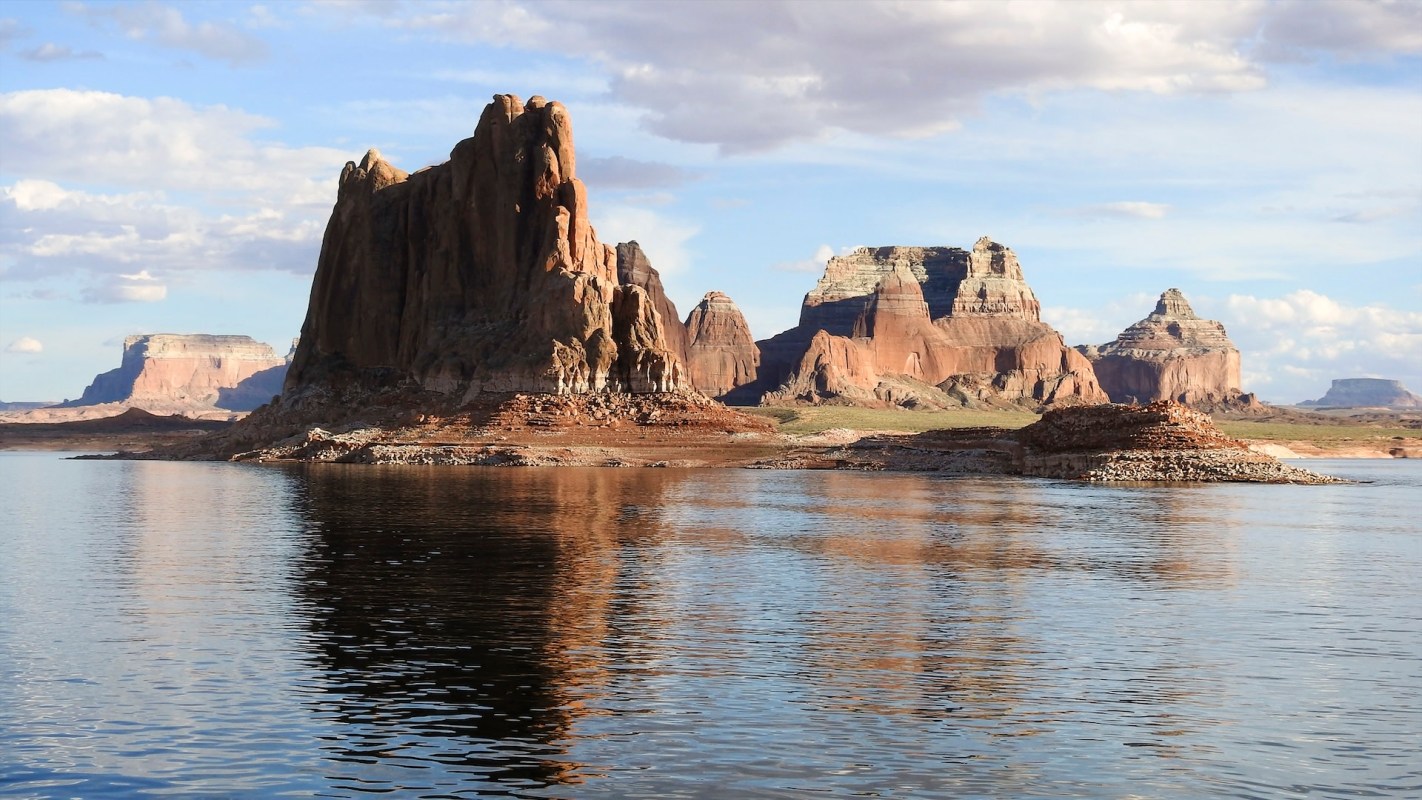
Lake Powell is rapidly approaching a crisis point, and officials warned increasingly low water levels could impact the Glen Canyon Dam's ability to generate hydroelectric power, Newsweek reports.
What's happening?
Located in Utah and Arizona, Lake Powell is America's second-largest reservoir after Lake Mead, and it's a popular attraction for tourists.
Water levels for Lake Powell have been a consistent concern in recent decades, due to conditions known as a "megadrought" in the Southwestern United States.
Lake Powell is a man-made body of water, created by the construction of the Glen Canyon Dam in northern Arizona.
The U.S. Bureau of Reclamation is a water management agency operating as part of the Department of the Interior. On July 15, the USBR published a 24-month forecast for Lake Powell and Lake Mead's likely water levels.
The USBR calculated "Probable Inflow," "Probable Maximum Inflow," and "Probable Minimum Inflow" to gauge projected water levels in three scenarios deemed likely.
TCD Picks » Quince Spotlight
💡These best-sellers from Quince deliver affordable, sustainable luxury for all




In the latter scenario,"Probable Minimum Inflow," water levels necessary to continue generating electricity via the Glen Canyon Dam could approach a threshold in November 2026, dipping below minimum levels required for the hydroelectric dam to function by December 2026.
Why are Lake Powell's water levels so important?
Per Newsweek, the dam provides electricity to "approximately 5 million people in Arizona, Colorado, Nevada, New Mexico, Utah and Wyoming."
Officials were noticeably concerned about the two-year water level projections in the USBR's July 15 report. Becky Mitchell is Colorado's commissioner for the Upper Colorado River Commission, and she stressed the importance of the "quantification of hydrologic shortage."
"No amount of lawyering is going to fix the math problem … we must live with the river we have, not the river we want," Mitchell said.
|
Do you think our power grid needs to be upgraded? Click your choice to see results and speak your mind. |
 Definitely 👍
 KJZZ covered the USBR's dire minimum level projections for the next two years, noting that officials faced a similar problem in previous years.
"Water managers made emergency releases from other reservoirs to prop up Lake Powell until spring runoff came to the rescue," the outlet explained, adding that the strategy is not one that is sustainable in the long term.
What's being done about Lake Powell's water levels?
Newsweek cited a previous, recent study that determined that increasing "wastewater recycling to 40 percent in the Colorado River Basin" could offset water levels enough to supply two million homes with water.
As for Lake Powell and the Glen Canyon Dam, officials are working to "finalize a new water management framework" and address the issue.

Join our free newsletter for good news and useful tips, and don't miss this cool list of easy ways to help yourself while helping the planet.







