


As more clean, renewable energy projects replace dirty fuels such as oil and gas, one issue power companies are facing is how to store surplus energy harvested from the sun or wind.
As reported by the Financial Times, Spanish electric utility company Iberdrola believes it has the solution to this problem: Use the century-old practice of pumped storage, or "water batteries."
Pumped storage refers to a system where two reservoirs at different elevations pass water back and forth, storing and generating energy in the process. A pumped storage system "acts similarly to a giant battery, because it can store power and then release it when needed," according to the Department of Energy.
While the system requires power to move the water to the higher elevation, gravity does the work of moving it to the lower elevation, and on the way down, it passes through a giant turbine, generating new electricity.
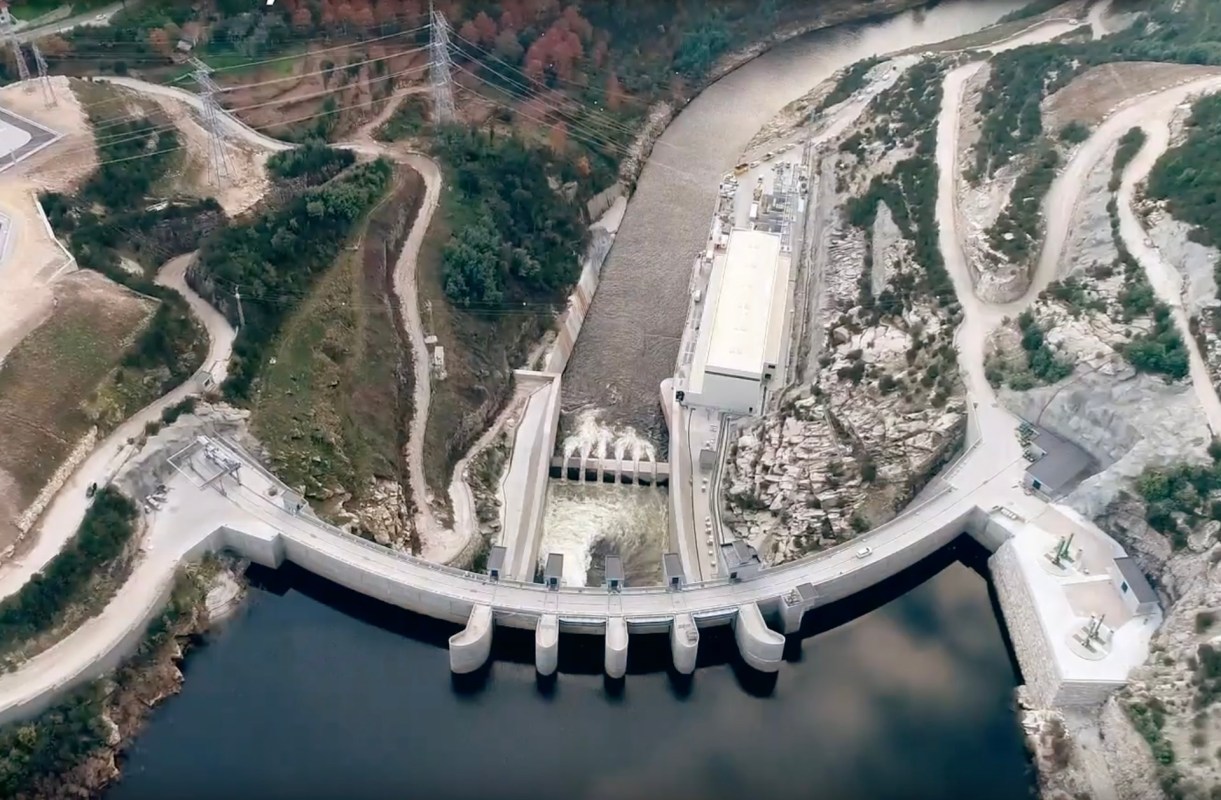
Iberdrola has built such a system as part of its €1.5 billion (around $1.6 billion) Tâmega hydroelectric complex in Portugal, which harvests both wind and solar, per the Financial Times.
As Diego Díaz Pilas, Iberdrola's global head of ventures and technology, explained to the Financial Times, while battery storage makes sense for plants harvesting only solar, a plant that deals with both wind and solar energy needs a more comprehensive solution.
TCD Picks » Quince Spotlight
💡These best-sellers from Quince deliver affordable, sustainable luxury for all




"When you have a lot of solar, it pairs very well with batteries because solar generates in daylight hours, and batteries can be discharged when the sun is not shining," he said. "But when you have also a lot of wind — and 50% of electricity will be coming from wind in Europe around 2030 — you really need to store vast amounts of energy."
The main obstacle standing in the way of more pumped storage systems is the large upfront cost and how long they take to construct — usually six or more years, per the Financial Times.
"We don't need anything fancy," Díaz Pilas said. "We just need faster permitting and stability in the regulatory framework. It's actually funny that we are here talking about a technology that is nearly 100 years old, but it is so important for the future."

Join our free newsletter for weekly updates on the coolest innovations improving our lives and saving our planet.






