


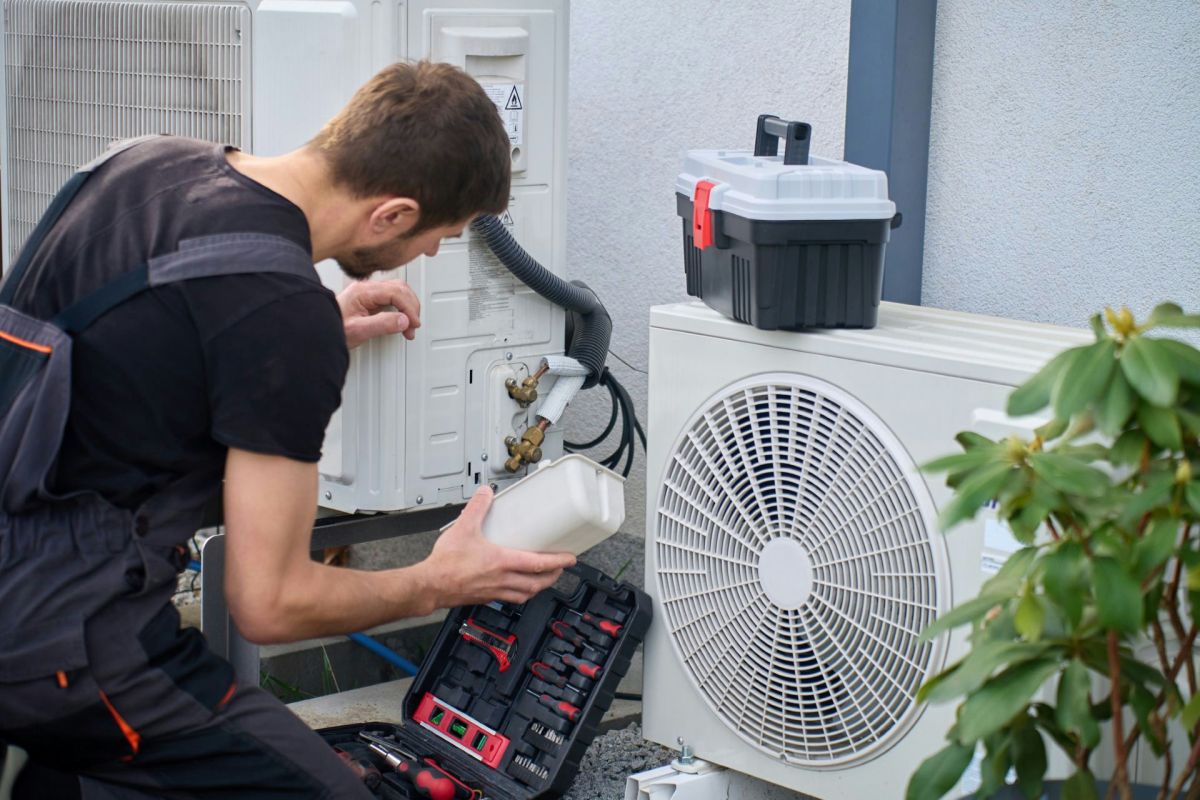
A U.K. homeowner says they have spent nearly a year trying to get a heat pump installed — only to see local companies stop responding after site visits.
The likely hurdle is not the size of the house but its heating emitters: a four-bedroom semi fitted with wet skirting-board heating rather than conventional radiators. The owner, nonetheless, thinks moving away from gas could reduce fossil-fuel use without raising bills.
Here's what to know
In a post on Reddit, the homeowner said a 14-year-old Vaillant combi consumed about 9,500 kilowatt-hours of gas in 2025 to provide heat and hot water for four people living in the home.
They added that the property already has eight 440-watt solar panels and 10-kilowatt-hour batteries, but they summed up the problem by saying: "Been wanting to get a heat pump for a long time but local installers keep ghosting me after coming to have a look."
Replies mostly treated the project as a design challenge, not as a reason to rule out heat pumps altogether.
One commenter focused on temperature, asking whether the house would stay warm with a lower flow setting. "If you can get away with 50 you should still get reasonable efficiency," they added, while noting that a hot water tank and perhaps some emitter upgrades could still be part of the job.
TCD Picks » Quince Spotlight
💡These best-sellers from Quince deliver affordable, sustainable luxury for all




For homeowners in situations like this — a four-bedroom house with solar, batteries, and a nonstandard heating setup — upgrading heating and cooling can be one of the best ways to cut utility bills and protect against rising energy prices. Palmetto can help homeowners understand their HVAC options and reduce energy bills with newer, more efficient HVACs and heat pumps, and its Comfort Plan network can help connect readers with vetted installers.
A separate commenter said the bigger missing piece could be formal analysis, not basic compatibility, writing that "you really need a heat loss survey to get any real idea."
In response, the poster said several installers have visited, told them things "should be fine," and then "never come back to me with the calculations."
More background
What may be unnerving contractors is how differently this home runs from the steady, low-temperature pattern a heat-pump retrofit often relies on.
The homeowner said the boiler is set to 140 degrees Fahrenheit, yet it normally heats only three or four rooms and usually runs for around two hours in the morning and a couple more at night, only from November through March.
That kind of intermittent, high-temperature use isn't where heat pumps tend to shine.
The poster also described room-by-room controls: smart thermostats keep spaces from falling much below 61 to 63 degrees, while bedrooms are purposely cooler, adding more zoning complexity to a thermaskirt dual-pipe system.
Later in the thread, someone raised a middle-ground option: adding fan coil units in selected places instead of tearing out the whole setup for panel radiators.
The homeowner said the suggestion sent them "down a massive AI rabbit hole researching them" and appealed because they "could get them to cool the house too" in a home that struggles in summer.
Even so, commenters warned that cooling wouldn't be a free add-on
A respondent said any pipework feeding fan coil units would need full insulation to stop condensation and that the added zoning could make the system harder to control. In their words, that might make installers want to "walk away even more, maybe running, screaming."
What can be done?
For homeowners dealing with nonstandard emitters, a sensible next step may be to ask installers plainly what is scaring them off and to request a heat loss survey.
That assessment could show whether the existing skirting-board system can run closer to 122 degrees or whether only limited upgrades are necessary. The original poster also believes they are eligible for the Boiler Upgrade Scheme grant.
For readers not ready to spend up front, the Comfort Plan includes $0-down options that can lower heating and cooling costs by up to 50%, plus 12 years of free maintenance. In a tricky retrofit like this, support finding efficient equipment and vetted installers could make the difference between another dead end and a workable quote.
Homeowners can also pair solar panels with electric appliances, including efficient HVACs, to drive utility costs even lower — exactly the kind of setup this poster is aiming for. EnergySage can help homeowners save up to $10,000 on solar installations by making it easier to compare solar options and find the best solar system and installer for a home's budget.
Once commenters had spelled out the complications tied to skirting heating, zoning, and possible cooling, the homeowner summed up the situation simply: "Definitely seeing why I might be scaring them away."
Where can I learn more?
These stories explore whether switching to a heat pump is practical, affordable, and worth the hassle.
• In the U.K., a homeowner chasing a 400%-efficient heat pump learned retrofits get messy fast.
• Homeowners comparing replacements found electric heat pumps often cost less than aging furnace fixes.
• Across Europe, the Institute of Economic Affairs found heat pumps cheaper than gas boilers in most markets.
• In winter, many households discovered common HVAC myths were obscuring major energy savings.

Get TCD's free newsletters for easy tips, smart advice, and a chance to earn $5,000 toward home upgrades. To see more stories like this one, change your Google preferences here.







