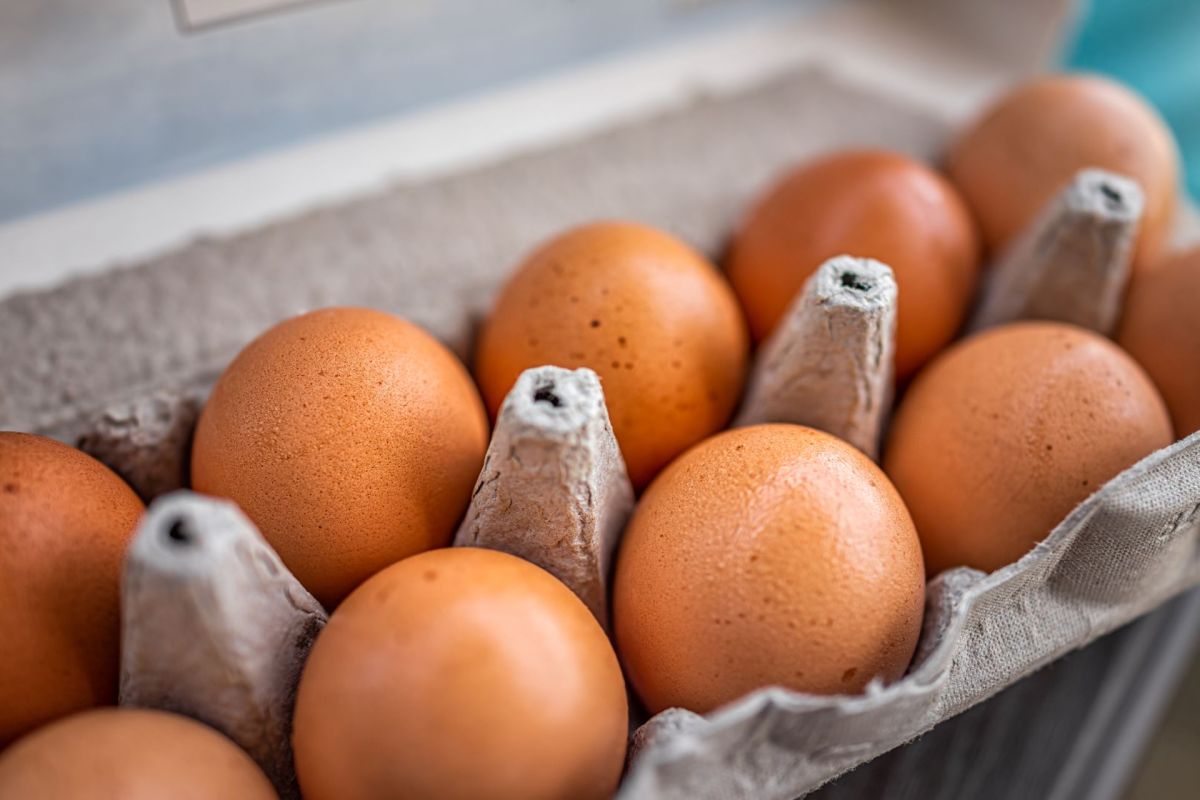
A major egg recall is affecting grocery shoppers across the South after Texas egg producer Midwest Poultry Services, L.P. pulled nearly 1.6 million dozen eggs sold at Kroger and Brookshire's stores under a range of brand labels because of possible Salmonella contamination.
What happened?
On Wednesday, the Food and Drug Administration announced that Midwest Poultry Services, L.P. had started a voluntary recall involving 1,589,577 dozen eggs produced at its Texas farms from June 6 through July 3, according to KHOU. The company said the products may be contaminated with Salmonella Enteritidis, a bacterium that can cause serious foodborne illness.
The recalled products were sold at Kroger stores in Texas and Louisiana and at Brookshire's locations in Texas, Oklahoma, Arkansas, Louisiana, New Mexico, and Mississippi. They include white shell eggs and brown cage-free eggs packaged under brands such as Kroger, Simple Truth Cage Free, Brookshire's, Country Morning, and Sunups.
Cartons in the recall have sell-by or best-by dates from July 20 to Aug. 17. They also carry plant code P-1950 or 0840962 and a Julian Date between 157 and 184.
So far, the company said, no illnesses have been reported in connection with the recalled eggs.
Why does it matter?
Salmonella infection can cause diarrhea, fever, stomach cramps, and vomiting, and it can be especially dangerous for young children, older adults, and people with weakened immune systems.
TCD Picks » Good Store Spotlight
Get 10% off your next purchase with code TCD10


What's being done?
After detecting the issue through environmental monitoring and root cause analysis at its two Texas farms, Midwest Poultry Services said it has stopped distributing fresh eggs from those farms for now.
If the plant code is P-1950 or 0840962 and the Julian Date falls between 157 and 184, do not eat the eggs. Consumers should throw them away or return them to the store where they were purchased.
Wash any surfaces, containers, or utensils that may have come into contact with raw eggs. If anyone in the household develops symptoms of food poisoning after eating eggs, they should contact a health care provider.
The company said it identified the problem through "proactive environmental monitoring and root cause analysis" and is "not distributing any fresh eggs from those farms at this time."
TCD Picks » Quince Spotlight
💡These best-sellers from Quince deliver affordable, sustainable luxury for all





Get TCD's free newsletters for easy tips, smart advice, and a chance to earn $5,000 toward home upgrades. To see more stories like this one, change your Google preferences here.