


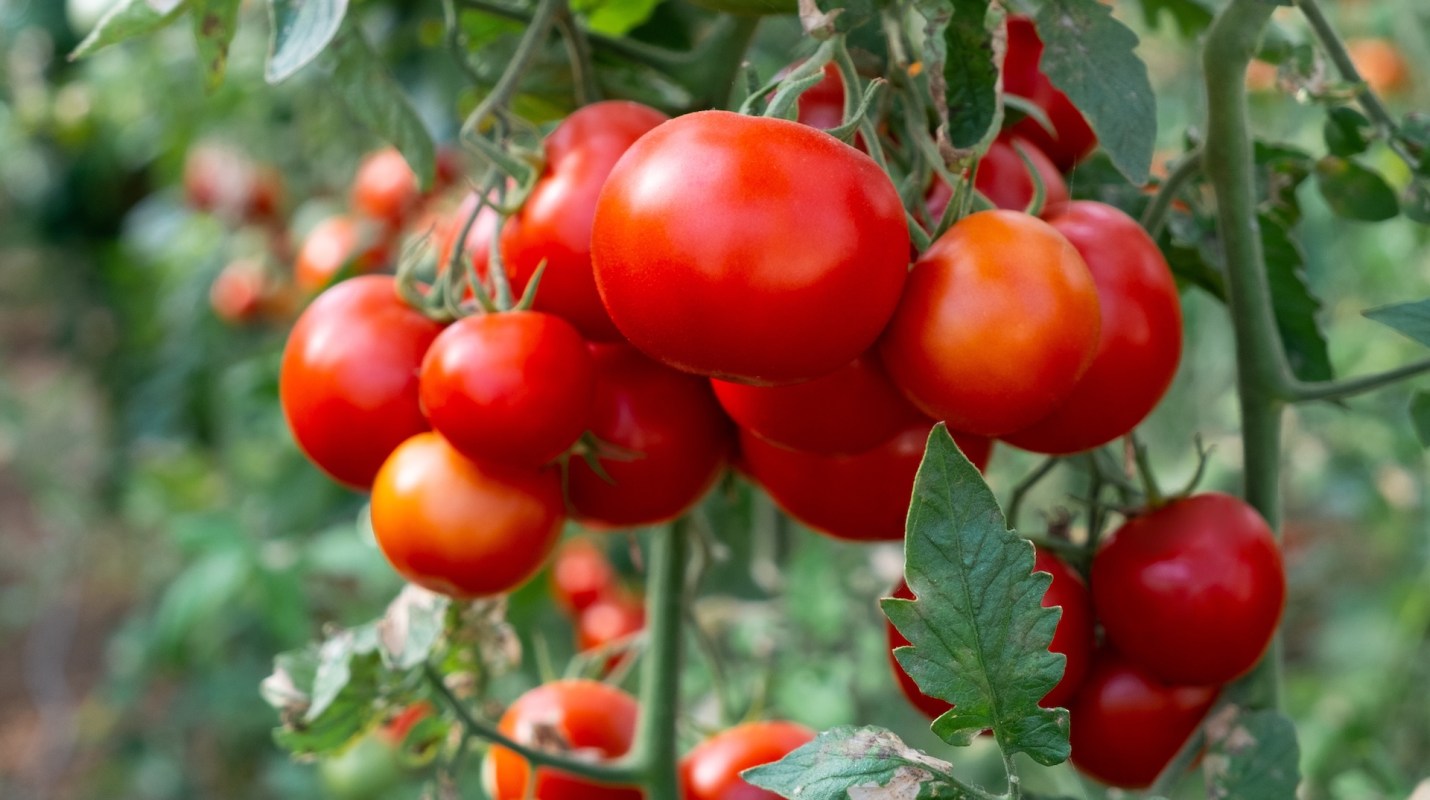
Scientists in the United Kingdom are using gene-edited tomatoes to test how modified foods affect human health.
According to the BBC, the Quadram Institute in Norwich has begun recruiting 76 participants with low vitamin D levels to take part in the ViTaL-D Study, a first-of-its-kind human trial.
Participants will eat soup made from tomatoes that have been genetically altered to naturally produce vitamin D, which helps reduce the risk of cancer and offers other health benefits when exposed to light. The goal, researchers said, is to see whether eating these tomatoes can raise vitamin D levels as effectively as supplements, potentially transforming how people get vital nutrients.
The tomatoes were developed by scientists at the John Innes Centre who "turned off" a molecule in the fruit so that when exposed to UV light, it begins generating vitamin D, per the BBC.
Professor Cathie Martin of the John Innes Centre said that while gene-editing tomatoes was relatively straightforward, replicating this process in other foods like broccoli or cabbage would be more difficult.
The government-funded project, also backed by the Biotechnology and Biological Sciences Research Council, was approved by an external ethics committee and follows England's Precision Breeding Act, which allows the development and sale of gene-edited plants that could have occurred naturally.
TCD Picks » Quince Spotlight
💡These best-sellers from Quince deliver affordable, sustainable luxury for all




According to Professor Martin Warren of the Quadram Institute, one in five people in the U.K. has low vitamin D levels, a deficiency that weakens bones and muscles and is especially common among children, the elderly, people with darker skin, and those who are pregnant or breastfeeding.
"We call it hidden hunger and we thought it was a third-world problem, but it's very much present in the U.K.," Warren said, adding that nutrient-enriched foods could help improve public health and reduce reliance on pills.
This technology and similar work could play a major role in strengthening global food systems. For example, scientists discovered a way to reduce the environmental impact of ammonia-based fertilizers, thereby securing the food supply through efficiency and sustainability.
Similarly, scientists who study vertical farming and indoor agriculture have said that controlled environments could "future-proof" the global food supply by growing nutrient-rich food year-round with less water and land use.
|
What is the biggest reason you don't grow food at home? Click your choice to see results and speak your mind. |
 Not enough time ⏳
 At the same time, about 30-40% of all food is thrown away each year in other parts of the world, such as the U.S., according to Feeding America, indicating inefficiencies in the distribution system. More trials like ViTaL-D could help eliminate waste by growing crops that deliver more nutritional value per harvest while reducing dependence on imported supplements and fortified foods.
"It offers huge potential to boost food security, cut pesticide use, increase crop yields and enhance disease resistance and we are backing it with a multimillion-pound investment," the Department for Environment, Food and Rural Affairs in the U.K. stated.
Pairing these innovations with everyday actions, such as growing your own food and composting scraps, or choosing more plant-based options, can help build a more resilient food system.
If gene-editing these tomatoes proves effective, Professor Martin hopes to bring the first "sunshine tomato" to market within three years.
"Do we really want life to be just a series of pills?" she asked.

Join our free newsletter for easy tips to save more and waste less, and don't miss this cool list of easy ways to help yourself while helping the planet.







