


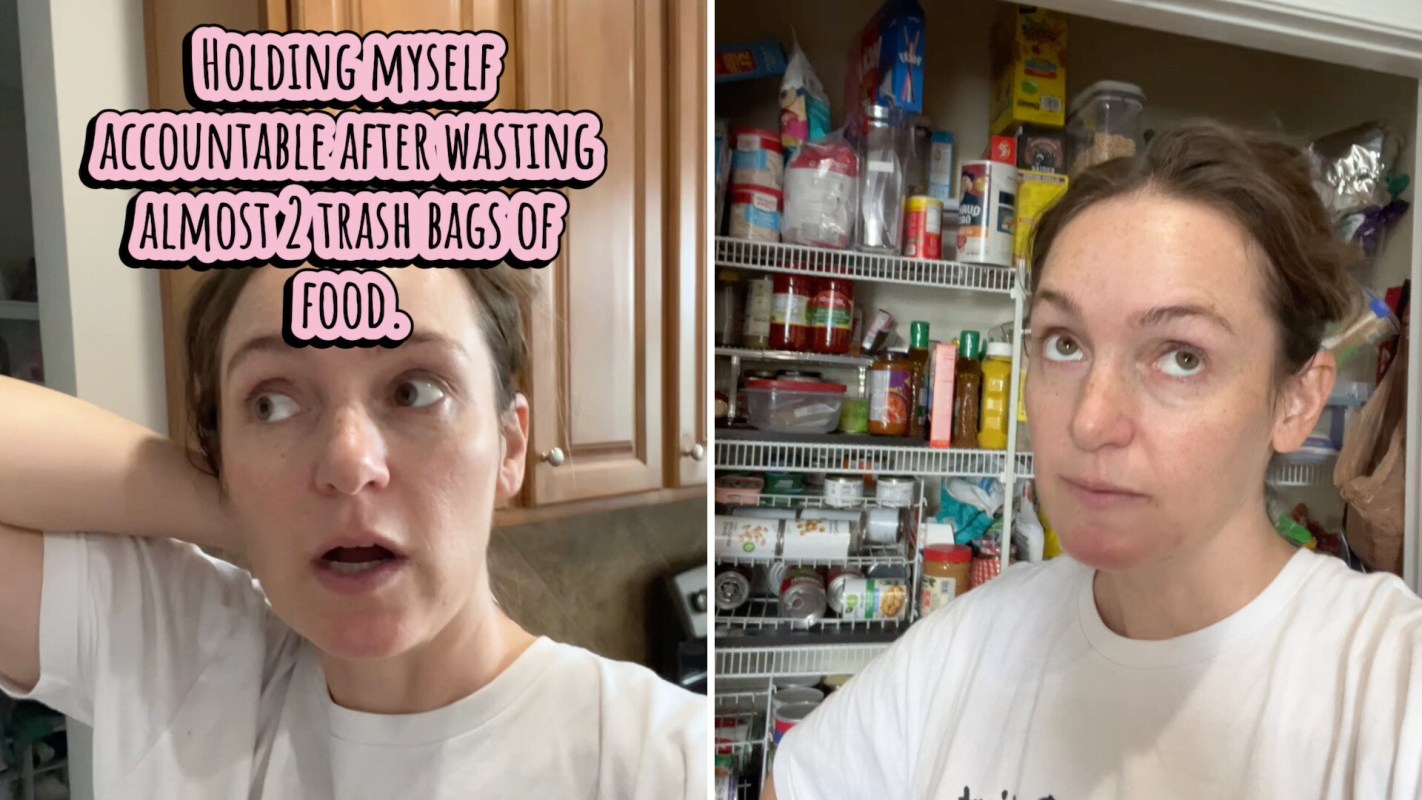
A TikTok creator is using an all-too-common aftermath of hosting as motivation to change how she shops. Kristin (@the_kristin_chronicles) shared that after 11 people stayed at her home, a large amount of uneaten food ended up in the trash and changed her thinking.
Here's what to know
The creator opened her video with a blunt admission: "I just threw out over a bag and a half, a trash bag and a half of food from my fridge. There is. There's no excuse that it was so wasteful."
@the_kristin_chronicles First step is documenting what we have and actually going in with a plan. #pantrycleanout #toomuchwaste #foodwaste #fyp ♬ original sound - Kristin
In the TikTok video, she said the problem started after hosting a large group, with extra food going uneaten.
"There were so many leftovers that didn't get eaten," she said. "Plans changed. People were shy. Things were overbought."
Rather than making another big grocery run, she said she would start eating through what was already at home. She noted that the waste issue was not limited to the fridge, adding that her pantry was full and her freezer was also "pretty full" of older food.
Her response was to pause the usual restocking cycle and focus instead on a pantry cleanout designed to use up what was already there.
TCD Picks » Quince Spotlight
💡These best-sellers from Quince deliver affordable, sustainable luxury for all




Commenters informed her that she had more runway than the three months she allocated for her frozen food. After the clarification, the message was one of solidarity.
"You have inspired me in a big way," a commenter wrote. "I too have a full pantry and freezer. I'm going to avoid the store except for necessary dairy and produce for one month. Love this idea."
More background
Food waste does not always stem from neglect or bad intentions; in many cases, it's from hospitality, overplanning, and the urge to buy extra food "just in case."
Wasted food is also wasted money. Every forgotten container, duplicate pantry item, or freezer package represents grocery spending that never became a meal. A pantry cleanout can help families recover some of that value simply by using what they have already paid for.
"I will have to buy some fruit for my kids and a little bread, but other than that, for me and my husband, we're eating from here," Kristin said in the video.
That kind of reset can turn a full-cart grocery trip into a much smaller top-off, which is where the savings can begin to show.
"I've been chipping away at my pantry and hardly buy anything anymore," another commenter wrote. "I'm learning it takes forever to finish anything."
What can be done?
Start with an inventory. The creator's caption summed it up clearly: "First step is documenting what we have and actually going in with a plan."
That means checking the fridge, freezer, and pantry before putting together the next shopping list.
From there, a practical approach is to buy only the essentials that fill gaps, such as fresh produce, bread, or dairy, while building meals around older items. Doing so can reduce both food waste and weekly spending.
It can also help to treat the cleanout as a short-term challenge rather than a punishment. Planning a few flexible meals around pantry staples, leftovers, and freezer items can make the process easier and may help keep the cycle of overbuying from starting again.

Get TCD's free newsletters for easy tips, smart advice, and a chance to earn $5,000 toward home upgrades. To see more stories like this one, change your Google preferences here.








