


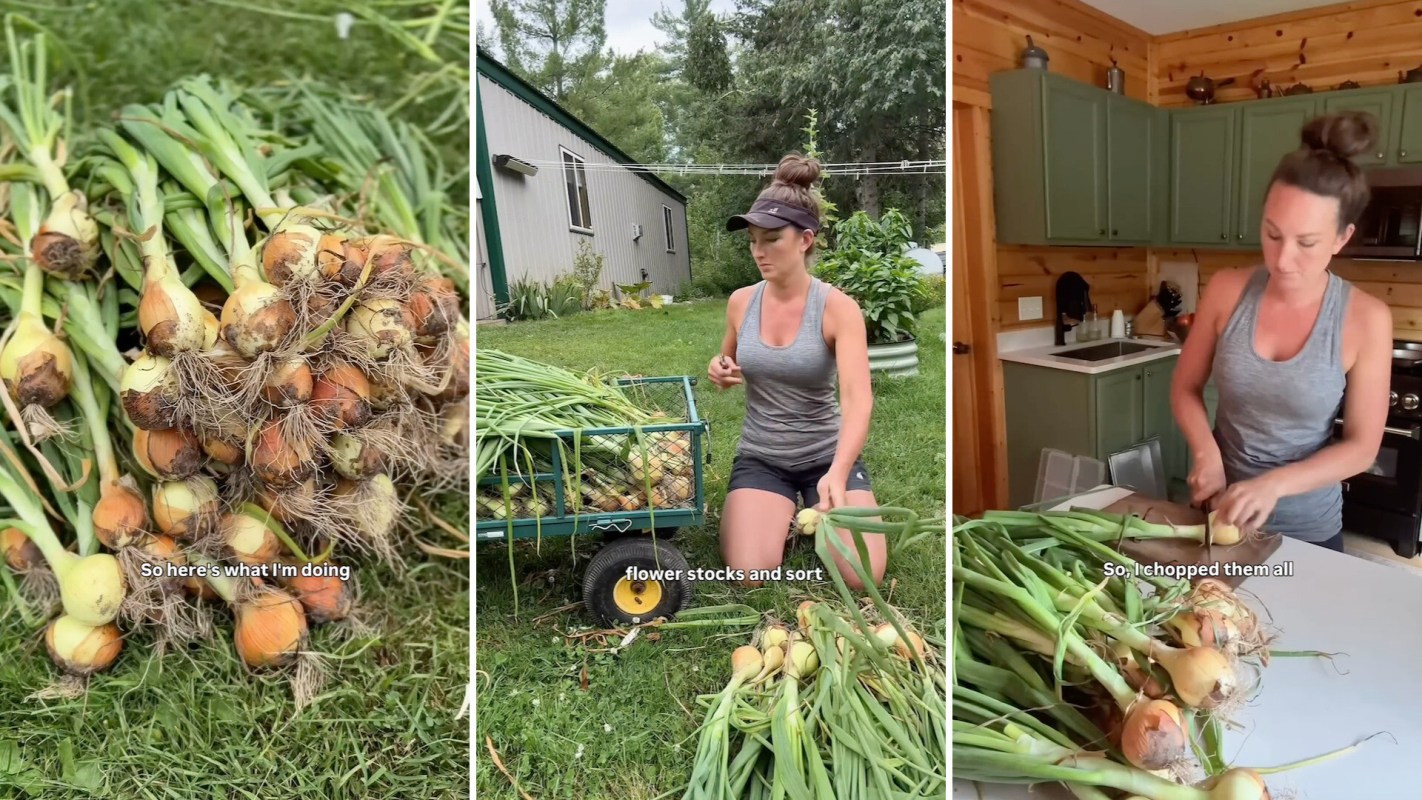
A homesteading dietitian and YouTube creator Katie (@thehomesteadingrd) showed what happened after a homegrown onion crop bolted, and explained why acting quickly can help keep at least part of the harvest from going to waste.
Here's what to know
Once an onion starts sending up a flower stalk, the problem moves into the bulb itself. As that stalk grows through the center, the onion becomes much more likely to rot from the inside.
"Crop failures can happen, but this was my biggest failure in 16 years," Katie said. "When they bolt, they can rot, so here's what I'm doing to save them."
To figure out which onions might still keep, Katie checked the necks for softness. Bulbs that still felt softer there were separated for a possible cure-and-store attempt, while the firmer ones needed immediate preservation by being cut up, caramelized, and freeze-dried for shelf storage.
Because onions are biennial plants, they usually spend the first year forming bulbs and the second producing seed. Stressors such as too little water, too much water, swings from cool weather to heat, and using sets instead of seeds can push them into bolting early.
More background
That kind of loss can be significant. A garden can help reduce grocery bills, particularly for staple produce such as onions, while also providing fresher, better-tasting food than many store-bought options.
TCD Picks » Quince Spotlight
💡These best-sellers from Quince deliver affordable, sustainable luxury for all




Gardening can also support mental well-being and physical health through time spent outdoors and regular movement.
Even bulbs that seem fine on the outside can already be deteriorating in the middle. To prevent more loss, the creator pulled this crop earlier than planned.
"Really hope you see this message because those 'good' onions are going to rot too," one commenter warned.
The commenter added that once the flower appears, "those onions will look like they're curing and storing just fine but within a few months they'll have rotted from the inside out, rendering them inedible."
Bolting is not merely cosmetic. Left untreated, it can quickly become a food-waste issue.
What can be done?
When onions bolt, the response may need to be more like triage than normal harvesting. Pull them early, check each bulb, and preserve what is usable instead of assuming the crop will cure and store as usual.
That can mean trimming off the flower stalks, separating softer-necked bulbs from rigid ones, and quickly processing anything unlikely to last. Freeze-drying was the method used here, but commenters also suggested onion stock, French onion soup, onion jam, dehydrated onions, or chopped frozen onions.
Avoiding bolting starts with reducing plant stress. Consistent watering can help, and gardeners should also remember that major weather swings can trigger bolting even in a well-tended bed. For people interested in growing their own food, that kind of planning can help protect both harvests and budgets.
Even when a crop goes sideways, preservation can still salvage much of its value.
"Now, instead of rotting in a couple of months, they'll be shelf stable for years and easy to incorporate into my meals," Katie concluded in the video.

Get TCD's free newsletters for easy tips, smart advice, and a chance to earn $5,000 toward home upgrades. To see more stories like this one, change your Google preferences here.








