


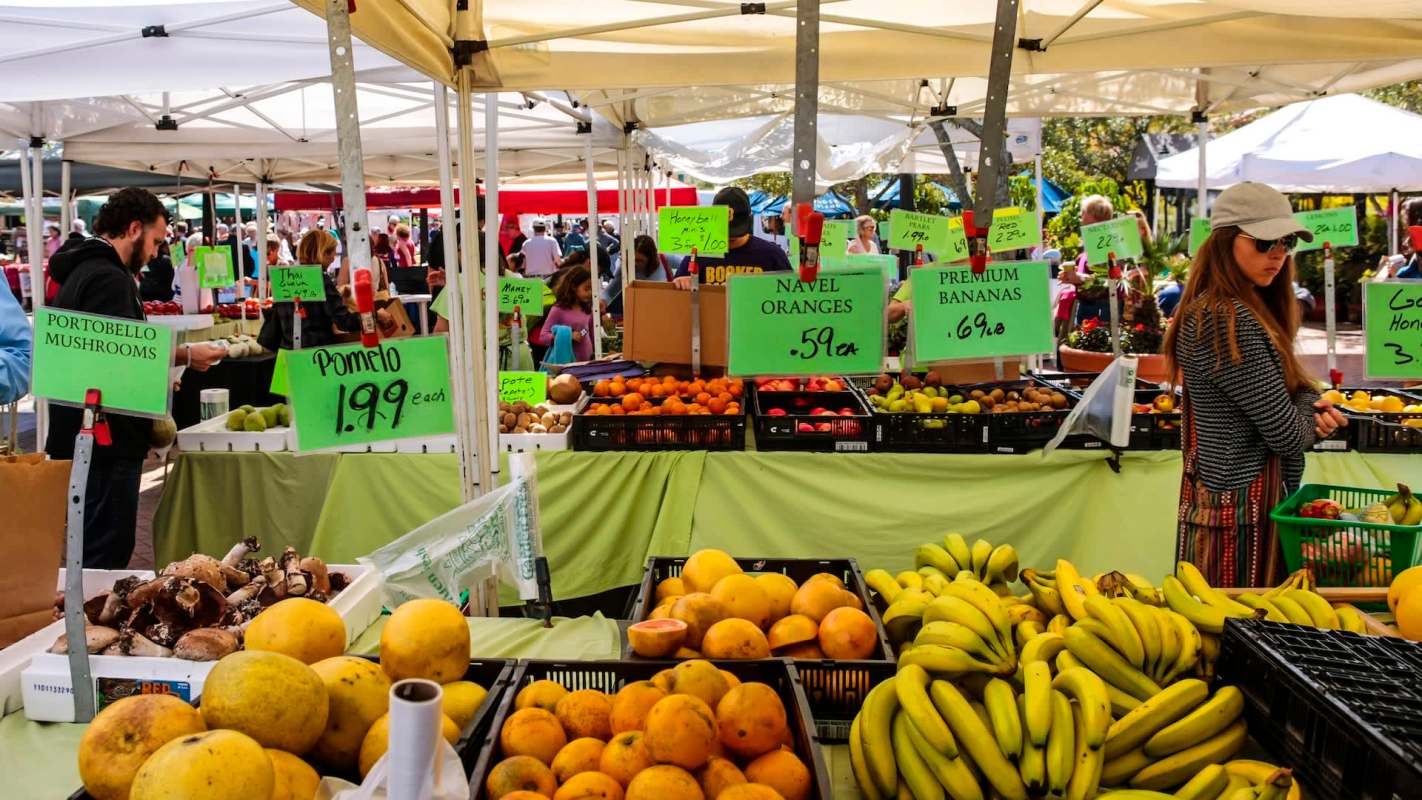
Jacksonville, Florida, rolled out its first comprehensive food plan, pairing a broad strategy for healthier, more affordable food with a proposal that could let residents sell produce.
According to Mayor Donna Deegan, food insecurity affects nearly 1 in 7 residents, including 1 in 5 children.
Here's what to know
Focused on production, distribution, access, and recovery, Jacksonville's new food plan outlines 32 actions and 79 subactions to strengthen the local food system, News4Jax reported.
Deegan said the goal goes beyond simply increasing food availability. The city wants a framework that helps Jacksonville withstand disruptions while aligning government, businesses, nonprofits, farmers, institutions, and neighborhoods.
Its recommendations focus on four priorities: backing local growers, improving supply connections, closing access gaps, and getting edible surplus food to residents instead of letting it go to waste, per News4Jax.
Deegan said grocery access remains uneven, with about 30% of residents living over a mile from a grocery store and more than half of households in 23 neighborhoods receiving SNAP benefits.
TCD Picks » Quince Spotlight
💡These best-sellers from Quince deliver affordable, sustainable luxury for all




More background
The region's emergency food network reflects the scale of Jacksonville's food challenge.
Feeding Northeast Florida expects to distribute about 48 million pounds of food in 2026, compared with 38 million pounds in 2025, Susan King, the organization's president and CEO, told News4Jax.
King said the food bank works with more than 420 agencies, partners, and programs. In 2025, it also recovered over 38 million pounds of food from retailers.
The plan's focus on recovery would direct surplus food to households. Better systems for getting surplus food to residents can stretch supplies while reducing waste.
"Our food system is vital infrastructure for our community's growth and well-being," King said, per News4Jax.
What's being done?
Some of the plan's ideas are already moving forward. Among them is City Council legislation called Pathways to Urban Agriculture that would allow residents to sell produce they grow.
The proposal would let home gardeners sell what they grow while increasing access to locally grown food in their neighborhoods. It aligns with the plan's emphasis on expanding local production rather than relying on large outside supply chains.
Residents, community organizations, industry experts, public agencies, and city staff shaped the plan.
Jacksonville is also partnering with the Parks Department and university partners on an oyster-shell recycling pilot. Under that effort, shells could be reused for coastal restoration instead of going to a landfill.
"Food is a shared responsibility, a matter of public well-being, and an essential part of the infrastructure of a thriving community," Deegan said, per News4Jax.
Where can I learn more?
• Across South Florida, 1.7 million residents struggle to put food on the table as costs rise.
• In Florida, weekly pantry trips become routine as SNAP cuts and grocery prices squeeze family budgets.
• A free grocery program serving 12,000 faces cuts after grant funding loss threatens support.
• In Palm Beach County, hunger tops 200,000 as a nonprofit readies the Hustle to End Hunger 5K.
• In Osceola County, mobile pantry demand jumps 68% as the Salvation Army seeks help.

Get TCD's free newsletters for easy tips, smart advice, and a chance to earn $5,000 toward home upgrades. To see more stories like this one, change your Google preferences here.







