


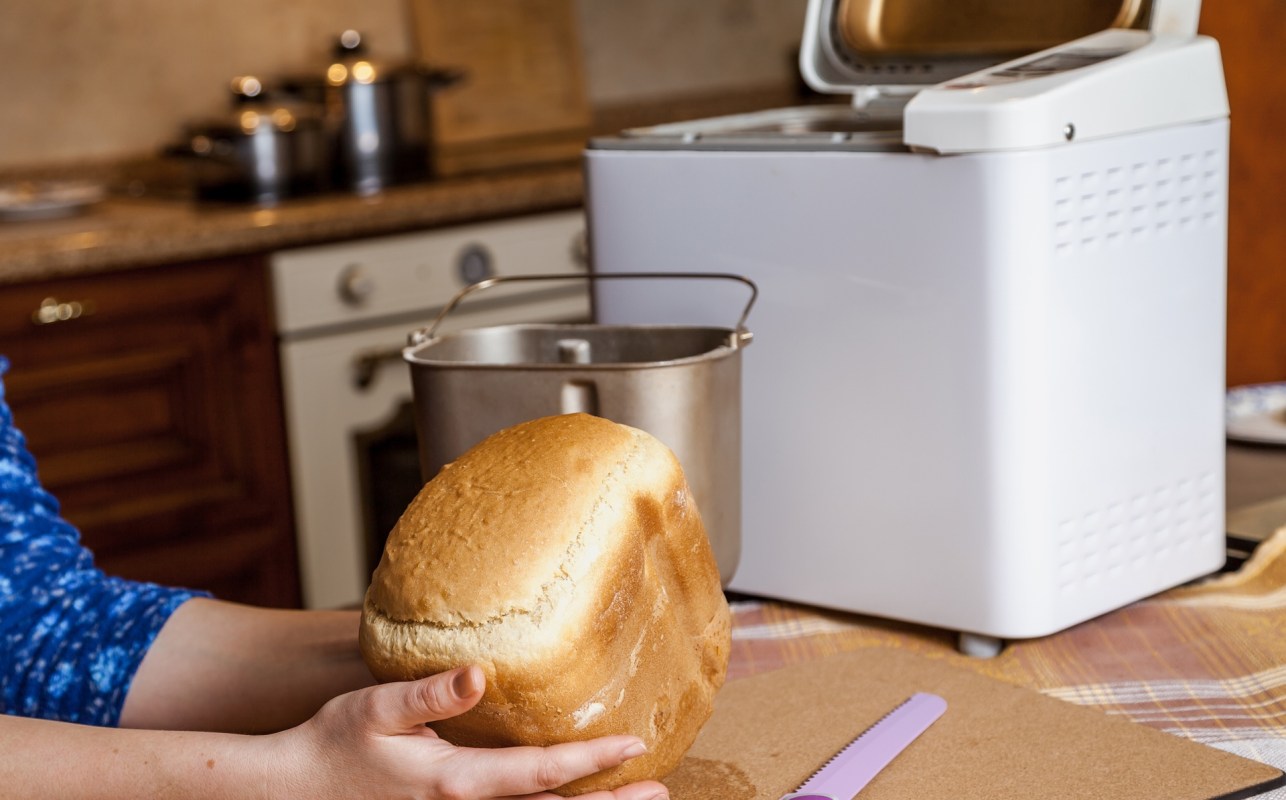
One home cook shared how baking bread from scratch helped stretch a week's groceries. Still, other shoppers raised the practical question of whether their homemade bread really costs less than a $1 supermarket loaf.
Here's what to know
In a Reddit post on the r/povertyfinance community, the home cook described pairing homemade bread with eggs and mild taco sauce for inexpensive breakfasts.
A bag of flour produced about three loaves, according to the poster, who also reported paying under $4 for a dozen cage-free eggs at their local WinCo.
"They easily last a whole week at a time, and they can be used to prepare a cheap meal of bread, eggs and mild taco sauce for breakfast for 3 days," the original poster wrote.
For another home baker, the comparison was less than $1 CAD ($0.71 USD) in ingredients for a homemade loaf versus roughly $3 (~$2.12) CAD for a store-bought one. They use milk and butter, but no eggs, and buy flour in 22-pound (10-kilogram) bags costing $10 CAD (~$7.08).
More background
While baking offered savings for some shoppers, others pointed out that the comparison depends on the bread available at their local stores.
TCD Picks » Quince Spotlight
💡These best-sellers from Quince deliver affordable, sustainable luxury for all




At Walmart, shoppers cited prices of $1 for regular bread in the Midwest and $1.47 for a loaf baked that day in California. The Midwest commenter said buying bread won out in their calculations, while the California shopper noted that further markdowns were available after several days.
"The difficult part is that sometimes you can't beat out economies of scale like with Walmart," the commenter who buys $1 loaves explained.
One baker's calculation of 1.32 per wheat-and-rye loaf already included time and energy. Along with ingredients, that total covered electricity for kneading and gas for baking. The bread used organic, nonenriched flour and locally sourced honey.
"If you want something more organic with protein and fiber you aren't getting that for 1.32 at Walmart," they clarified.
For a sourdough baker in the discussion, two separate three- to four-hour rises turned breadmaking into an effectively all-day activity. Another commenter, juggling work, school, and raising teenagers, emphasized the mess and time involved.
What can be done?
Other commenters shared their own processes. Two 90-minute rises were part of one commenter's two-loaf recipe. The first was before dividing and shaping the dough, and the second before baking. The ingredient list called for 20.1 ounces (570 grams) of flour along with yeast, sugar, salt, and warm water.
Frozen bread dough had also worked for focaccia, according to a commenter who recommended it as a shortcut. They reported paying $5 for a pack of six frozen dough loaves, which needed thawing and time to rise.
To extend the life of bread and rolls, one commenter stores them in the freezer. For consumers who prefer bakery goods, much of the thread backed the original poster's view that home baking was a strong move.
"It's so much cheaper to bake most baked goods from scratch than to buy from the bakery," a top-voted reply asserted. "Even a box cake mix and frosting is cheaper than buying a bakery cake!"
Where can I learn more?
Saving money on bread is one part of stretching a grocery budget and reacting to rising prices.
• In the UK, the 6-to-1 grocery method aims to cut food bills but isn't foolproof.
• Five US shoppers describe difficult grocery budget trade-offs, including trying to eat less.
• A North Carolina mom's frustration over rising grocery costs sparked a wider discussion of shopping stress.

Get TCD's free newsletters for easy tips, smart advice, and a chance to earn $5,000 toward home upgrades. To see more stories like this one, change your Google preferences here.







