


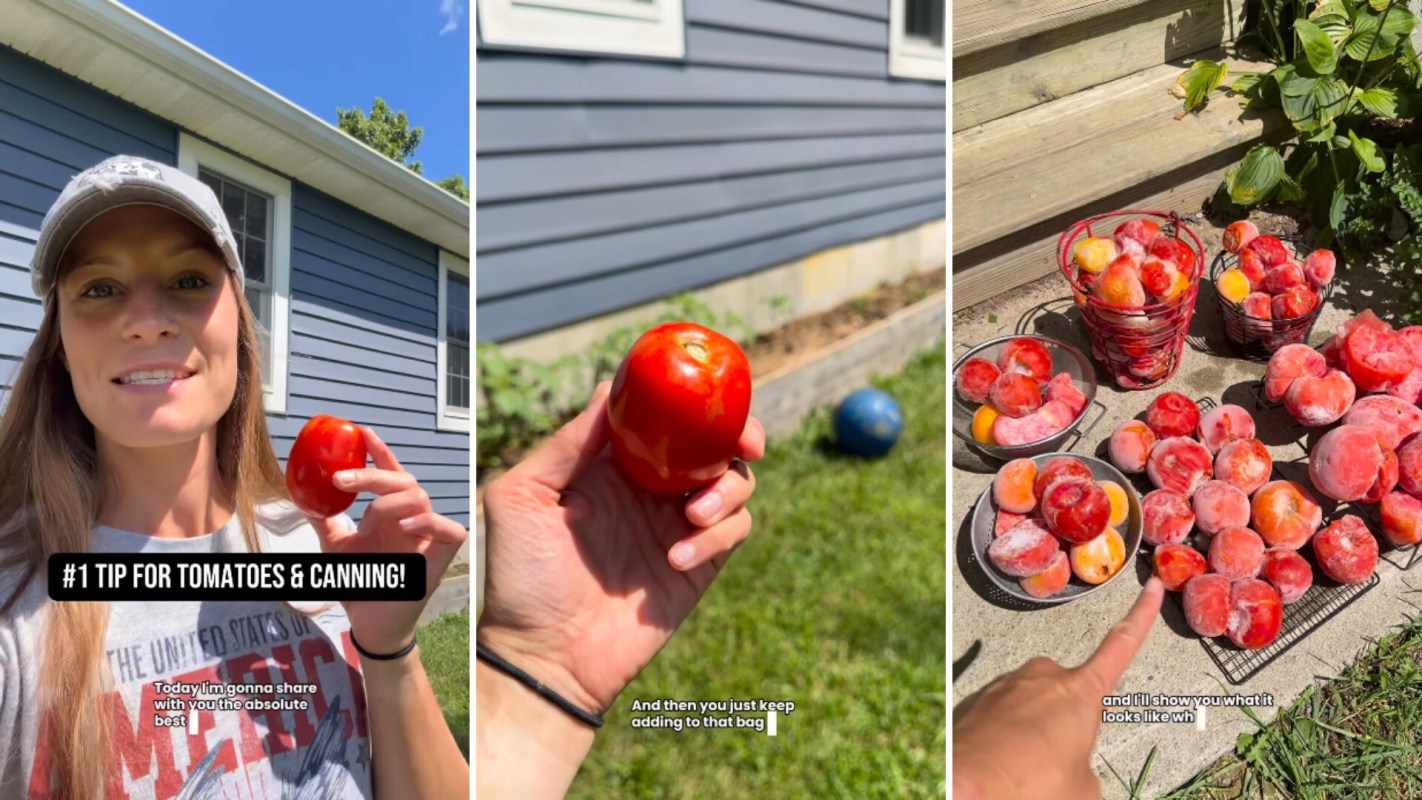
When ripe tomatoes start piling up on the counter, the pressure to preserve them before they spoil can quickly turn a satisfying garden harvest into a sweaty kitchen marathon.
Homesteading creator Collins Country (@CollinsCountry) shares the best tip she has ever learned when it comes to processing tomatoes.
Here's what to know
On August 25, Collins Country posted an Instagram video advising gardeners to freeze whole tomatoes to manage an overflowing harvest, pitching it as a practical option for those who want to avoid a long session over a hot stove.
The creator wrote, "My mom taught me about freezing tomatoes a few years ago and I'm never going back!" She added of the method, "It's so helpful!!!!"
Peak tomato season often brings in more fruit than a household can use at once, and traditional canning can be time-intensive, messy, and hot. On the other hand, if you only have a few tomato plants and want to save up to do a big batch of sauce, this is the way to go.
"It's going to save you hundreds of hours in the kitchen," the OP said, because when you thaw out the tomatoes after freezing them, you're left with nothing but the pulp, skin, and seeds.
TCD Picks » Quince Spotlight
💡These best-sellers from Quince deliver affordable, sustainable luxury for all




After harvesting your tomatoes, cut the tops off or core them, then put them in a freezer-safe bag. When you're ready to process, pull them out of the freezer and set them out to thaw in a colander or on top of something like a cooking rack so the juice can fall below. If you want to collect and can the tomato juice, that's another option.
Collins Country reminded viewers that if you're using Ziploc bags, to save and reuse them by putting them back in the freezer until you're ready to store more tomatoes in them so they can't grow any bacteria.
In a few hours, they should be thawed out and rid of all moisture. The skins peel right off, and you're ready to boil them into a sauce without having to deal with all of the juice.
"It's like a magic trick!"
More background
For many gardeners, tomatoes are one of the biggest rewards of growing food at home. They can save shoppers money on produce, and many people find that backyard tomatoes taste far better than store-bought ones picked early for shipping since they spend less time off the vine between harvest and consumption.
Gardening comes with a plethora of benefits. Spending time outdoors and working with plants can support mental well-being, while digging, watering, weeding, and harvesting all add physical activity to daily life.
Tips like this can help people keep up with the harvest, so when preservation feels too overwhelming, extra produce won't go to waste.
By putting tomatoes into the freezer before doing any further prep, gardeners can ease the urgency of a big harvest and postpone the kind of all-day boiling session that is especially unpleasant in the hottest part of the season.
A large harvest is only valuable if households can use it, share it, or store it.
What can be done?
If you're thinking about growing your own produce, growing your own food can be a powerful way to trim grocery bills while getting fresher ingredients at the same time.
A heavy tomato crop does not have to be handled all at once. Keeping the fruit whole in the freezer gives gardeners extra time and can make home preservation seem less intimidating, particularly for busy households or people new to canning.
That kind of flexibility can encourage more people to keep gardening year after year. A system that feels manageable is much easier to stick with than one that requires an all-day kitchen session.
Low-stress food preservation can help reduce waste at home. When people have an easier path to storing what they grow, they are more likely to keep good food out of the trash and on the table.
As the creator wrote, "No more standing in the kitchen all day and watching tomato juice boil."

Get TCD's free newsletters for easy tips, smart advice, and a chance to earn $5,000 toward home upgrades. To see more stories like this one, change your Google preferences here.







