


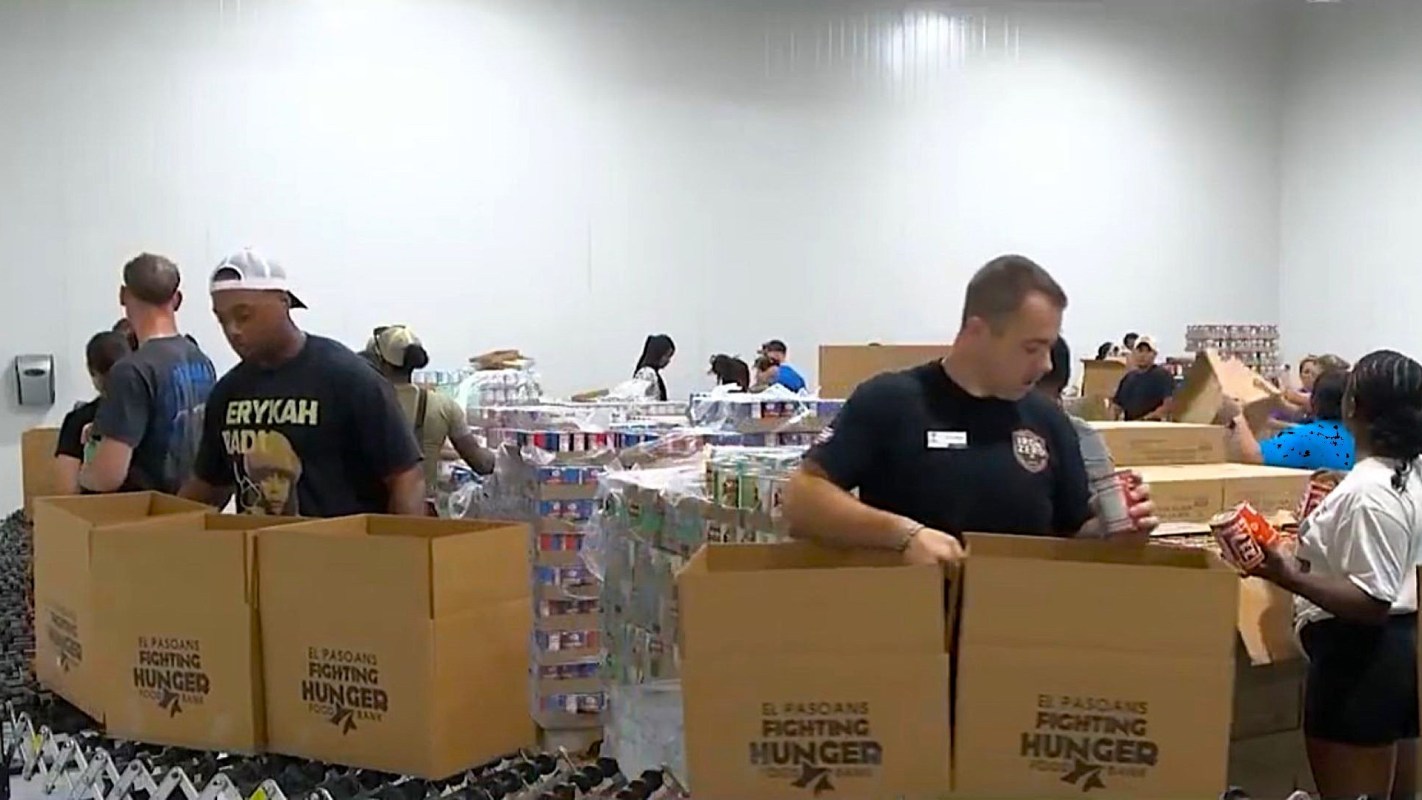
At a local El Paso food bank, around 150 Fort Bliss service members pitched in for a day of hands-on work, helping organize groceries and fill food boxes, KVIA reported.
For the nonprofit El Pasoans Fighting Hunger, the added volunteer force arrived as the organization continues trying to meet a steady need among families across the region.
Here's what to know
Before the volunteer shift started at El Pasoans Fighting Hunger's Plaza Circle facility, Fort Bliss Garrison Commander Col. Michael Soyka and El Pasoans Fighting Hunger interim CEO Kris Yagel greeted the service members. According to KVIA, the group then sorted food and put together boxes for residents in need.
Yagel said the nonprofit is confronting a significant local problem: food insecurity in El Paso has risen to 40%, about twice the national average, as KVIA reported.
"We're at 40% food insecurity in El Paso," Yagel said. "Partnerships like this absolutely get us ahead for the weeks that follow. And so it is critical."
Army Sgt. Jax Myers said outreach like this can help people better understand what military service looks like beyond training and operations.
TCD Picks » Quince Spotlight
💡These best-sellers from Quince deliver affordable, sustainable luxury for all




More background
Food banks often rely on a mix of staff, donations, and volunteer labor to move perishable items quickly and assemble distributions efficiently.
According to Soyka, El Pasoans Fighting Hunger had supported military families before, helping during a federal funding lapse when Fort Bliss service members were unsure about their paychecks.
Soyka said the nonprofit showed substantial support for the military community when it brought food in from across the country to meet the needs of families on Fort Bliss.
What's being done?
After finishing their regular training duties, service members joined the food bank's sorting, processing, and distribution work, adding manpower as the organization prepares for continued demand.
And for people looking to support longer-term community resilience, donating money to climate causes is another way to back work tied to the systems that affect access to essentials.
"People being hungry is never okay," Myers added. "So by any means, by any cost, even if it's just time, if it's my time, knowing that it could potentially help somebody in a spot of poverty like that is really unique and cool."
Where can I learn more?
What happened at Fort Bliss is part of a larger reality for food banks: they rely on community partners, donations, and efficient operations to keep groceries moving. The articles below show how extra support can quickly turn into more meals for families facing ongoing need.
• At Midwest Food Bank, Geotab donated devices to help deliver meals more efficiently.
• A food recovery partnership recovered surplus groceries before they turn into waste.
• Marriott International helped save over 300,000 meals through a broad food rescue effort.
Each example points to the same thing: volunteer time, donations, and better distribution can help food banks stretch limited resources. That's why even one day of service can have an impact that lasts well beyond a single shift.

Get TCD's free newsletters for easy tips, smart advice, and a chance to earn $5,000 toward home upgrades. To see more stories like this one, change your Google preferences here.







