


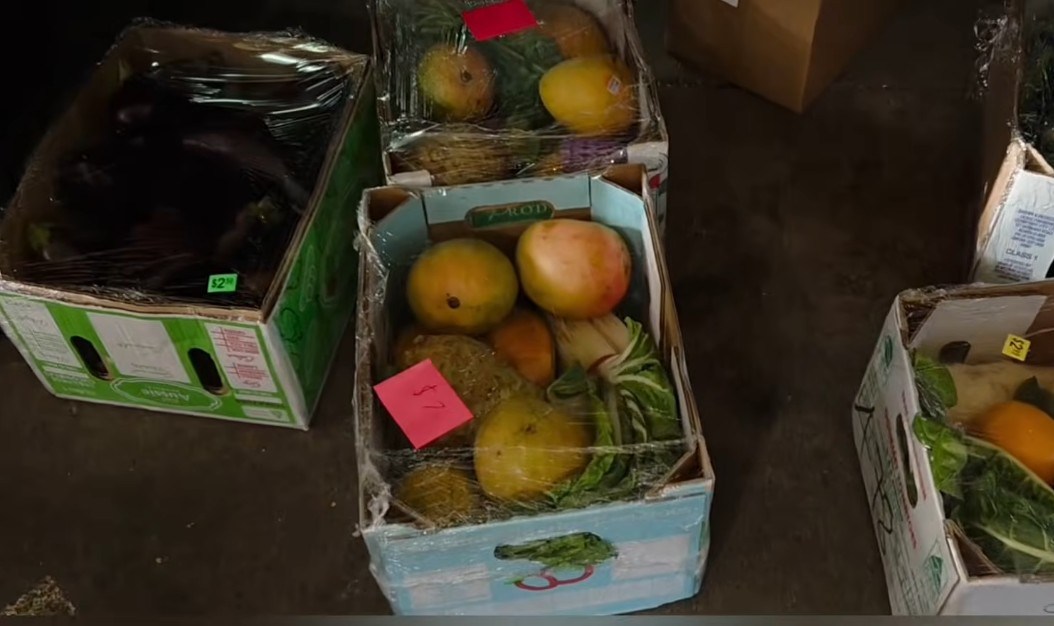
One YouTuber and member of the zero-waste movement gave a first-hand look at how she saves boxes of still-usable produce from ending up in the landfill, and how to save loads of money doing it.
An Australian content creator spent just $8.99 on three markdown produce boxes at Rochedale South Markets, then turned the haul into canned apple pie filling, a fresh pie, freezer-ready mirepoix, dried mushrooms, and homemade vegetable stock.
Here's what to know
A YouTube video shows the creator shopping at Rochedale South Markets, a wholesale-to-retail fruit and veggie store, where markdown boxes are kept beneath the standard produce displays.
The apples alone made the haul notable. One $2.50 box of apples weighing a little over 15.4 pounds (7 kilograms) produced seven 22-fluid-ounce (650-milliliter) jars of apple pie filling and a finished dessert as well.
Her purchase totaled three discount boxes: $2.50 for apples, $3.50 for carrots and lettuce, and $2.99 for a mixed assortment.
The $2.99 box included bok choy, daikon radishes, parsnips, okra, radishes, a Lebanese cucumber, bitter melon, four packs of sliced mushrooms, four packs of enoki mushrooms, and more. Nearly all of it was turned into ingredients that would keep for a long time.
TCD Picks » Quince Spotlight
💡These best-sellers from Quince deliver affordable, sustainable luxury for all




"These boxes are put together so that the food doesn't go into landfill," she says, adding that she only buys produce she knows her household will use.
At home, she began processing right away: mushrooms filled a 10-tray dehydrator, carrots were grated and chopped for meal prep, and the apples were reserved for baking and canning.
More background
She started with peppers at 8:00 a.m., and she said that by 9:00 a.m. she had already finished the peppers, carrots, onions, celery, and stock ingredients.
Much of the value came from avoiding higher-priced convenience items. In the video, she said ready-grated carrots can cost about $5 a pound ($11 a kilo), while that $3.50 box delivered a large amount of carrots along with a green pepper and an oak leaf lettuce.
The carrots also fit into the prep plan because she still had onions from a $1.99, 24.3-pound (11-kilogram) box and celery from her garden. Using those foods together let one inexpensive shopping trip stretch into several batches of ready-to-use ingredients.
She also used peppers to make homemade paprika, and she earmarked a large cabbage costing about $1.40 for ferments, slaws, wontons, and spring rolls.
What can be done?
For anyone hoping to find similar deals, she recommended looking underneath the main displays. She said market staff will sometimes remove produce that is not "100% perfect," pack it into boxes, and often set them out early in the day, though not at one exact time.
She bought each box with a use already in mind. The mushrooms were an easy yes because they were pre-sliced and could go straight to the dehydrator, the apples made sense because she had a tested water-bath canning recipe ready, and the carrots fit because onions and celery were already available for mirepoix.
In the video, she said mushrooms can also be handled in several other ways, including drying, freezing, pressure canning, or cooking them into sauces and freezing those in portions. Having multiple options can help households avoid spoilage when a markdown box brings home more produce than the family can eat fresh.
Instead of throwing scraps away, she simmered onion ends, celery leaves, and other trimmings with bay leaves and peppercorns for stock, and some cabbage leaves were set aside for livestock.
One commenter summed up the appeal: "This is a guard against food insecurity. Brilliant. It also helps me realize how much I have been overpaying for fruits and veggies."
The creator's own rule was just as valuable: "I only ever buy produce that I know that I am going to use, so there's no waste."

Get TCD's free newsletters for easy tips, smart advice, and a chance to earn $5,000 toward home upgrades. To see more stories like this one, change your Google preferences here.







