


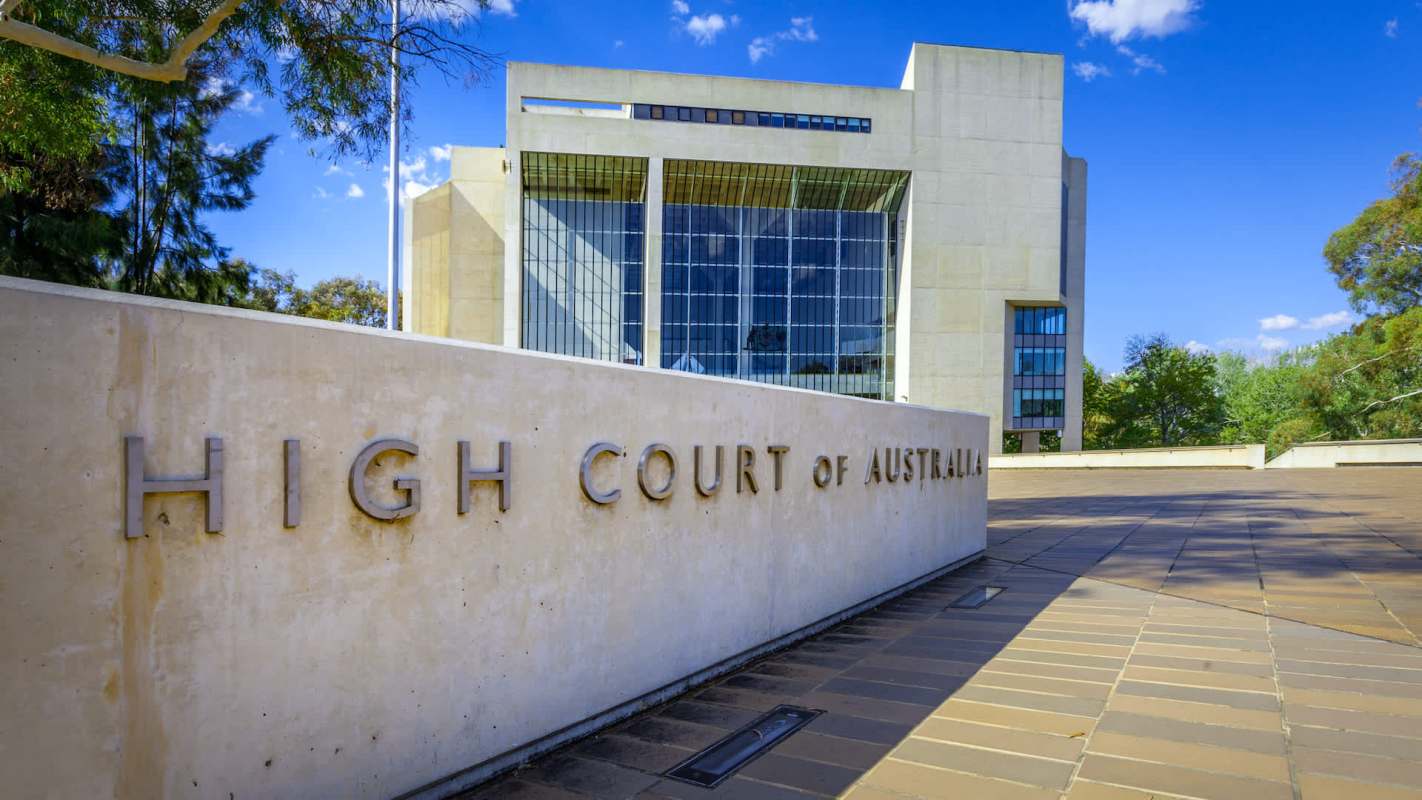
Animal rights activists in Australia must destroy their copies of secretly recorded slaughterhouse footage despite winning a High Court challenge over its copyright.
Here's what to know
A director and an employee of Farm Transparency International admitted to seven instances of trespass on property belonging to Game Meats Company of Australia between January and April 2024, according to Australia's ABC News. They secretly installed cameras at the company's halal goat slaughterhouse in Eurobin, in northeast Victoria.
The group shared a 14-minute video compiled from the recordings with a federal regulator and a local television news station, and also published it online. It said the footage showed "extreme animal cruelty," ABC News reported.
The company's Federal Court case resulted in an injunction requiring the online footage to be taken down and a $130,000 damages order against the activists.
The activists took their copyright challenge to the High Court after an appeal ruling assigned ownership of the footage to the slaughterhouse.
More background
No copyright case of this kind had previously used a "constructive trust," the court-imposed remedy at the center of the dispute. The mechanism concerns property arising from wrongdoing.
TCD Picks » Quince Spotlight
💡These best-sellers from Quince deliver affordable, sustainable luxury for all




The activists maintained that a less sweeping solution could address their crime without transferring the rights to the slaughterhouse. They argued that making the recordings was a separate act from trespassing.
GMC, meanwhile, argued that the trespasses were intentional wrongdoing and that an injunction should prevent publication to protect the company from ongoing consequences.
The High Court's judges unanimously upheld part of FTI's copyright appeal, the claim that no constructive trust should be declared over its copyright in the images.
Transferring the footage's copyright to GMC could allow the company to pursue separate lawsuits against people outside FTI who shared the images, with implications for political communication and free speech.
What's being done?
The High Court instead required FTI to delete every recording and copy resulting from the trespasses.
FTI executive director Chris Delforce said the organization would comply. Further publication, he explained, would depend on third parties who downloaded the footage during the few hours it was available online on May 17, 2024.
"This is an enormous blow to the public's right to know what happens in slaughterhouses and factory farms," Delforce said, per ABC News. "We will comply with the orders and delete all copies of the footage in our possession, but we will never stop fighting against cruelty and injustice."
Despite FTI's disappointment over the deletion order, the Alliance for Journalists' Freedom and the Human Rights Law Centre welcomed the decision. They emphasized that it protected public interest reporting and political communication.
Kieran Pender, associate legal director at the Human Rights Law Centre, said the decision "prevents development of law which in other cases may have allowed perpetrators of alleged wrongdoing to acquire copyright in order to prevent public interest reporting," per ABC News.
Where can I learn more?
The fight over the slaughterhouse footage puts copyright law at the center of an animal welfare dispute.
• Australian creatives are considering a U.K. playbook to challenge AI copyright policies.
• Activists used color-coded teams to take 22 beagles from a Wisconsin breeder, prosecutors say.
• The U.K. is moving to end CO2 pig stunning to prevent further animal suffering.
• In England, activists were convicted over Sandringham lambs after claiming the King would have consented.
• In Australia, 12 egg suppliers are accused of fixing prices and coordinating culls.

Get TCD's free newsletters for easy tips, smart advice, and a chance to earn $5,000 toward home upgrades. To see more stories like this one, change your Google preferences here.







