


We've been hearing about the Great Pacific Garbage Patch for three decades, including tireless cleanup efforts. However, it can be difficult to envision exactly how all that plastic pollution is affecting the ocean, and many of the existing photos are misleading.
One YouTube creator made the problem easier to understand using a tasty treat.
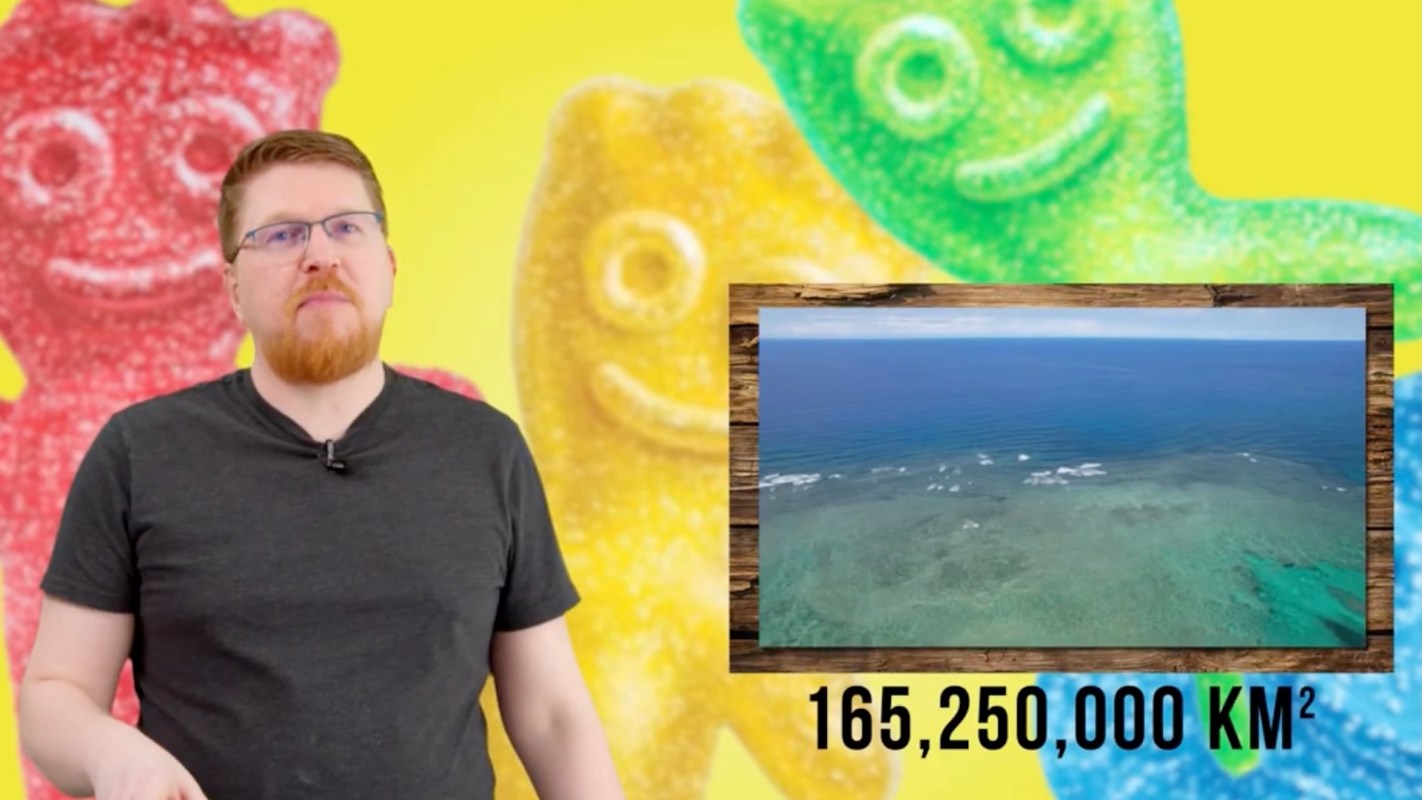
Justin Pack of the educational YouTube channel EcoBits (@EcoBitsOfficial) walked viewers through exactly how many Sour Patch Kids it would take to match the size of the Great Pacific Garbage Patch.
"It's a swath of ocean full of plastic garbage that's twice the size of Texas," Pack explained. "There's between 75 and 199 million metric tons of garbage in the ocean right now, with 11 million more tons being added every year. That's about as much as one garbage truck a minute."
That number accounts for not just the Great Pacific Garbage Patch but also the five huge garbage gyres that affect all the world's oceans.
So how many Sour Patch Kids is that?
TCD Picks » Quince Spotlight
💡These best-sellers from Quince deliver affordable, sustainable luxury for all




"It's 2,480,004,960,009,920 Sour Patch Kids to fill the Great Pacific Garbage Patch," said Pack. "So, maybe 'twice the size of Texas' is still a better analogy and less delicious. … Hopefully, we've given you some sense of just how big this problem is."
Or, to put it another way, that's 2 quadrillion, 480 trillion, 4 billion, 960 million, 9,920.
To give viewers a sense of scale, Pack used a backyard swimming pool to represent the Pacific Ocean. At that size, a bucket of Sour Patch Kids is enough to represent the Great Pacific Garbage Patch.
As Pack pointed out, the debris fills only about 1% of the pool. While it is a significant problem, it doesn't look world-ending at first glance.
|
Which of these savings plans for rooftop solar panels would be most appealing for you?
Click your choice to see results and earn rewards to spend on home upgrades. |
 Save $1,000 this year 💸
 The real problem is that the plastic isn't just large pieces of debris like bottles and discarded fishing nets. Those items break down over time into microplastics, tiny fragments of plastic that can end up in seafood and our water supply.
To cut that pollution off at the source, Pack said, we will need international cooperation to regulate fishing and the manufacture of single-use plastics.

Get TCD's free newsletters for easy tips, smart advice, and a chance to earn $5,000 toward home upgrades. To see more stories like this one, change your Google preferences here.







