


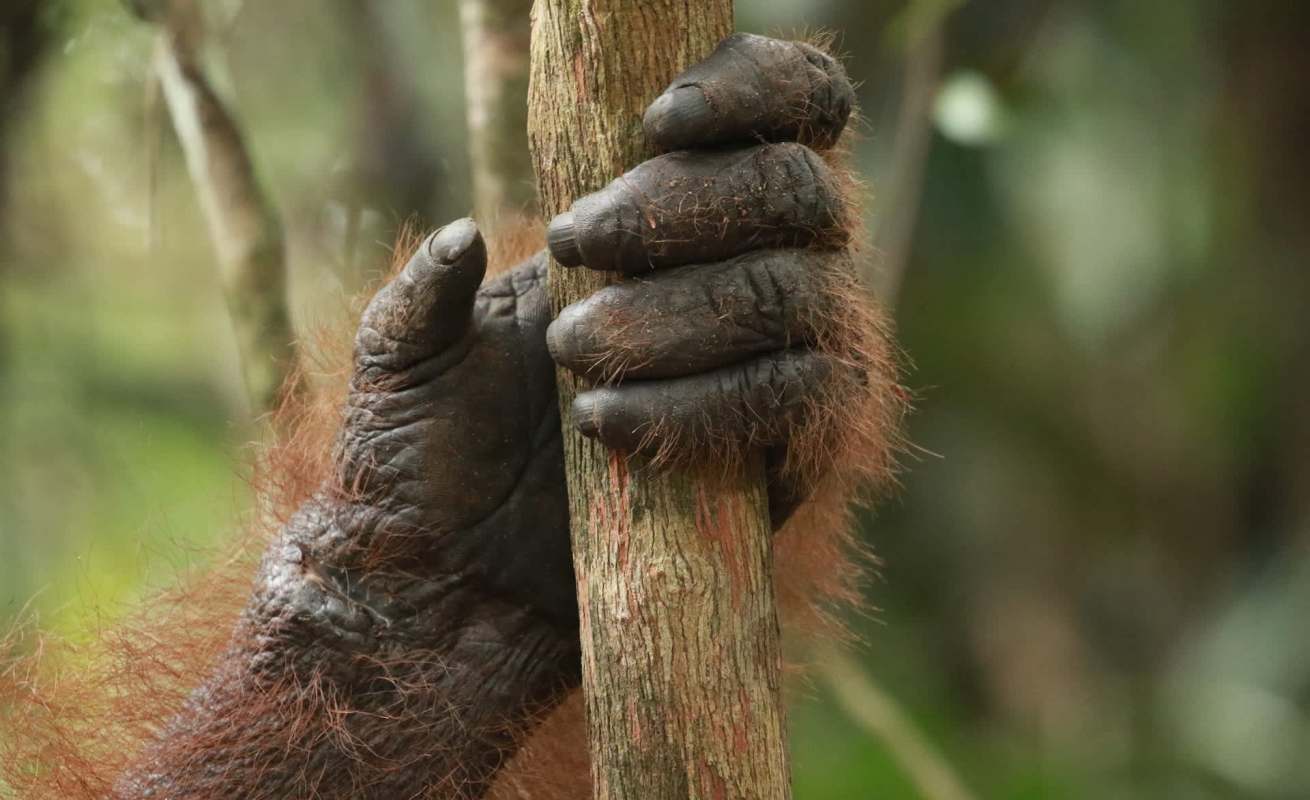
A young orangutan in Indonesian Borneo survived a wildfire long enough to climb to the top of a mostly leafless tree, where rescuers found her surrounded by thick smoke.
The ape, nicknamed Novita and estimated to be three to four years old, burned her feet as she walked through flames to reach the tree.
Here's what to know
A devastating fire season has piled more pressure on the already endangered species. According to Arab News, Novita was pulled from a fire zone in late September and brought to the Nyaru Menteng rehabilitation center in Palangkaraya. Her case is part of a growing number of orangutan rescues from wildfire-hit areas of Sumatra and Borneo.
Andi Muhammad Khadafi, head of the Central Kalimantan Natural Resources Conservation Agency, said she is still under close care.
"We've been told that the burns on her hands and feet are improving, although even after she recovers, she may not return 100 percent to how she was before she suffered the burns," he said.
After locating Novita in the treetop, the Borneo Orangutan Survival Foundation said its team tranquilized her, gave her oxygen and IV fluids, and then transported her to the rehab center.
TCD Picks » Quince Spotlight
💡These best-sellers from Quince deliver affordable, sustainable luxury for all




Wildfires are worsening conditions for an already endangered species that is rapidly losing safe habitat. For local rescue groups, each evacuation becomes urgent, dangerous work carried out in choking smoke and extreme heat.
More background
Wildfires recur during Indonesia's dry season, and in Borneo, they usually peak between July and September. In 2023, El Niño increased the danger by bringing severe drought conditions to Indonesia.
Forecasters warned that this El Niño could be among the strongest in roughly 40 years. When the landscape dries out, fires can start more easily and become much harder to control.
Experts have also identified two human-caused factors behind the worsening fire risk: land clearing by burning and peatland drying. Those changes have made areas that once resisted fire much more vulnerable.
Fires like these threaten wildlife, but they also send heavy smoke into nearby communities and strain the people and organizations responding.
What's being done?
The Borneo Orangutan Survival Foundation says it has already taken in several apes affected by the fires. Novita was tranquilized in the field, stabilized with oxygen and fluids, and moved into intensive care.
She is now being treated at Nyaru Menteng, where Khadafi said agency staff and care teams are monitoring her recovery closely, especially the burns on her hands and feet.
The response depended on local conservation infrastructure already in place. When fires break out, having trained teams, medical supplies, rehabilitation space, and government coordination in Central Kalimantan can mean the difference between an animal surviving or dying in the field.
Slash-and-burn practices and dried peatlands are making fires more likely, so prevention — not just emergency response — is critical for wildlife and nearby communities alike.
"We rescued her from an area that was burning. Before we reached her, she had to walk through the fire to get to the tree and climb it, so the soles of her feet and her toes were burned," said Borneo Orangutan Survival Foundation CEO Jamartin Sihite.
Where can I learn more?
Similar pressures are affecting orangutans and other wildlife as climate-fueled disasters worsen.
• In Borneo, villagers are being paid for spotting wild orangutans as conservation takes a new turn.
• In North Sumatra, storm-triggered landslides killed 58 Tapanuli orangutans as climate risks worsened.
• In Indonesia, climate-fueled rain and landslides wiped out 7% of Tapanuli orangutans in days.
• In California, a wildlife care center rescued dozens of bird eggs after wildfires tore through habitat.

Get TCD's free newsletters for easy tips, smart advice, and a chance to earn $5,000 toward home upgrades. To see more stories like this one, change your Google preferences here.







