


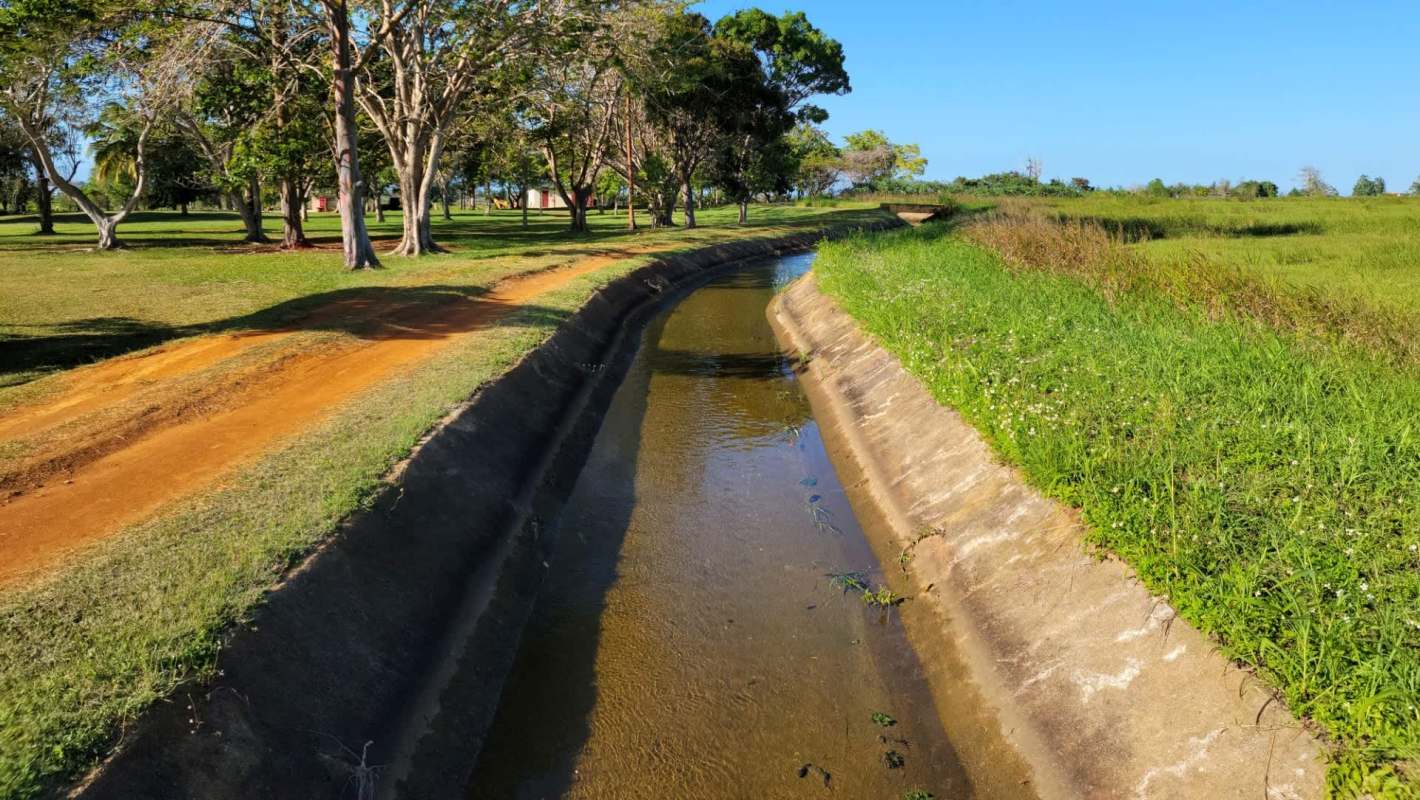
The Pathfinder Irrigation District, serving farms and ranches across eastern Wyoming and the Nebraska panhandle, is warning that its seasonal water supply could run out by the first week of August unless users sharply improve efficiency.
The shortage reflects more than meager runoff after an exceptionally dry winter. Water is also soaking into dried-out canals and surrounding soils before it can make its way to downstream crops.
What's happening?
In a notice to customers last week, the district said its canal network is experiencing "extremely high water losses," Cowboy State Daily reported. The district delivers North Platte River water to more than 100,000 acres of farmland.
As of Thursday, the district had about 393,000 acre-feet of water left for the season, per the outlet, compared with roughly 676,900 acre-feet at the same point last year. That supply comes from Pathfinder Reservoir southwest of Casper, which the Bureau of Reclamation says is now under 24% full.
George Finnegan, the Bureau of Reclamation's North Platte water scheduler and a civil engineer, told Cowboy State Daily that the upper North Platte Basin saw its lowest-ever peak snowpack in 2025-26. Because runoff was so limited, irrigation deliveries that usually start in April did not begin until June this year.
According to Finnegan, drought has dried out the canals and adjacent ground so severely that water is being absorbed by the system before it can reach users farther downstream.
TCD Picks » Quince Spotlight
💡These best-sellers from Quince deliver affordable, sustainable luxury for all




"These banks have been very thirsty this year," he said.
Why does it matter?
When irrigation water becomes scarce in midsummer, it can reduce crop yields, drive up feed costs, and add financial strain for producers who depend on steady water deliveries during the hottest part of the season.
A similar strain is occurring elsewhere in the West. One Utah town saw its water flow drop to just 6% of normal this year, while Colorado has had to rework how it distributes emergency water to mountain communities facing their own shortages.
Finnegan told Cowboy State Daily that seepage problems like these are hitting numerous irrigation districts across the North Platte Basin this year, not just Pathfinder. The outlet also noted that drought still covers almost all of Wyoming, with roughly 45% of the state in extreme drought.
What's being done?
To track shrinking supplies, the Bureau of Reclamation has started sending irrigation districts weekly allocation letters outlining how much water remains. Finnegan said that typically happens only in especially dry years.
One of Pathfinder's efforts to reduce seepage is Saturday's annual "silt run," the district said. During that process, stronger flows move sediment through the canals, and the silt that settles on the bottoms and banks can help seal leaks.
Officials say the silt run alone will not solve this season's shortage. Cowboy State Daily also reported that a June 8 storm caused seven canal breaches, five of them major, drawing crews away from their usual preseason work. The district even explored renting a water truck to help with that effort.
For now, the main option is to conserve what remains by using only necessary water, limiting avoidable losses, and adjusting operations to extend the supply. The district has also said, according to Cowboy State Daily, that it does not support borrowing water for 2026 because it would be expensive and would have to be repaid before next season begins.
"We've been kind of living off of that storage," Finnegan said. "That hungry ground — it takes up the water."
"We understand that this has been a difficult year for our users, and we recognize how important it is to deliver water as soon as possible," the district said.

Get TCD's free newsletters for easy tips, smart advice, and a chance to earn $5,000 toward home upgrades. To see more stories like this one, change your Google preferences here.







