


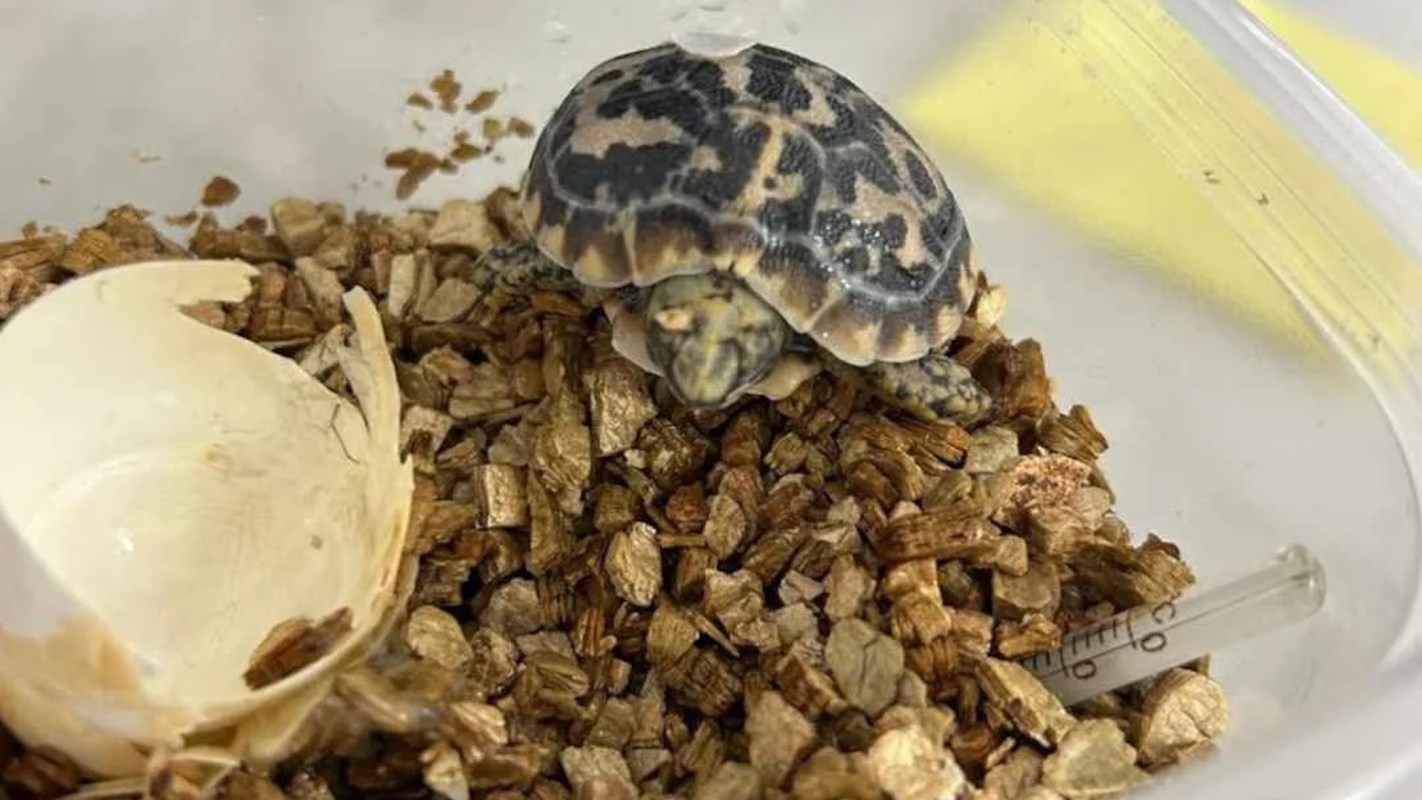
A tiny new arrival at a wildlife park in Suffolk, UK, is offering a much-needed dose of hope for a critically endangered reptile species.
At Jimmy's Farm & Wildlife Park, staff announced the birth of a pancake tortoise hatchling — encouraging news for a reptile whose wild population has been in steep decline.
What happened?
According to a report from Good Good Good Co, the park said the new arrival, a female bred through its monitored incubation effort, is the offspring of parent tortoises Waffle and Maple.
The birth marks a "rare and welcome boost" for the species, the team said.
Good Good Good Co noted that the pancake tortoise, named for its unusually flat shell, is native to rocky parts of East Africa, particularly Kenya, Tanzania, and northern Zambia. That shell shape allows the animal to hide and make habitats among rocks, an adaptation that has helped it survive in the wild for generations.
In a social media video for the park, wildlife content creator Kyle Thomas shared videos of the tiny animals and explained how illegal mining puts the wild population of the species at risk. "People come and blow up these huge areas of land that these tortoises will live in because they kind of burrow themselves in between rocks," he said.
TCD Picks » Quince Spotlight
💡These best-sellers from Quince deliver affordable, sustainable luxury for all




According to the IUCN, as reported by Good Good Good Co, pancake tortoises are critically endangered, with their population down by about 80% over the last 30 years. The park cited habitat loss and the illegal pet trade among the main pressures on the species, and the IUCN also lists climate change, development, and environmental change.
Why does it matter?
The decline of animals such as the pancake tortoise points to ecosystem damage, illegal trade, and land-use pressures that affect both wildlife and people.
When habitats are destroyed by mining or development, the damage often extends far beyond a single species. Rocky landscapes, grasslands, and surrounding ecosystems support a wider web of life, and their decline can destabilize local environments as well as the communities that depend on them. Efforts to protect threatened species can also help preserve these landscapes.
Wildlife parks, conservation centers, and educators also play an important role in connecting the public with global biodiversity issues. A hatchling like this gives visitors, especially children, a direct link to wildlife protection and international conservation efforts.
What's being done?
Followers of Jimmy's Farm and Wildlife Park have been invited to help choose a name for the hatchling.
"This little tortoise is a symbol of hope for the future of the species and highlights the vital work being done to protect some of the world's most threatened animals," a statement from the nature center said, as Good Good Good Co reported. "We can't wait to see what name the public chooses for her."
Captive breeding and monitored incubation programs cannot solve the global extinction crisis on their own, but they can buy valuable time for highly threatened species while broader habitat protections and anti-trafficking efforts continue. For animals targeted by the pet trade or squeezed by habitat destruction, such programs can serve as a critical safeguard.

Get TCD's free newsletters for easy tips, smart advice, and a chance to earn $5,000 toward home upgrades. To see more stories like this one, change your Google preferences here.







