


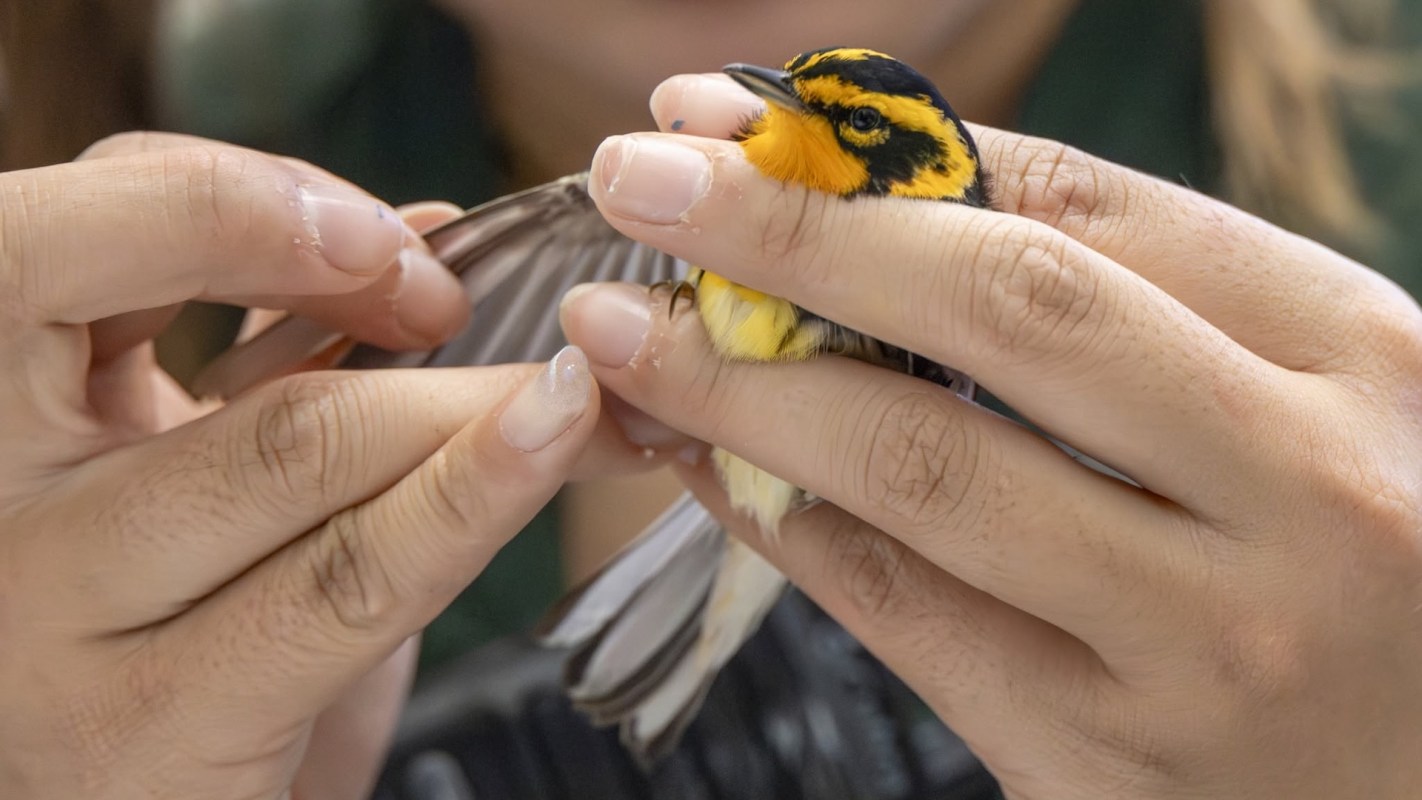
Over a three-day period in Toronto, the Toronto Wildlife Centre said it took in dozens of birds needing urgent help, including a Blackburnian warbler that was shown squinting in an oxygen chamber after hitting a window.
The image also highlights a growing danger for birds moving through dense urban areas during spring migration.
What happened?
The Toronto Wildlife Centre said that, last month, 67 migratory songbirds in need of emergency care were admitted within just three days.
In the post, the center said the Blackburnian warbler was the 38th bird admitted during that stretch.
"The tiny bird had collided with a window, leaving him with painful bruising on his shoulder and face," the center said, adding that the bird was weak enough to need time in an oxygen chamber to help him breathe.
After receiving pain medication along with specialized care, the bird recovered enough to be released. The center said spring migration brings vast numbers of birds through the Greater Toronto Area as they head north, forcing them to pass through a growing city environment that includes hazards such as windows, roads, cats, and habitat loss.
TCD Picks » Quince Spotlight
💡These best-sellers from Quince deliver affordable, sustainable luxury for all




Why does it matter?
Ordinary parts of city life can become deadly obstacles for wildlife. A single reflective window may seem harmless to people, but to a bird flying at full speed, it can become a trap. These collisions are not isolated incidents. They pile up during migration seasons, putting pressure on rehabilitation centers and threatening bird populations.
The people caring for these animals are stepping in during moments of crisis, often with limited time and resources, to give injured birds a second chance.
What's being done?
At Toronto Wildlife Centre, staff triage injured birds, treat them, and release those that are healthy enough to return to the wild. For this warbler, that care included oxygen support, pain relief, and specialized treatment. The center's post identified some of the biggest threats birds face in cities.
Practical steps include reducing window-collision risks with bird-safe decals or treatments, keeping cats indoors or supervised, and supporting local wildlife rehabilitation organizations.
After all, as Toronto Wildlife Centre put it, these birds reach Toronto after traveling "hundreds or even thousands of kilometres," only to face "an increasingly urban landscape filled with hazards such as reflective windows, busy roads, unsupervised cats, and shrinking natural habitat."

Get TCD's free newsletters for easy tips, smart advice, and a chance to earn $5,000 toward home upgrades. To see more stories like this one, change your Google preferences here.







