


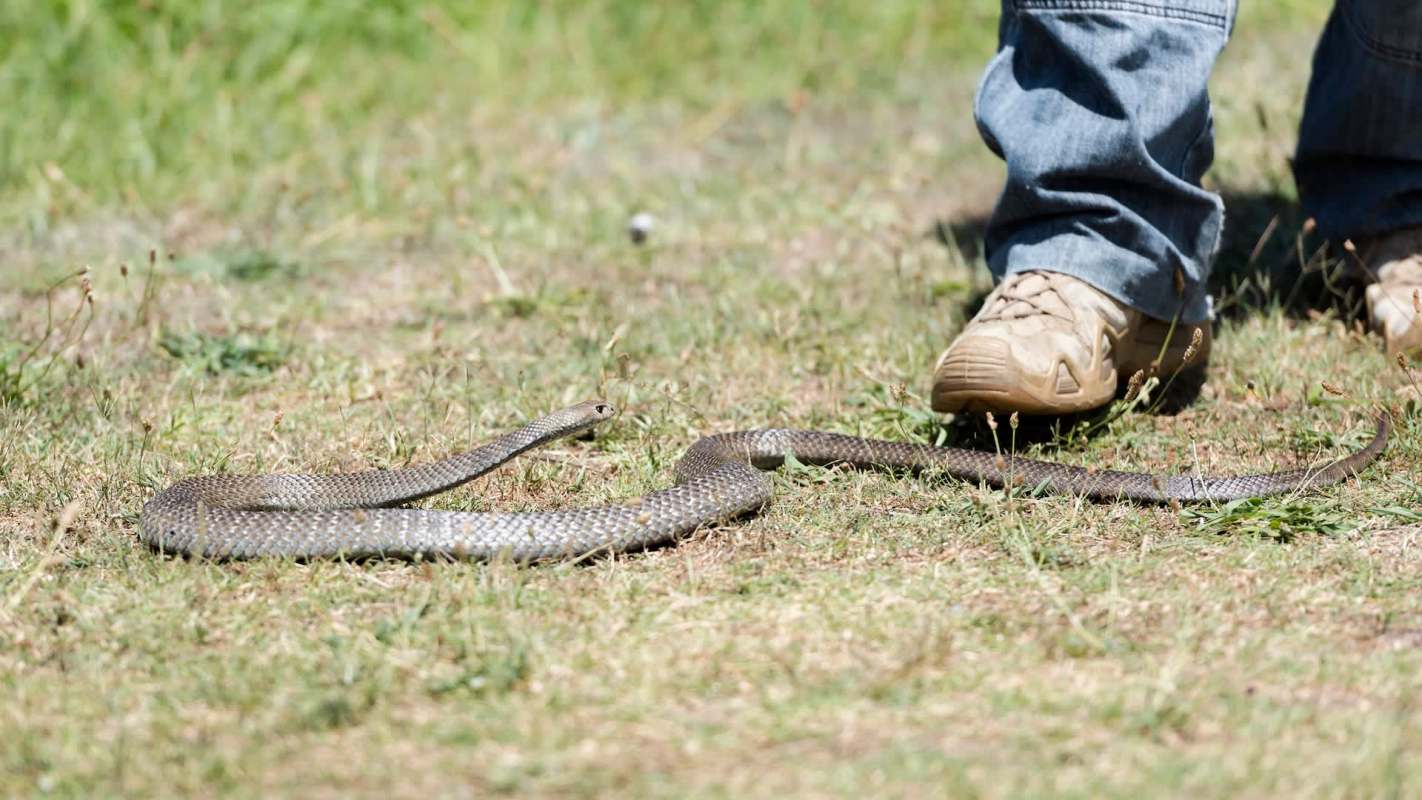
At a time when conservationists already have only a short stretch of morning light to spot pregnant Eastern massasauga rattlesnakes, haze from Canadian wildfires cut that window even further, raising the chance the snakes would go underground or give birth before they could be relocated.
Because the species is so diminished in the state, missing even one pregnant snake can matter. Each missed animal is one less opportunity to help restore a threatened native population in Ohio.
Here's what to know
According to WVXU, in Champaign County's Killdeer Plains Wildlife Area, Greg Lipps, a conservation biologist with the Columbus Zoo & Aquarium and Ohio State University's coordinator of amphibian and reptile conservation, worked with research technicians Jennifer Myers and Marnie Behan to look for gravid, or pregnant, massasaugas in waist-high grass. The smoke-dimmed sunlight made that job tougher by changing how the ground warmed and by reducing the period when basking snakes were easiest to see.
Once reported in 28 counties, massasaugas may now remain in as few as eight. Ohio designated the species as endangered in 1996, and it later received federal threatened status in 2016.
Although massasaugas are venomous pit vipers, they generally avoid populated areas and trails. The greater danger to the species is not human encounters in the field, but the ongoing loss of prairie habitat to development and farmland conversion.
Lipps told WVXU that the work in the field is shaped by factors the team cannot control: "Somebody pointed out to me that it's not your fault and you can't control the weather and so I should stop apologizing so I did."
TCD Picks » Quince Spotlight
💡These best-sellers from Quince deliver affordable, sustainable luxury for all




More background
The snake's decline is part of a larger prairie decline. Prairies support not only massasaugas, but also birds, insects, amphibians, and other reptiles, and when that habitat vanishes, the consequences ripple through the food web.
For that reason, helping the snake recover also requires rebuilding the surrounding habitat. Pregnant massasaugas need the right combination of sunlight, cover, prey, and secure places to stay through winter, and without those elements, moving snakes from one site to another would do little to restore the species.
Researchers saw that ecological connection firsthand in the field. After lifting a metal cover used to attract snakes, Lipps found a pregnant DeKay's snake and said, "These babies will be born just a couple of weeks before the massasauga babies are born, and these babies are a major food item. So this is a good sign."
What's being done?
To improve recovery odds, the team plans to move pregnant massasaugas from Killdeer Plains to Cedar Bog State Nature Preserve, where habitat improvements make recovery more likely.
At Cedar Bog, the snakes give birth in outdoor enclosures outfitted with artificial burrows, vegetation, and trail cameras. Researchers then weigh, measure, and microchip the newborns before letting them leave on their own after a few days, allowing survival to be tracked without using more invasive methods.
The relocated adults produced 58 infant snakes in 2024 from six females, and 23 more infants in 2025 from three gravid females.
Lipps said, "There's not any single thing that we're doing that's novel, but putting together all of these different aspects of snake biology and translocation methods. I think this is the first time they've been put together this way."
Some of those babies also appear to be surviving multiple winters.
Lipps said, "You're really kind of at the mercy of just getting lucky and finding them during regular surveys. So seeing that, not only are we finding some, but we're finding some that have made it through one winter, two winters. We're seeing them grow a lot. We're seeing them act like normal snakes. Those are all things that are so promising."
Where can I learn more?
These stories look at similar wildlife recovery efforts, from snakes to mussels and bison. They show endangered species being reintroduced, protected, or starting to rebound as habitat improves.
• In Dunkard Creek, conservationists saw a freshwater species resurgence for the first time in 15 years.
• In Louisiana, biologists released a batch of snake hatchlings to rebuild a vanishing population.
• After nearly 30 years, Audubon Zoo sent 14 rare Louisiana pine snakes back into the wild.
• In Yellowstone, willow stands posted a stunning 1,500% plant comeback after wolves returned.

Get TCD's free newsletters for easy tips, smart advice, and a chance to earn $5,000 toward home upgrades. To see more stories like this one, change your Google preferences here.







