


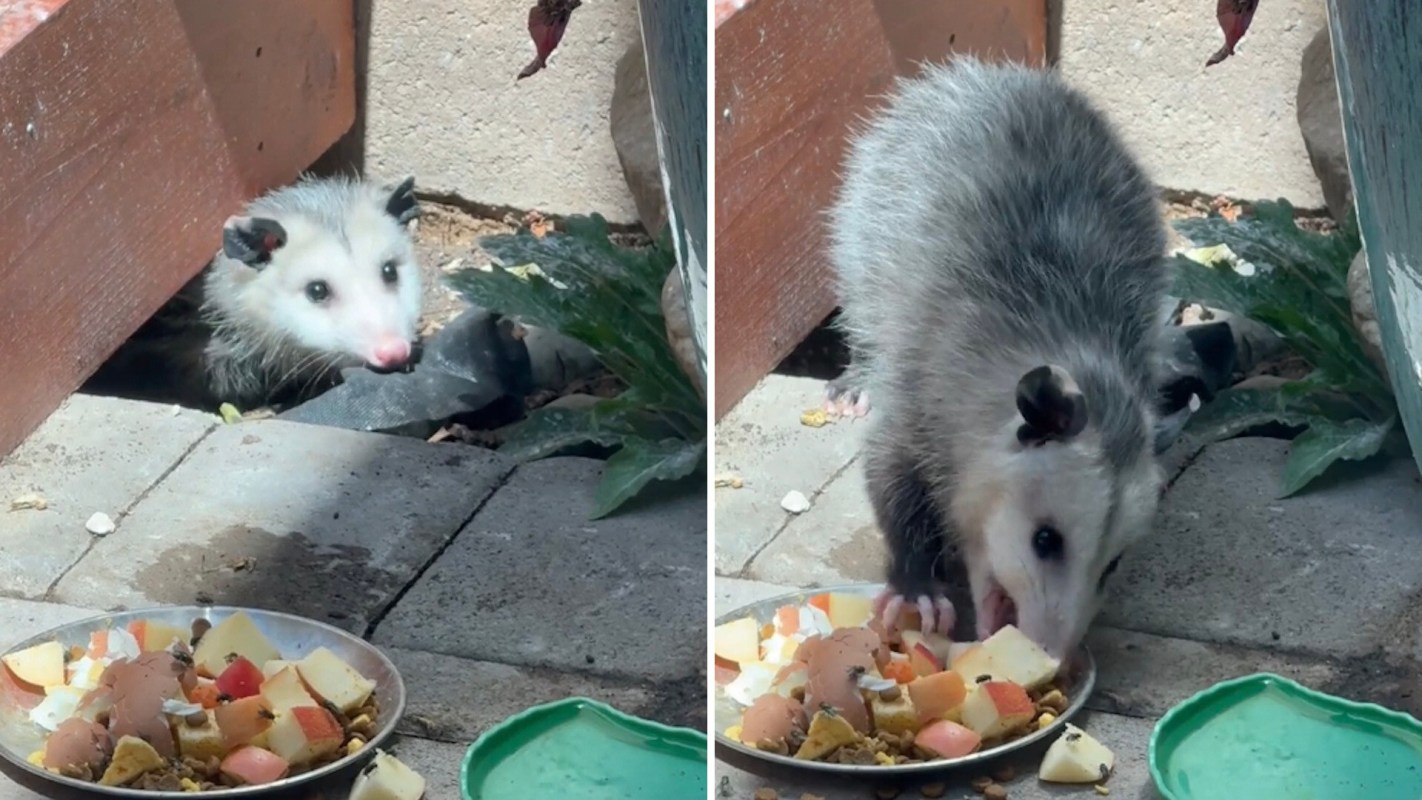
A homeowner sparked a lively debate on Reddit after sharing videos of Poe, a wild opossum that had been living under their deck for about a month and emerged each night for food left out by the homeowner.
While some viewers were charmed by the footage of the eating animal, the post also ignited a broader discussion about the ethics and potential risks of feeding wildlife.
"I leave out fresh water and snacks every evening for him. His favorite snacks are hard-boiled eggs, apples, cat food, and berries," the homeowner said. "I hope I'm not causing more harm than good by feeding him, I know it's typically not good to feed wildlife, as that can make them dependent on humans vs naturally finding their food source."
Although many users under the Reddit post commented about how adorable the opossum was and even thanked the homeowner for feeding it, giving wildlife food can often have serious consequences.
Many people want to help wild animals, especially when one appears calm, familiar, or in need. But regular feeding can sometimes alter an animal's behavior, encouraging it to return more often or rely on a food source that may not always be there.
According to the U.S. Fish and Wildlife Service, human and even domestic pet food is not designed to meet the nutritional needs of wild animals.
TCD Picks » Quince Spotlight
💡These best-sellers from Quince deliver affordable, sustainable luxury for all




"If a wild animal were to eat food like this, they might not get the nutrients they need in order to survive. Malnourished animals are likely to die from lack of proper nutrients or predation due to their weakened body," they wrote.
Wildlife isn't just "showing up" out of nowhere — animals are often responding to the environments people create. Sheltered spaces like decks, reliable water, pet food, and quiet suburban cover can make residential areas attractive places to rest or forage.
That can lead to more memorable wildlife sightings, but it can also create uncertainty around pets, sanitation, and animal welfare. The debate around Poe reflects a challenge many people face: wanting to be good stewards without accidentally creating new problems for wild neighbors.
Homeowners can also focus on making spaces safer rather than more inviting. That might mean checking under decks and porches for denning animals before sealing openings, supervising pets, and contacting a local wildlife rehabilitator or animal control office if an animal appears sick, injured, or unusually comfortable around humans.
People who enjoy backyard wildlife can also turn to native plants and habitat-friendly landscaping as a more sustainable way to help.

Get TCD's free newsletters for easy tips, smart advice, and a chance to earn $5,000 toward home upgrades. To see more stories like this one, change your Google preferences here.







