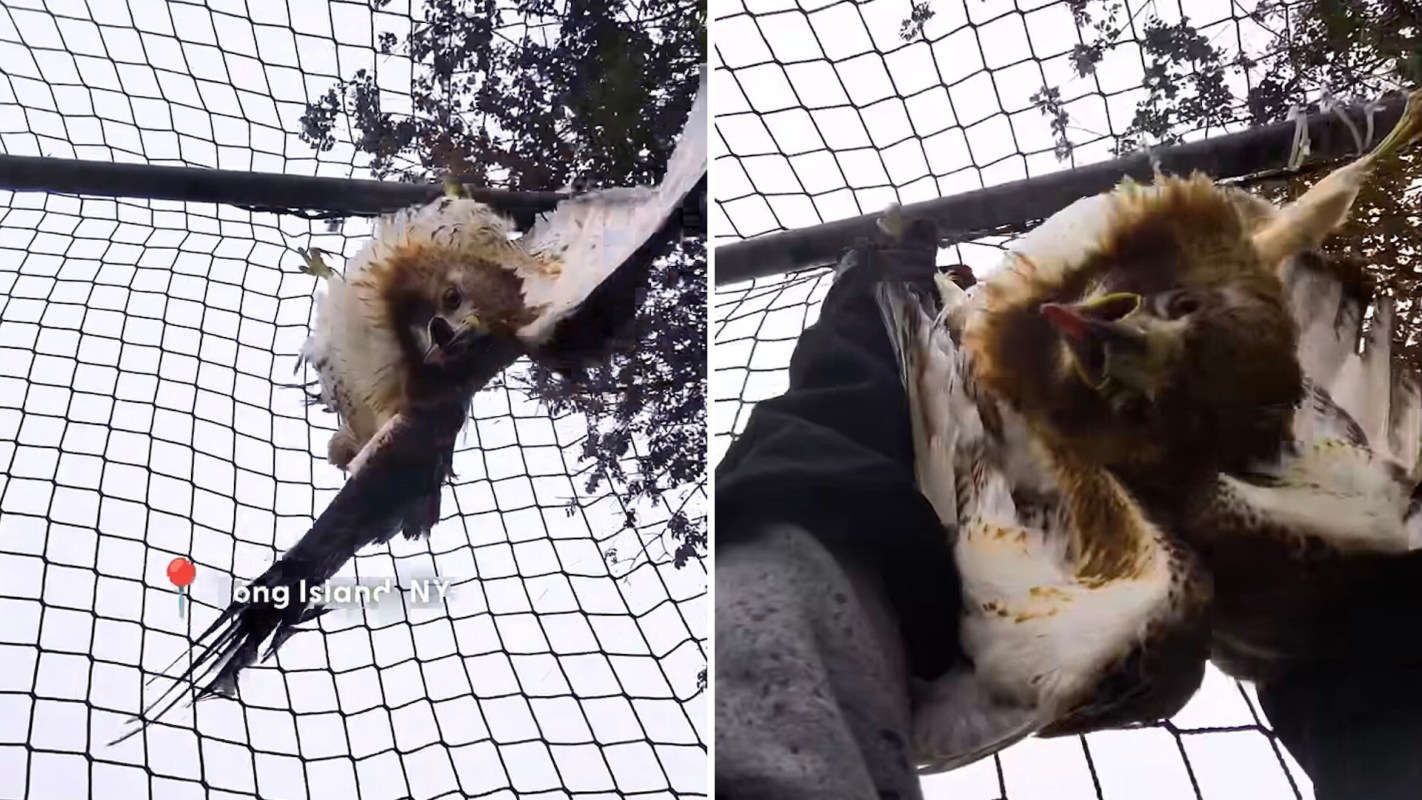
After getting caught upside down in the netting of a batting cage on Long Island, New York, a wild hawk was gently brought down in a wildlife rescue.
What made the scene especially unusual was how calm the bird remained while the rescuer worked to free it.
What happened?
A video from The Dodo shows the hawk hanging from within the batting cage netting, struggling to free itself.
Thankfully, Long Island wildlife rescuer John DeBacker (@JohnTheCatGuy) quickly arrived at the scene and was able to save the animal. For John, the rescue call itself was not out of the ordinary.
"I actually do hawk rescues often," he said in the video.
What did surprise him, though, was the bird's behavior, which was far calmer than rescuers typically expect from a wild hawk.
TCD Picks » Good Store Spotlight
Get 10% off your next purchase with code TCD10




As John put it, "He seemed to appreciate the help. He was very calm, didn't try to bite me, didn't try to attack me."
He added that hawks often end up more seriously caught in the mesh, but "that wasn't the case in this situation."
After the rescue, John told the outlet that when "Any wildlife [gets trapped], they're going to be freaking out. So it was very unusual that he was letting me [get] that close to him."
The bird was subsequently taken to a vet clinic where it was given a clean bill of health. A few days later, it was released back into the wild.
Why does it matter?
Wild animals can become trapped in human-made structures more easily than many people realize, from sports netting and fencing to discarded materials.
For birds of prey, those encounters can quickly become dangerous, especially if stress or injury prevents them from escaping on their own.
If you ever spot wildlife in danger, the safest response is usually to keep a respectful distance, prevent crowds from gathering, and contact a local wildlife rehabilitator, animal rescue organization, or park authority. Even when an animal appears docile, it should still be handled by trained rescuers whenever possible.
Trying to free an animal without training can increase the risk of injury for both the person and the animal itself.

Get TCD's free newsletters for easy tips, smart advice, and a chance to earn $5,000 toward home upgrades. To see more stories like this one, change your Google preferences here.