


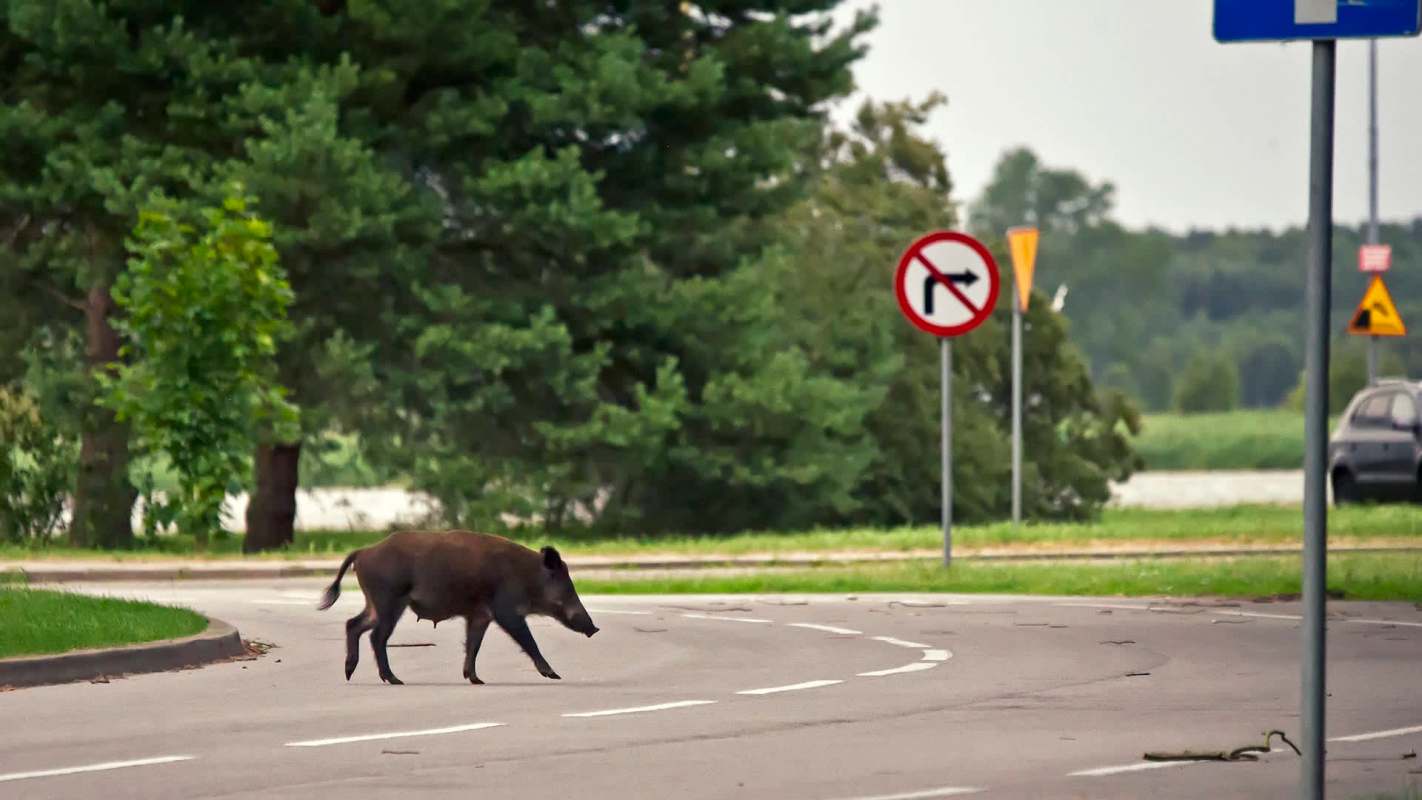
Wild boars are no longer staying on the outskirts of cities in parts of the Czech Republic, according to Radio Prague International.
Instead, the animals are showing up more often in parks, gardens, and residential neighborhoods, drawn not only by easy meals but by another thing cities can offer: safety.
That shift points to a deeply human-made problem — food scraps, unmanaged green spaces, and hunting pressure around urban areas may all be helping push boars closer to people.
Here's what to know
Across the Czech Republic, more reports are emerging of wild boars turning up in human-populated areas, including near Prague and Brno.
Rather than remaining mostly in forests, they are now searching for food in parks, gardens, abandoned lots, and residential neighborhoods.
Miloš Ježek, who works at Prague's Czech University of Life Sciences in the Faculty of Forestry and Wood Sciences, said the pattern is escalating throughout Europe due to several overlapping causes, one of which is how easily boars can find food in urban settings.
TCD Picks » Quince Spotlight
💡These best-sellers from Quince deliver affordable, sustainable luxury for all




"One factor is the relatively easy access to food they can find in cities, specifically in parks, gardens, abandoned areas and similar places. At the same time, they feel relatively safe in urban environments because wild boars are generally not hunted there," he explained.
Urban areas can also function as refuges. Ježek noted that boars face less hunting there, while stronger pressure around city edges can drive them toward places where people live.
"Greater hunting pressure around cities may actually encourage wild boars to move in among people," he added.
Human behavior is helping shape where these animals go, from unsecured compost heaps and overflowing bins to land management and hunting patterns that influence how boars respond.
More background
Wild boars are adapting to environments people have built and, in some cases, made especially attractive to them.
For boars looking for both food and cover, cities can offer plenty of both: compost with fruit and vegetable scraps, food waste around bins, and sheltered, overgrown areas.
Ježek pointed to a documented incident in which a sow with piglets entered a bio-waste container.
The consequences can range from unsettling encounters to damaged gardens and torn-up public green spaces. Municipalities are also under pressure to respond when large animals begin to appear.
Wild boars usually avoid people and prefer to flee.
Problems arise when they feel trapped or when an unleashed dog gets close to a sow with piglets.
What's being done?
Since culling is difficult in populated areas, some municipalities are using other methods, including trapping animals and setting up scent fences treated with repellents to keep boars away from specific locations.
The approach is considered safe for people, including children, though the repellent must be renewed about every three months.
Ježek said prevention should focus on making urban areas less inviting by cutting off access to food waste and reducing hiding places in dense shrubs, wooded pockets, and overgrown parks.
The most practical steps are straightforward: secure compost and trash, avoid approaching wild boars, keep dogs leashed, and make sure the animals have a way to escape rather than cornering them.
"The most common reason for an attack is the protection of young, or when a wild boar finds itself trapped and unable to escape, which happens more often in urban environments. In those situations it may charge, but such attacks are genuinely rare," Ježek stated.
Where can I learn more?
What's happening in the Czech Republic is not occurring in a vacuum: cities can inadvertently attract wildlife by offering food, cover, and fewer human-related threats.
Similar tensions are playing out beyond Prague and Brno, from boars in Singapore to feral swine in the United States and predators along urban edges.
• In Singapore, boars in Bukit Panjang Park startled residents as urban encounters spread.
• Across the United States, feral swine populations keep expanding despite years of heavy hunting pressure.
• Near Nairobi National Park, lion behavior near a city park is exposing urban edge tensions.
• In North American neighborhoods, incidents with wildlife have intensified as coyotes clash with pets.
Seen side by side, these stories make clear that urban wildlife sightings are part of a larger shift. Human-built landscapes can serve as habitat, refuge, and conflict zone all at once.

Get TCD's free newsletters for easy tips, smart advice, and a chance to earn $5,000 toward home upgrades. To see more stories like this one, change your Google preferences here.







