


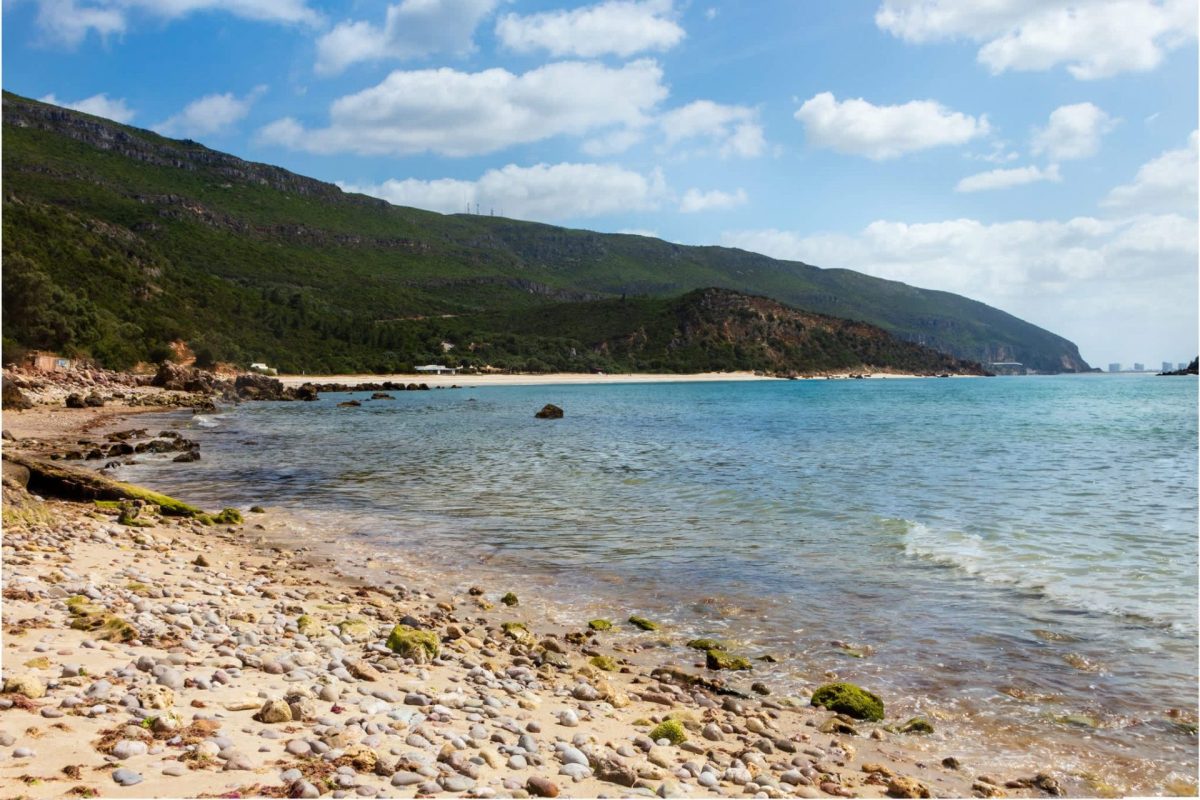
A beach day in Portugal's scenic Arrábida region now comes with an unusual warning: Don't leave your lunch unattended.
According to Euronews, wild boar are again turning up at Portinho da Arrábida, where they have been seen moving among towels and taking food left by tourists.
What's happening?
Social media videos shared last month show the animals crossing the beach and eating food left beside beachgoers' belongings when no one is nearby.
Sightings of wild boar are a familiar part of life in Portugal's Serra da Arrábida, but the animals now seem to be appearing more often in heavily visited beach areas during summer.
Euronews said that Portinho da Arrábida, Creiro, and Galapinhos in Setúbal were the beaches with the most reported sightings. Galapinhos, voted Europe's most beautiful beach in 2017, is particularly vulnerable to these encounters because it lies deeper within the Serra da Arrábida.
Part of the pattern appears to come from human behavior. In summer, people often leave food scraps in bins or out in the open, giving the boar an easy source of food and more reason to return.
TCD Picks » Quince Spotlight
💡These best-sellers from Quince deliver affordable, sustainable luxury for all




Why does it matter?
When wild animals grow accustomed to finding food around people, the risk of unsafe encounters rises for both humans and wildlife.
Tourists may see the boar as aggressive or unusually bold, but the animals are often responding to conditions people have created by leaving behind food and trash. Once wildlife begins to associate crowded public areas with easy calories, those patterns can be difficult to reverse.
That can create safety concerns on busy beaches, near roads, and even in nearby cities. Euronews noted that wild boar are also commonly seen in Setúbal after coming into the city from the Serra da Arrábida in search of food.
It also reflects a broader trend seen around the world: As human activity increasingly overlaps with wildlife habitat, animals adapt to our routines.
What's being done?
This year, the Institute for Nature Conservation and Forests, or ICNF, has signed off on 85 capture operations in the Serra da Arrábida.
Those actions include controlled hunting and overnight trap watches, usually on farms, near the beaches, or anywhere the animals are known to find food.
Despite increased culling, ICNF says the wild boar population in Arrábida Natural Park is still large and stable. Between 600 and 700 animals are killed each year within the park's boundaries.
Conservation experts argue that population control alone is not enough. As Euronews reported, they say hunting campaigns should be followed by regular monitoring to maintain ecological balance while officials address growing boar numbers.
Beachgoers are advised to keep food covered, secure rubbish bags tightly, and stay back if a boar comes near.

Get TCD's free newsletters for easy tips, smart advice, and a chance to earn $5,000 toward home upgrades. To see more stories like this one, change your Google preferences here.







