


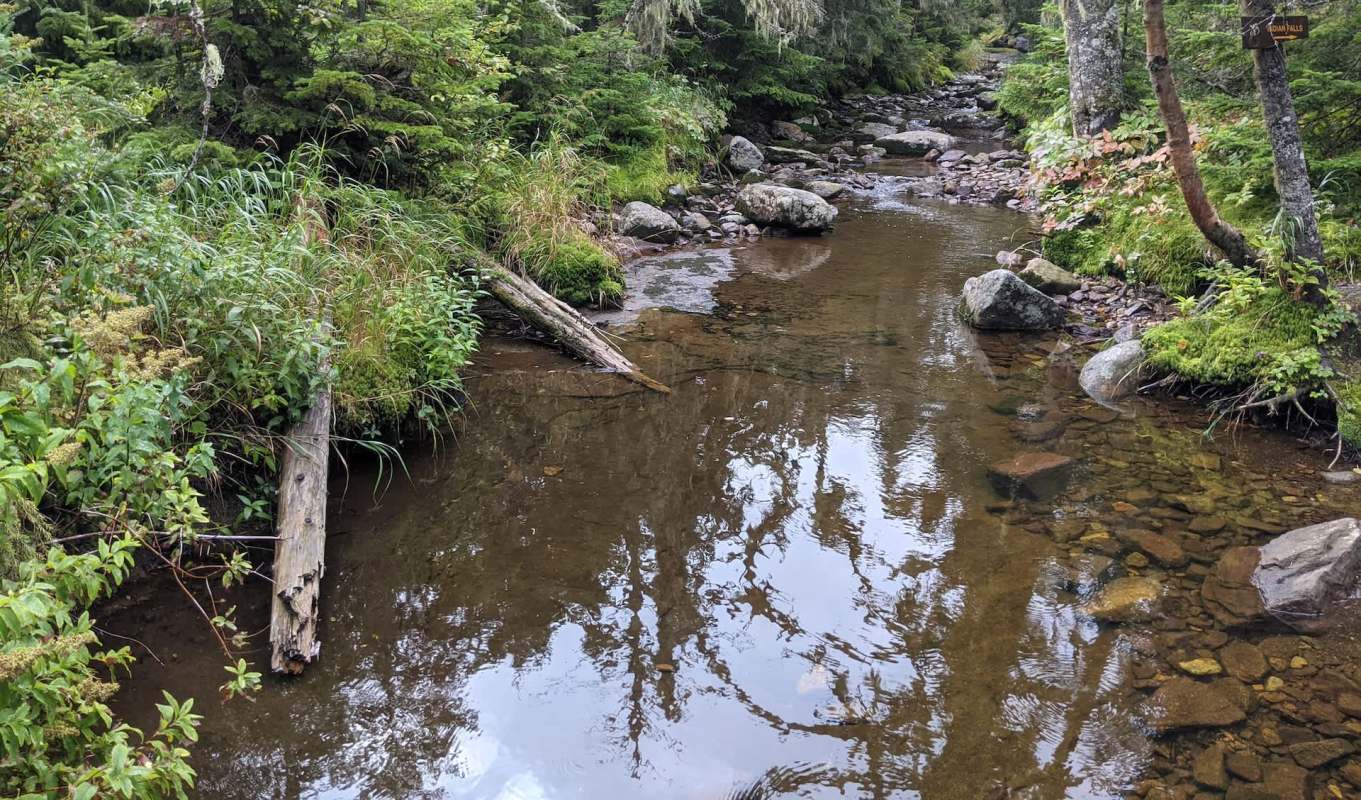
New Hampshire's famously steep mountain trails are becoming even harder to manage as heavier rains batter paths that were not built for today's climate.
Trail crews and volunteers are racing to keep some of the Northeast's most beloved hikes from washing out.
What's happening?
More intense rainfall is turning one of the White Mountains' signature features into a growing problem. As the New Hampshire Bulletin reported, the region's famously steep, straight-up trails were designed for difficulty, not for the weather patterns the region now faces.
Many of those routes were built in the 1920s and 1930s, when trail makers preferred direct climbs over switchbacks, Matt Moore, senior operations manager for Appalachian Mountain Club Trails, told the news outlet. That approach helped create some of New Hampshire's best-known hikes, but it also leaves many trails acting like channels for rainwater.
As Moore put it, "Climate change is intensifying and accelerating a problem that we already had."
On a busy day, up to 1,000 people may hike Franconia Ridge, Moore said — "the kind of usage that I'm sure the original builders never could have envisioned."
TCD Picks » Quince Spotlight
💡These best-sellers from Quince deliver affordable, sustainable luxury for all




The combination of heavy foot traffic and precipitation is leading to compacted soil, faster-moving runoff, deeper erosion gullies, and more damage to the surrounding forest.
Why is this concerning?
Eroded trails can become difficult and unsafe to traverse, while compacted soil can damage tree roots, and sediment washed off the paths can end up in mountain streams.
A climate-driven trail problem can end up affecting ecosystem health, outdoor access, and the local communities that rely on recreation and tourism.
In a warming world, protecting these public spaces can also take more time and money. Moore said rerouting a trail onto a gentler grade is often the most effective fix, but such projects can move slowly and come with high costs.
Crews can also "harden" routes with stone staircases. For most trails, though, the work is less dramatic and more continuous: Volunteers regularly clean and maintain water bars — the log- or stone-built features that redirect runoff and help limit erosion.
Last year alone, Moore told the Bulletin, Appalachian Mountain Club volunteers maintained about 5,000 water bars.
What are people saying?
Moore acknowledged that not everyone welcomes the trail changes.
"People have mixed feelings about it," he said. "People say, 'I liked the challenge of the old trail.'"
He said relocations are being reserved for the most damaged areas, where erosion and soil compaction have created a "devastated area" around what was once wilderness.

Get TCD's free newsletters for easy tips, smart advice, and a chance to earn $5,000 toward home upgrades. To see more stories like this one, change your Google preferences here.







