


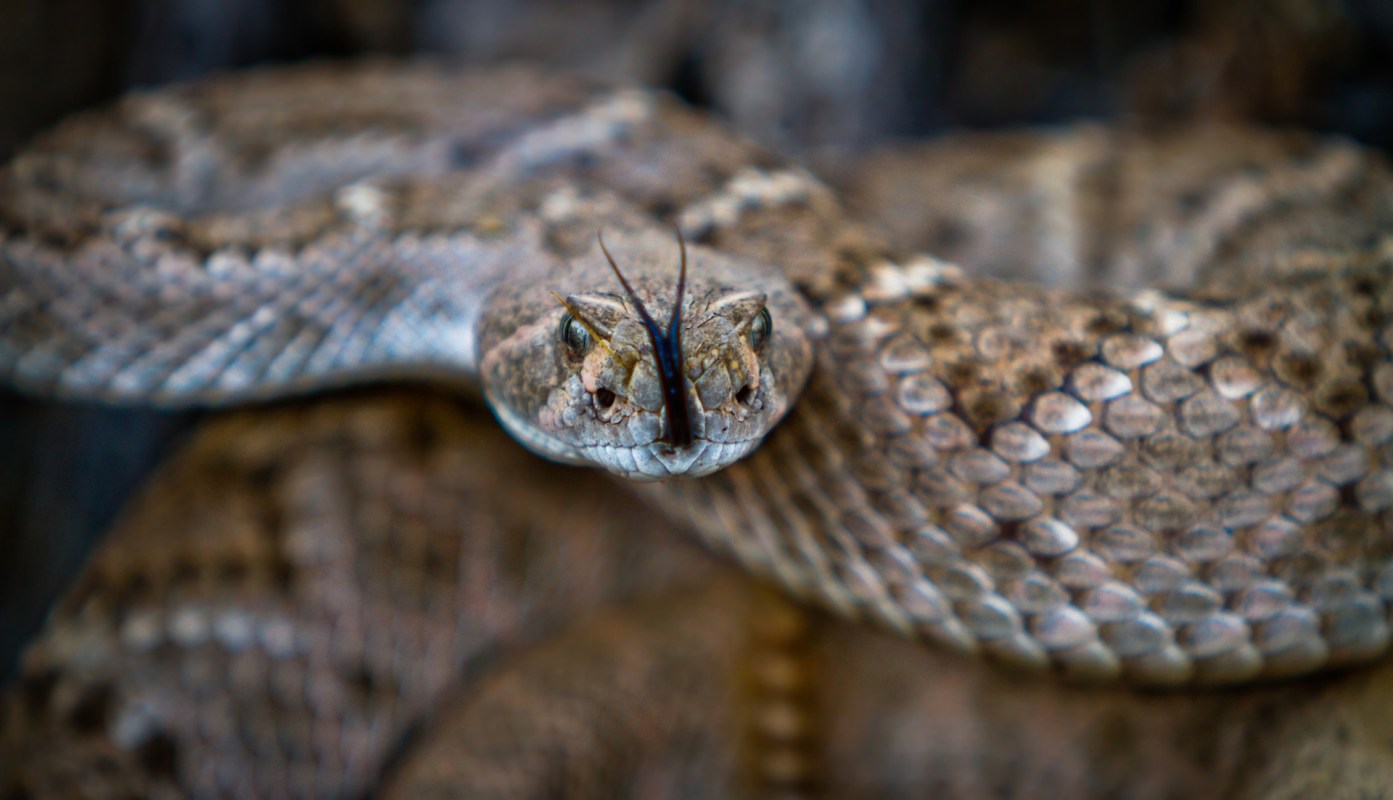
Footage from a trail camera aimed at a western diamondback rattlesnake den offered an unusually close look at several snakes coming out of the opening, including one that appeared to stop and look straight at the lens.
Much of the discussion centered on what the snakes were doing and whether the camera may have influenced the scene.
Here's what to know
"Set up a trail cam on a western diamond back den I found," the original poster said on Reddit. The video shows western diamondbacks just outside of the den entrance, with one remaining near the camera for a moment.
(Click here if the embedded video does not appear.)
Reacting to the setup, one commenter wrote, "Wow! I've never seen a trail cam set for any snake!"
Attention soon shifted to the snake closest to the lens. When one user asked, "What even is guy in back doing," another proposed that the equipment itself could be affecting the animal, writing: "He's got facial pits that detect infra-red. I wonder if the camera's IR light is confusing him by emitting a hell of a lot of IR, not moving and being tiny."
TCD Picks » Quince Spotlight
💡These best-sellers from Quince deliver affordable, sustainable luxury for all




Concerns about protecting the den surfaced almost immediately as well, with one commenter replying to the post: "That's awesome. Please don't share that location with anyone."
More background
Interpretations of the movement in frame varied. One commenter suggested a snake could be following "the scent of a small rodent," only for another user to reply, "No rodent, that's just the second snake's head turning back." The back-and-forth highlighted how easy it is to misread subtle behavior in wildlife footage.
While the infrared theory posited that the snake's behavior was at least partly shaped by human technology, a different commenter floated a less obvious reading, describing the scene as "the beginning or end of the male dominance dance between two males" and as "a rare catch to document in the wild."
What can be done?
While several users asked where the den was, the clearest pushback was the request that the original poster keep the site private. Withholding exact den locations can help limit disturbance from curious visitors.
Commenters also pointed to safer ways to watch snake behavior without crowding wild dens.
One user recommended Project Rattlecam, writing that it has "3 dens in Colorado, California and Pennsylvania you can watch live between May and October."
Where can I learn more?
Seeing snakes in their natural habitat can fuel fascination and intrigue, but direct sightings can also cause panic.
• A rearing snake was filmed repeatedly striking at a camera.
• On California's central coast, researchers launched a live rattlesnake nest cam to demystify the species.
• At Colorado's Garden of the Gods, twisting prairie rattlesnakes battled for breeding rights.
• In Florida, giant snake nest footage captured how fiercely Burmese pythons guard eggs.
• In Arkansas, viral clips showed snakes taking over a vacant home for harmless reasons.

Get TCD's free newsletters for easy tips, smart advice, and a chance to earn $5,000 toward home upgrades. To see more stories like this one, change your Google preferences here.







