


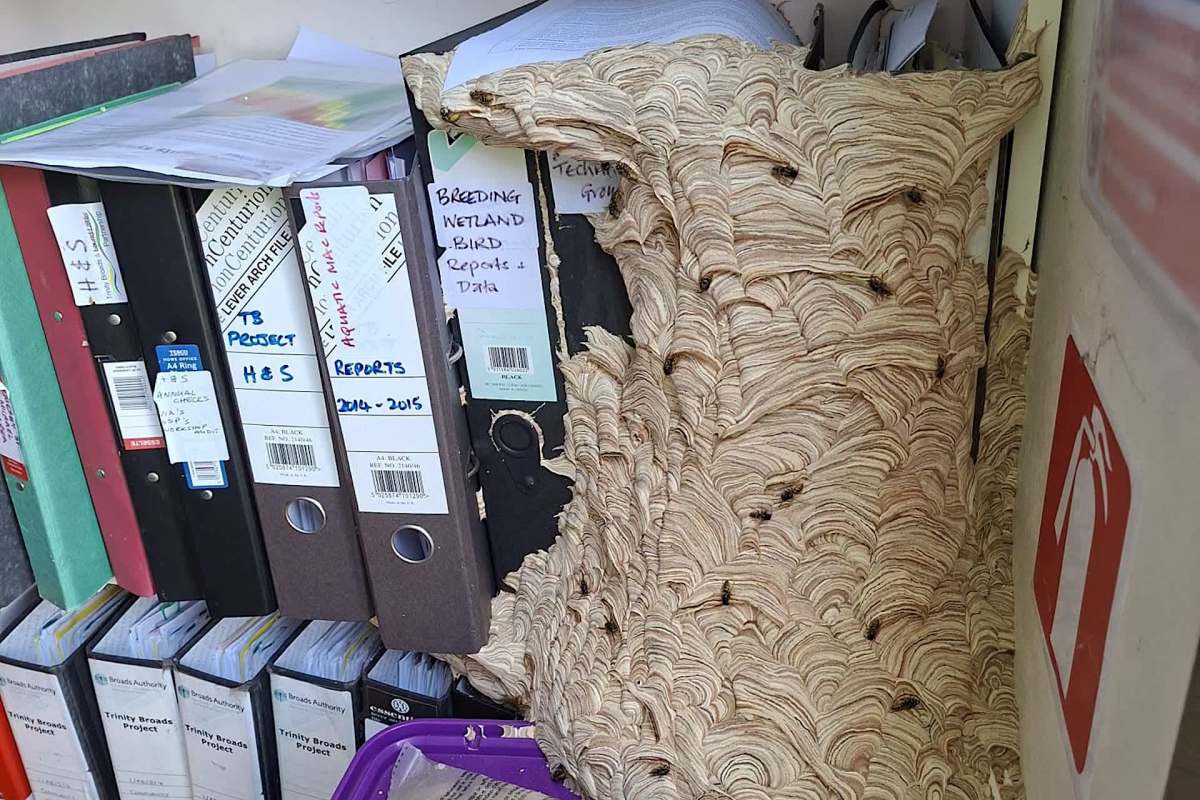
A reserve manager in England is staying out of her office after wasps moved in and made the space unusable, according to the BBC.
Their nest, about 3 feet across, grew around a bookshelf lined with ring binders.
Here's what to know
After spending weeks conducting surveys, Eilish Rothney, the Trinity Broads nature reserve manager at the Norfolk Wildlife Trust, returned to her office in Ormesby St Michael on June 11 and noticed wasps "buzzing round the corner," the BBC reported.
The nest now covers shelving, binders, and boxes in one corner of the room. Rothney said it started at only about "a quarter of the size it is now," but even at that stage, working in the office was not practical.
Instead of destroying it, Rothney has been working from home while the nest remains active. She said the insects' work was unexpectedly beautiful to watch.
"It was just fascinating to watch the wasps coming and going and building up the lovely layers of colour — it looks like exotic paper," she said.
TCD Picks » Quince Spotlight
💡These best-sellers from Quince deliver affordable, sustainable luxury for all




In a post, the Norfolk Wildlife Trust said, "Thousands of new colleagues moved in without permission, skipped recruitment entirely and ignored the office hot-desking policy."
More background
Wildlife often takes advantage of sheltered, quiet human-made spaces when conditions are right. Such encounters, like this one, can happen when animals use structures people have placed in or near habitat they already occupy.
Wasps can sting, and large nests near heavily used areas may require expert assessment. But in some cases, especially when the insects are left undisturbed, coexistence may be possible for a limited time.
Wasps also play important ecological roles, including helping control other insect populations and contributing to local food webs.
What's being done?
In Rothney's case, the plan is to wait it out. The nest is being left alone until autumn, when the wasps are expected to depart naturally.
The BBC explained that the females that emerge will look for places to hibernate and may return next spring as queens, and the workers will gradually die off. That seasonal cycle can make temporary avoidance a sensible option when a nest is not posing an immediate safety threat.
For people who find wasps where they live and work, the safest first step is usually not to panic or swat. Keeping your distance, avoiding sudden movements, and limiting disturbance can reduce the chances of provoking defensive behavior.
It's always a good decision to contact a qualified pest control or wildlife professional rather than trying to remove it alone as well.
"The intention is just to leave it be, and eventually they will all leave," Rothney told the BBC.
She added, "If you keep calm, they will sense that and won't feel threatened."

Get TCD's free newsletters for easy tips, smart advice, and a chance to earn $5,000 toward home upgrades. To see more stories like this one, change your Google preferences here.







