


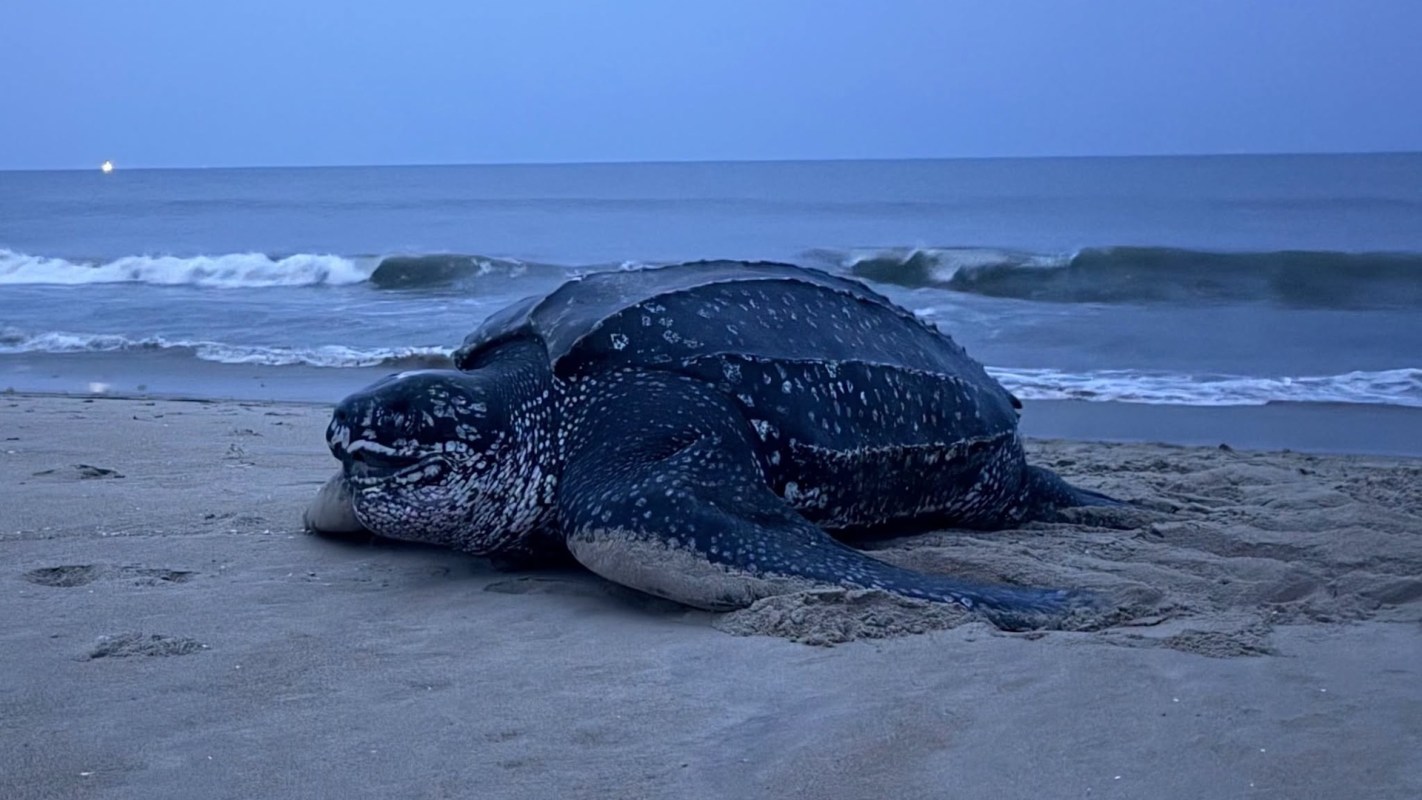
A leatherback sea turtle has made history in Virginia, laying the state's first-ever recorded nest of the endangered species.
The unexpected nesting site was found on a military base in Virginia Beach, where officials quickly fenced off the area to protect the eggs and reduce the risk of disturbance.
What happened?
Near Naval Air Station Oceana Dam Neck Annex in Virginia Beach, officials recently confirmed Virginia's first-ever recorded leatherback sea turtle nest. As Fox Weather reported, the eggs were laid by a leatherback—the largest sea turtle species on Earth.
According to the U.S. Fish and Wildlife Service, personnel at Naval Air Station Oceana located the nest and put barriers around it so the eggs could incubate more safely.
Its location on a security-controlled beach means fewer visitors and fewer of the routine disruptions that can put nests at risk.
Virginia is well north of the places where leatherbacks usually nest, Fox Weather reported, which are more often beaches from Florida through the Caribbean. Adults can grow to about 8 feet long and weigh as much as 2,000 pounds.
TCD Picks » Quince Spotlight
💡These best-sellers from Quince deliver affordable, sustainable luxury for all




Why does it matter?
Sea turtles are highly sensitive to beach conditions, ocean health, light pollution, and human activity. When a species as uncommon and far-ranging as a leatherback successfully nests in a new area, officials pay attention. Such events can offer clues about changing animal behavior and help identify where future protections may be needed.
Coastal ecosystems support wildlife, recreation, local economies, and the resilience of nearby communities.
Even land set aside for purposes other than conservation, including national defense, can benefit wildlife when natural habitat remains intact.
What's being done?
After finding the nest, officials enclosed the area to give the eggs a better chance of hatching safely.
Sea turtle nests can be damaged by foot traffic, curious beachgoers, predators, and other avoidable threats. On a controlled stretch of shoreline, the eggs have a quieter place to develop with less human interference.
Broad, less-developed beaches can provide important nesting space for sea turtles and other animals that struggle to reproduce along busier shorelines.
The next milestone biologists are watching for is the hatch itself. If the eggs do hatch, Virginia's first leatherback nest would become a rare conservation success and a reminder of how protected places can help wildlife persist.

Get TCD's free newsletters for easy tips, smart advice, and a chance to earn $5,000 toward home upgrades. To see more stories like this one, change your Google preferences here.







