


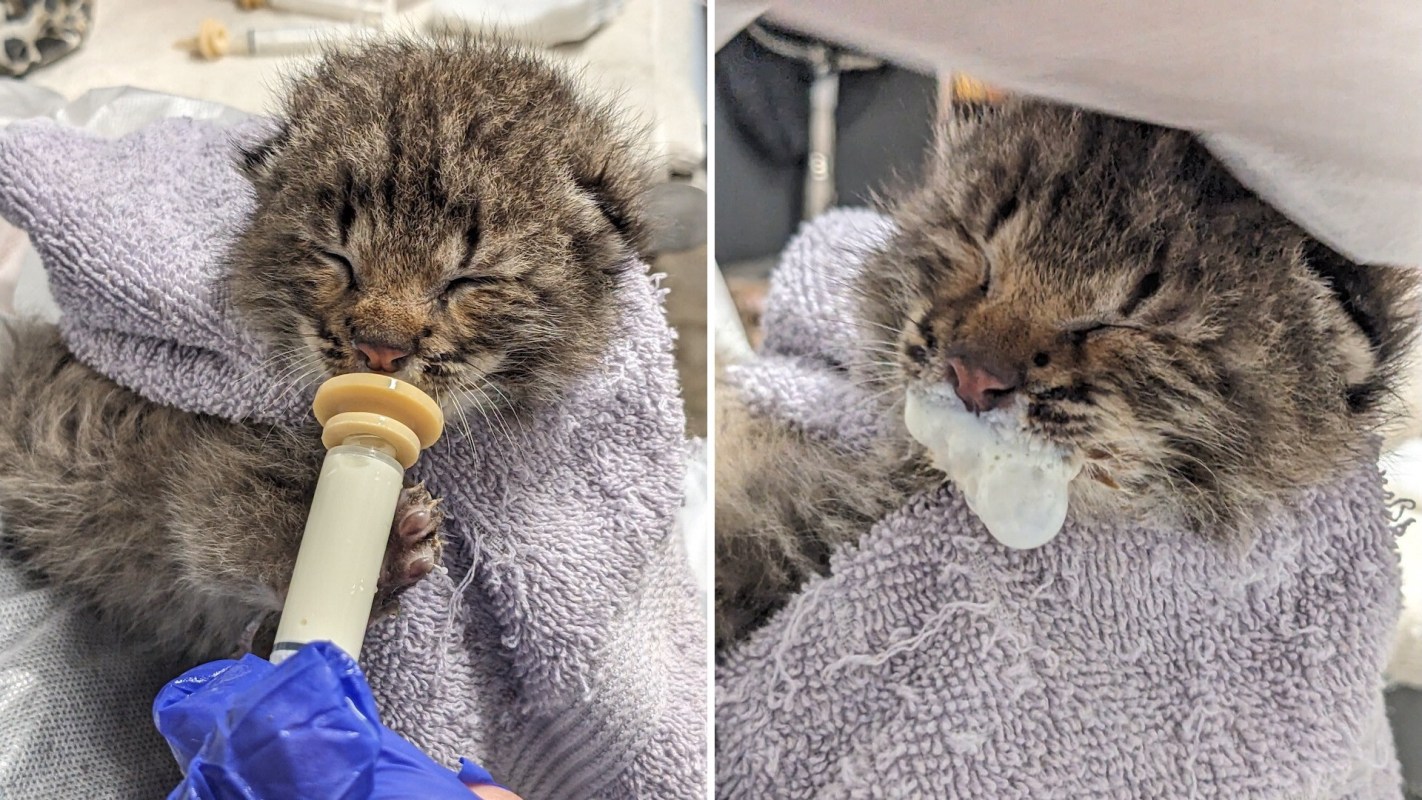
Preventing two tiny bobcat kittens from growing comfortable around people shapes the feeding routine at a wildlife center in Roanoke, Va. Caregivers wear masks and stay silent during feedings since that familiarity can develop in just days, making the careful routine crucial to the kittens' eventual return to the wild.
Here's what to know
The Southwest Virginia Wildlife Center received the kittens on Sept. 28 after land clearing disrupted their Chatham den, according to WSLS 10. They were about five days old, with their eyes still closed.
Now, the pair are growing and doing well. The center's founder and president, Sabrina Garvin, said the kittens opened their eyes roughly 10 days later, WSLS 10 reported.
For the center, Garvin said, these kittens stand out because they were born so far beyond the bobcat's usual spring birthing season.
An inexperienced mother, or one that had returned to heat after losing an earlier litter, could account for the timing. Extreme summer heat and climate shifts are other possibilities. Unfortunately, no explanation is certain, and rescuers may never learn why the kittens were born so late.
More background
Although the team has successfully rehabilitated bobcat kittens before, this is the first time it has cared for four at once, increasing both the workload and the financial demands. Two older bobcats found in the spring were already in the center's care, according to WSLS 10.
TCD Picks » Quince Spotlight
💡These best-sellers from Quince deliver affordable, sustainable luxury for all




Chester Leonard, the center's executive director, explained that housing the younger kittens separately is necessary because of their age difference from the older bobcats, WSLS 10 reported. Footage from the WSLS 10 bobcat camera has shown the older animals observing the newcomers and exploring around them while keeping their distance.
Staff are remodeling the center's fox enclosure for the younger kittens, with the work projected to cost $20,000, WSLS 10 reported. Meanwhile, caring for a pair of bobcat kittens costs an estimated $25,000. Leonard welcomed public donations toward the work.
What's being done?
Masks and silence were part of the feeding routine when a WSLS 10 crew observed it, with both the crew and caregivers taking those precautions to limit the kittens' exposure to humans. Overnight, Garvin and her husband, Lucky, share feeding duties.
Less handling is the plan as solid food replaces the kittens' bottles, Garvin said. Their feeding schedule will continue while they spend warm days at the center.
Leonard said the effort could rank among the lengthiest and costliest rehabilitation cases the center has handled.
Where can I learn more?
These stories follow bobcat recovery and hunting behavior, orphaned bear cubs, and rescued fox cubs.
• In California, a bobcat with fire-scorched paws recovered for 65 days before release.
• In Florida, a camera trap captured a bobcat attacking the world's largest rattlesnake species.
• At New Mexico's lone bear rehab, orphaned cubs learn to forage without their mothers.
• In Ontario, two orphaned bear cubs rescued near rail tracks are preparing for release.
• In England, three fox cubs rescued from a narrow gap between houses returned to freedom.

Get TCD's free newsletters for easy tips, smart advice, and a chance to earn $5,000 toward home upgrades. To see more stories like this one, change your Google preferences here.







