


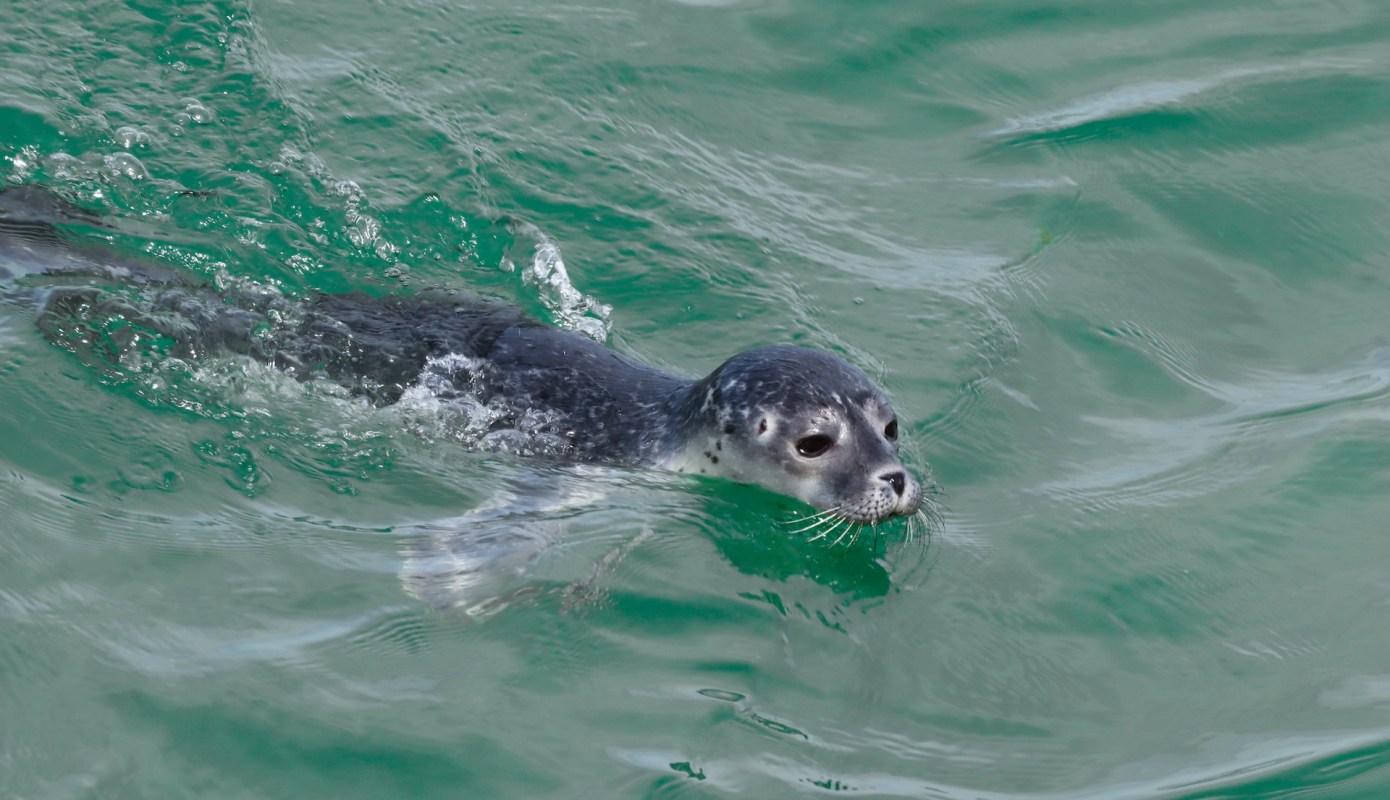
At an RSPCA wildlife center in Cheshire, England, staff are tube-feeding five orphaned seal pups a "fish soup" diet as they work to help the underweight animals survive.
Drawn from rescues in Wales, Cheshire, and Northumberland, the cases also show how heavily the United Kingdom's busy grey seal breeding season relies on coastal communities and volunteers.
Here's what to know
RSPCA Stapeley Grange Wildlife Centre in Nantwich is especially busy during the October-November grey seal breeding season because young pups can lose contact with their mothers before they are fully weaned, Nation.Cymru reported. Many are brought in dehydrated and underweight, with some also needing care for injuries.
Among the five pups now in care are McFly, brought in from Porth-isallt beach on Holy Island, Anglesey; Pink, taken from Llanrhystud beach in Ceredigion after being monitored for three days; and Abba, found by the River Dee in Cheshire with a small wound to her side.
RSPCA Stapeley Grange Manager Lee Stewart described how intensive this kind of rescue can be.
"Orphaned seals are very vulnerable and require an enormous amount of specialist care," Stewart said.
TCD Picks » Quince Spotlight
💡These best-sellers from Quince deliver affordable, sustainable luxury for all




Only about a dozen U.K. wildlife rescue centers are equipped to rehabilitate seal pups.
Each seal begins in an isolation unit under veterinary supervision. Once it can feed on its own, it moves to outdoor pools, then to the deeper-pool facilities at RSPCA East Winch Wildlife Centre or RSPCA West Hatch Animal Centre for the final stage of rehabilitation.
More background
Rescues often begin with British Divers Marine Life Rescue volunteers reaching remote beaches, while the UK Wildlife Transporters network helps bring the pups onward to Stapeley Grange.
The center's naming theme is veteran pop acts, following a pudding theme. Two older pups, Spotted Dick and Yum Yum, were rescued from the Northumberland coast and treated with antibiotics for mouth rot, a disease the RSPCA said can be life-threatening. Spotted Dick also had a flipper wound.
The work is becoming more demanding as the seal population grows and more pups need help.
Nation.Cymru reported that a six-week-old seal found collapsed on a Skinburness beach near Silloth in Cumbria was assessed by a marine vet and later put to sleep after rescuers discovered a broken flipper and multiple abscesses.
A seal pup named Sturgeon, rescued in Cumbria and later returned to the North Wales coast in 2020, was seen on October 17 with her own newborn pup.
What can be done?
The RSPCA says people should not assume a seal pup alone on a beach needs rescuing, as mothers may leave pups alone for extended periods while they go out to sea to feed.
If the pup appears fit and healthy and does not seem distressed, the best step is to monitor it for 24 hours.
People should keep their distance, avoid trying to push the animal back into the water, and keep children, dogs, and other animals well away.
If a seal pup is injured, clearly in distress, or still alone after 24 hours, the public should call British Divers Marine Life Rescue or the RSPCA so trained responders can decide whether intervention is needed.
Nation.Cymru reported that Stapeley Grange's fish bill for seal pups is about £10,000 (around $13,000) a year, and the center said donations through its JustGiving page can help cover the cost of feeding and rehabilitation.
Where can I learn more?
Rescues like this are part of the expansive work of rehabilitating young marine mammals that end up stranded, orphaned, or injured.
• At the Alaska SeaLife Center, six harbor seal pups entered rehab after separate strandings and injuries.
• Off Haida Gwaii, two injured harbour seal pups returned to the wild after three months of care.
• Along Namibia's coast, rescuers freed two young seals tangled in an abandoned trawler net.

Get TCD's free newsletters for easy tips, smart advice, and a chance to earn $5,000 toward home upgrades. To see more stories like this one, change your Google preferences here.







