


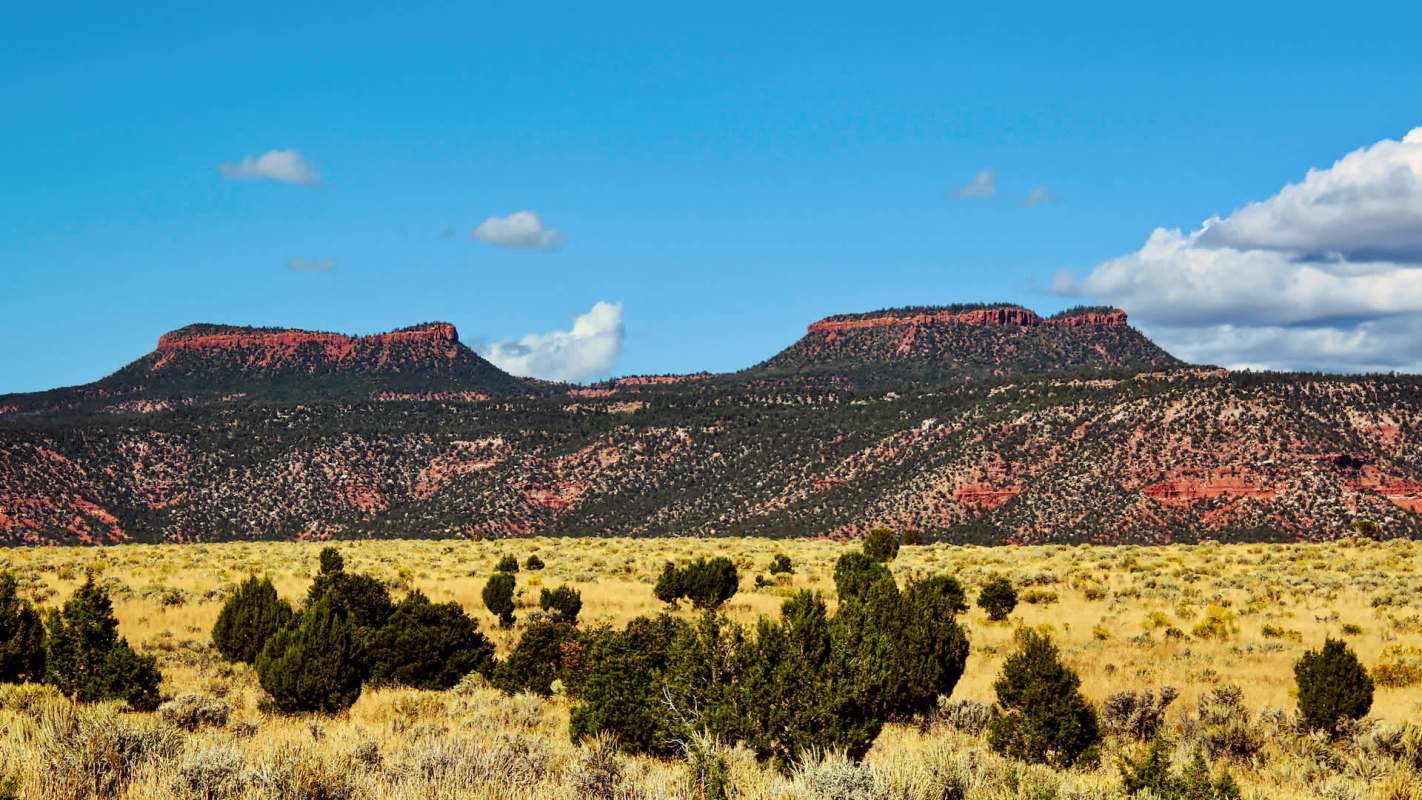
More than 2 million acres of sacred Utah lands are at the center of a legal fight as Tribal Nations challenge President Donald Trump's attempts to strip them of national monument status.
The lawsuits seek to protect ancestral burial grounds, ceremonial sites, and the Tribes' role in caring for their ancestral homelands.
Here's what to know
The Native American Rights Fund is challenging the attempted revocation of national monument status for Bears Ears and Grand Staircase-Escalante in two lawsuits. It filed the cases in federal district court in Washington, D.C., on Nov. 18, 2026, according to Native News Online.
The Hopi Tribe, Pueblo of Zuni, and Ute Mountain Ute Tribe are plaintiffs in the Bears Ears case. The Ute Mountain Ute Tribe is also a plaintiff in the Grand Staircase-Escalante case, alongside the Kaibab Band of Paiute Indians and Paiute Indian Tribe of Utah.
Tribal Nations have a formal role in overseeing Bears Ears through the Bears Ears Commission. Their lawsuit also contests the administration's attempt to dismantle that body.
According to NARF, the administration sought to end required federal consultation with the commission, threatening Tribal participation in decisions about their ancestral homelands.
TCD Picks » Quince Spotlight
💡These best-sellers from Quince deliver affordable, sustainable luxury for all




More background
Trump first sought to strip both monuments of protections through presidential proclamations in 2017, then acted again in 2026, according to Native News Online.
"It's where our citizens travel to pray and to gather plants and medicines necessary for religious ceremonies. These are sacred lands, not potential mining sites," said Paiute Indian Tribe of Utah Chairwoman Laurel Yellowhorse of Grand Staircase-Escalante.
Hopi Tribe Vice Chairman Mikah Kewanimptewa pointed to Bears Ears' ancestral rock markings, artifacts, and landmarks as records of Tribal history.
What's being done?
The lawsuits ask the court to block implementation of the administration's directives, preserving monument protections and existing Tribal stewardship arrangements.
The Pueblo of Zuni is represented in the Bears Ears case by both NARF and Sonosky, Chambers, Sachse, Mielke & Brownell, LLP, according to Native News Online.
The legal argument rests partly on the 1906 Antiquities Act, which allows presidents to create monuments that safeguard historic landmarks, structures, and items of historical or scientific significance.
"The Antiquities Act of 1906 authorizes the president to declare national monuments. It does not give the president the power to revoke existing monuments. That power lies with Congress alone. The court should block implementation of these unlawful directives," said NARF Deputy Director Matthew L. Campbell.
Zuni Head Councilman Anthony Sanchez said, "These lands are an unbroken record of who we are and where we come from. It is our sovereign right as Tribal Nations to steward this land for generations to come."

Get TCD's free newsletters for easy tips, smart advice, and a chance to earn $5,000 toward home upgrades. To see more stories like this one, change your Google preferences here.







