


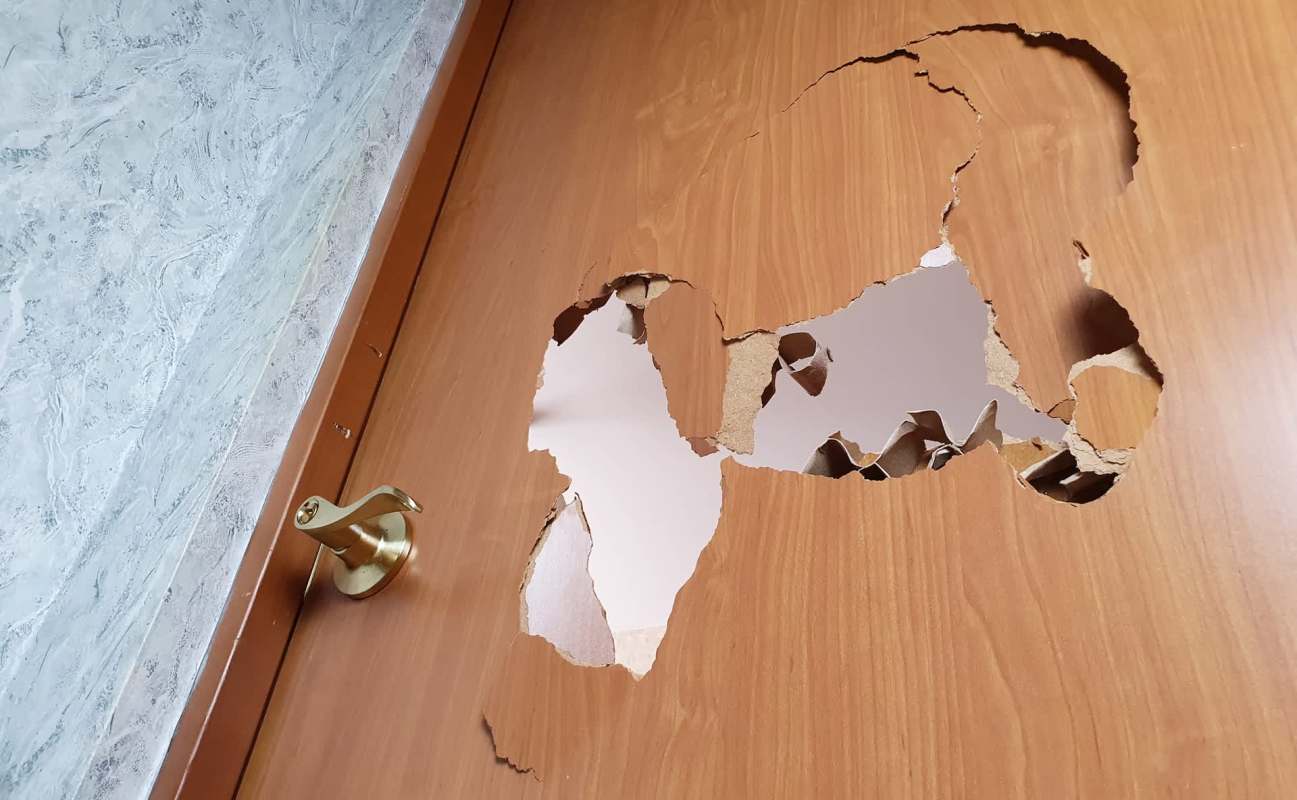
What began as an ordinary hotel stay on the Tibetan Plateau became a tense wildlife encounter when a brown bear forced its way through a guest room door and confronted the person inside.
No one was injured, but the incident highlighted an important issue of the growing overlap between people and wildlife in some parts of the world.
What happened?
UPI, as cited by BroBible, said a Tibetan brown bear entered a hotel in Nagqu, Tibet, on July 4.
In a surveillance video shared by Shanghai Daily on X, the bear can be seen striking the room door again and again until it gives way. The guest inside then appears to pause and look at the animal for a few seconds before the bear heads off through the rest of the hotel.
A Tibetan brown bear wandered into a hotel lobby in Nagqu, Tibet, on July 4 before climbing to the second floor and pushing open a guest room door with its paws.
— Shanghai Daily (@shanghaidaily) July 5, 2026
The owner rushed over with a flashlight and tools to scare the bear off. No one was hurt. The hotel has since added… pic.twitter.com/FpUiXtVWDa
The animal had already entered through the front of the hotel and ripped through the front desk area, where it was said to be seemingly searching for bottled water, UPI stated. Afterward, the owner showed up with a flashlight and tools and managed to scare it off. No injuries were reported.
That happened on a vast plateau north of the Himalayas where human-bear encounters are already a known issue. Research published earlier this year estimated that about 6,300 Tibetan brown bears — a subspecies adapted to the region's harsh, high-altitude environment — inhabit the nearly 970,000-square-mile Tibetan Plateau.
TCD Picks » Quince Spotlight
💡These best-sellers from Quince deliver affordable, sustainable luxury for all




Why does it matter?
As shocking as the incident was, it reflects a broader pattern: Wild animals are more likely to come into contact with people when human settlements, roads, lodging, and food storage systems expand into or near their habitat.
In these high-altitude areas, Tibetan brown bears regularly clash with nomadic herders and other local communities, and some incidents involve animals entering homes in search of food. Here, the bottled water stored at the front desk may have been enough to draw the bear in.
Repeated access to human buildings can increase the likelihood of future conflict, which often ends badly for the animal.
It is also a reminder that so-called nuisance behavior is often tied to human activity. When buildings, waste, or food supplies become easier to access, wild animals may take risks they otherwise would avoid. Wild animals like bears can turn up even in city areas where you wouldn't imagine finding one — a black bear surprised a man in a close encounter under a bridge in downtown Gatlinburg, Tennessee, eventually wandering away without any incident.
What's being done?
The owner has reportedly already started making the hotel more difficult for bears to get into.
For hotels and homes in bear country, that can mean reinforcing doors and windows, keeping lobbies and storage areas free of accessible food and drinks, securing garbage, and training staff on how to respond if an animal gets inside. Even small attractants can make a major difference.
Avoiding the storage of snacks in easy-to-reach places, quickly reporting signs of wildlife activity, and following local safety guidance can also significantly reduce risks.
Communities in areas abundant with wild animals often need some combination of better building design, safer waste management, and planning that accounts for animal movement patterns. Such measures can protect people while reducing situations that teach bears to associate hotels or homes with easy rewards.
The Nagqu break-in ended without injuries, and the owner has reportedly moved to "bear-proof" the hotel. In places where human development and wildlife habitat overlap, that kind of preparation can help prevent a frightening encounter from becoming something much worse.

Get TCD's free newsletters for easy tips, smart advice, and a chance to earn $5,000 toward home upgrades. To see more stories like this one, change your Google preferences here.







