


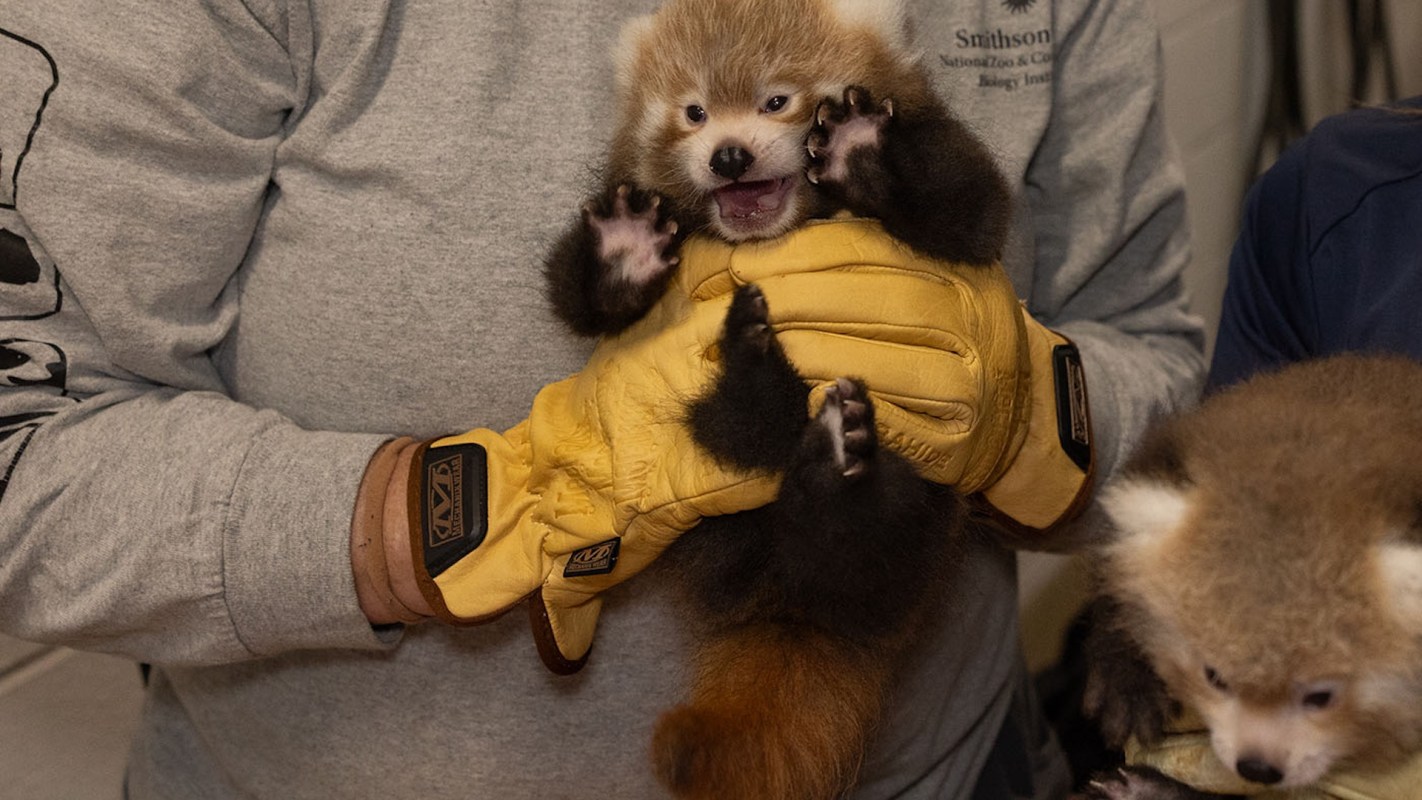
At the Smithsonian's National Zoo and Conservation Biology Institute's Conservation Campus in Front Royal, Virginia, staff are caring for three new red panda cubs, a welcome development for an endangered species facing pressures worldwide.
The public will have to wait to see them, though, as the cubs are not yet on display.
Here's what to know
Their births were split between two litters that arrived a few weeks apart.
Sequoia, a 3-year-old red panda, gave birth to twins on May 29, one boy and one girl, with 12-year-old male Mow Mow as the father. Then, a short time later, on June 11, 3-year-old red panda Keahi gave birth to a female cub, with 7-year-old Rocket as her father.
Keepers are now following the babies' progress through cameras placed inside the nest boxes, which allows staff to observe the mothers and cubs without unnecessary disturbance. That matters especially in the first weeks, when bonding, nursing, and early growth are at their most sensitive.
Because red pandas are endangered, the Conservation Campus contributes to wider conservation efforts by maintaining genetically diverse populations under the supervision of human care.
TCD Picks » Quince Spotlight
💡These best-sellers from Quince deliver affordable, sustainable luxury for all




In the Smithsonian National Zoo's press release on these births, Jessica Kordell, the assistant carnivore curator, explained that "the cubs are really just balls of fur that eat and sleep right now."
More background
A visit with these newborns is not possible just yet. They are being kept at the Front Royal campus, which is closed to the public, rather than at the National Zoo in Washington, D.C. As a result, visitors will not be able to see these cubs on the Zoo's Asia Trail.
Visitors in the District can still see a red panda, though. Per the zoo's press release, adult female red panda Asa lives on the National Zoo's Asia Trail and is the red panda on view in D.C. The Smithsonian has previously noted that red pandas are often most active around dawn and dusk, which may help guests plan their visit if they're especially interested in seeing one.
Any timeline for a possible move of the newborns remains unclear. The Smithsonian has not provided a timetable and has not confirmed whether these cubs will be transferred to the D.C. zoo, per Secret DC.

Get TCD's free newsletters for easy tips, smart advice, and a chance to earn $5,000 toward home upgrades. To see more stories like this one, change your Google preferences here.







