


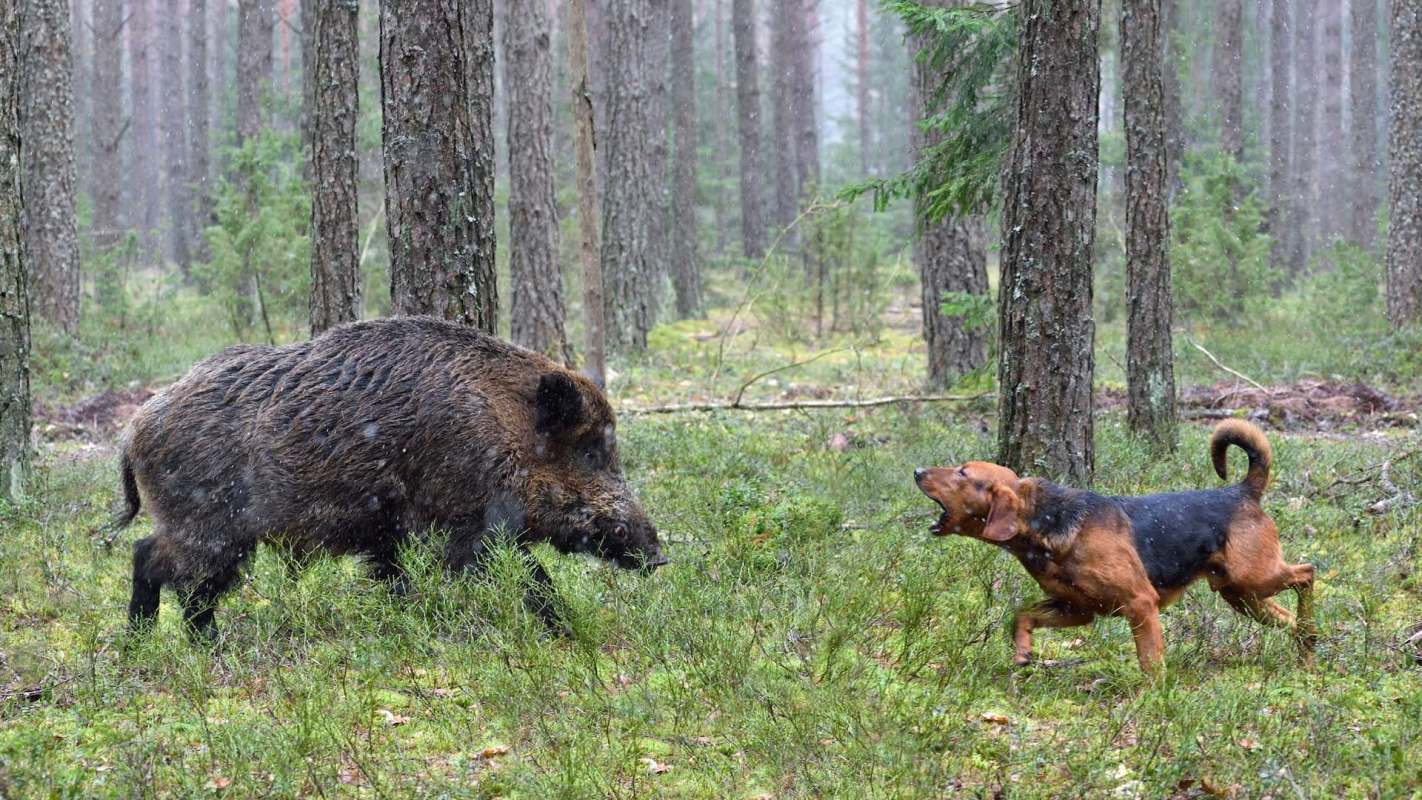
After other deterrents failed to stop repeated crop raids, farmers in Tamil Nadu's Thoothukudi and Virudhunagar districts began hiring packs of native hunting dogs to run down and kill feral pigs.
Each operation may deploy 100 to 150 dogs from native breeds including Kanni, Chippiparai, Rajapalayam, and Kombai.
Here's what to know
Across the rainfed belts of Kovilpatti, Kayathar, Ottapidaram, Ettayapuram, Vilathikulam, and Pudur, as well as the paddy-growing areas of Srivaikuntam and Karungulam, farmers say herds of pigs come into fields at night during the northeast monsoon.
According to The New Indian Express, the animals frequently hit maize and also damage paddy and millet crops.
To tackle the raids, farmers are calling in hunting dog breeders from the seven-village Ezhupatti cluster in Ettayapuram and from Singilipatti, Sinnavan Nayakkanpatti, and Poosaripatti near Sivakasi.
Farmers pay for the dogs' food and transport, with one day of hunting costing about Rs 50,000 to Rs 60,000 ($526.62 USD to $631.94 USD).
TCD Picks » Quince Spotlight
💡These best-sellers from Quince deliver affordable, sustainable luxury for all




Describing how the hunts work, a hunter said, "The dogs are let into thorny bushes and areas covered by seemai karuvelam, where the feral pigs take refuge. A dog can hunt two to three pigs. The dogs kill the pigs and drag the carcass to us."
More background
Testing by the Advanced Institute for Wildlife Conservation identified the animals damaging crops as domestic pigs rather than wild boars.
The finding suggests the conflict is at least partly linked to human activity, since the pigs are believed to be domestic country breeds that have gone feral and are now damaging farms.
Because they were not classified as wild boars, farmers are left without the compensation route that might have been available for wildlife-related crop damage.
In this case, maize, millet, and paddy fields are vulnerable during a key growing season.
For households that depend on rainfed agriculture, repeated night raids can turn a short-term crop into a major financial setback, especially when the animals arrive in huge herds.
What's being done?
The forest department recommended biological and preventive measures to deter pigs, such as spraying repellents around field edges.
Farmers say those efforts still failed to prevent enough damage.
As a result, they have shifted to an expensive response that relies on organized packs of native hunting dogs.
Search efforts concentrate on the thorn scrub and seemai karuvelam cover where the pigs tend to hide.
The hunter quoted in the report said, "The dogs hunt nearly 200 to 300 pigs in a day. We take away the meat."
A senior forest official said, "Had they been identified as wild boars, provisions of the Wildlife Protection Act could have applied, and farmers could have sought compensation for crop damage. The state government has also issued a GO to the forest department to kill wild boars damaging crops."
Where can I learn more?
Farmers and officials elsewhere face similar damage as pig populations tear up crops, property, and public spaces. These articles track feral hogs and wild boars as communities struggle to contain them.
• Across the United States, feral swine aren't slowing down, and hunting still does not keep pace.
• In Kerala, a boar smashed into a store, gored a shopkeeper, and fled onto a highway.
• In Gurdon, Arkansas, feral hogs wreak havoc on yards by rooting with their snouts.

Get TCD's free newsletters for easy tips, smart advice, and a chance to earn $5,000 toward home upgrades. To see more stories like this one, change your Google preferences here.







