


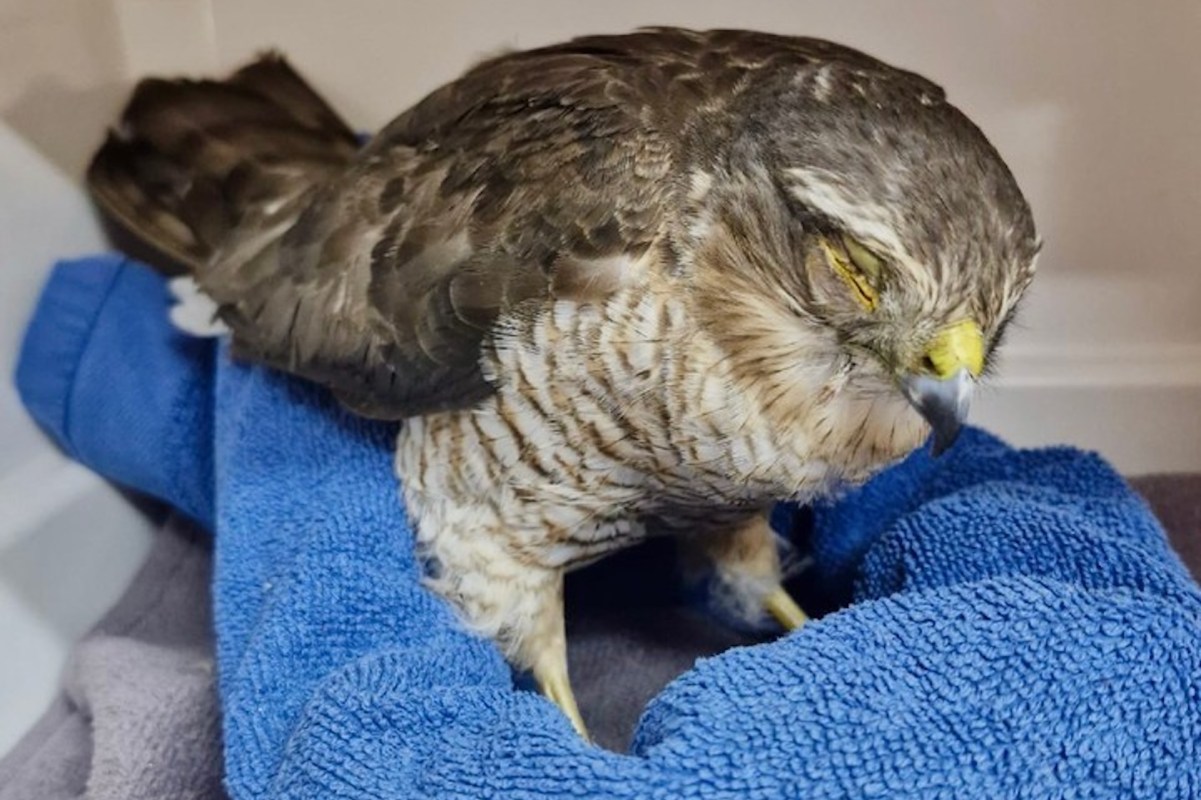
A sparrowhawk was rushed to a wildlife hospital in England after being hit by a vehicle, leaving her unable to open one eye.
What happened?
According to a July 11 Instagram post from Wildlife Aid, eyesight is the sense birds like this rely on most to survive. Reduced vision can make hunting harder, reduce their ability to spot threats, and complicate fast movement through the spaces around them.
The rescue organization wrote: "Silent, frightened and in obvious pain, her right eye was swollen completely shut."
Wildlife Aid said the bird was treated without delay, with the veterinary team providing pain relief, medication, and specialized care. In just two weeks, the bird made a remarkable recovery, and its release back into the wild was imminent.
Commenters expressed relief for her improvement and for Wildlife Aid's work.
One user mentioned how human impacts can pose threats to wildlife: "So sad for animals to be hit by us. Always be aware of your surroundings!"
TCD Picks » Quince Spotlight
💡These best-sellers from Quince deliver affordable, sustainable luxury for all




Why does it matter?
Roads are a constant hazard for animals, and birds can be especially vulnerable when flying low, scanning for prey, or crossing traffic corridors.
When an injury involves the eye, the danger goes far beyond the initial impact. For birds, losing vision can become fatal. Quick medical treatment can mean the difference between a temporary setback and a permanent loss of survival ability.
However, wildlife hospitals can only do this work if the animal is reported in the first place, ensuring quick transport to trained professionals. Rescue organizations, veterinarians, and concerned residents all play a role in getting injured wildlife the care it needs.
Returning an animal to the wild ensures it continues to play its role in the ecosystem. Birds of prey, for example, help with seed distribution and pest control, which can support biodiversity and reduce the spread of disease.
What's being done?
Driving carefully, keeping an eye on the speed limit, and checking for wildlife crossing signs can reduce the risk of strikes, especially on smaller roads.
If you come across an injured wild animal, the safest option is usually to contact a licensed wildlife rehabilitator or local rescue group rather than trying to provide treatment yourself.
As Wildlife Aid put it, "Her story is an important reminder that road traffic accidents are one of the biggest threats facing British wildlife."

Get TCD's free newsletters for easy tips, smart advice, and a chance to earn $5,000 toward home upgrades. To see more stories like this one, change your Google preferences here.







