


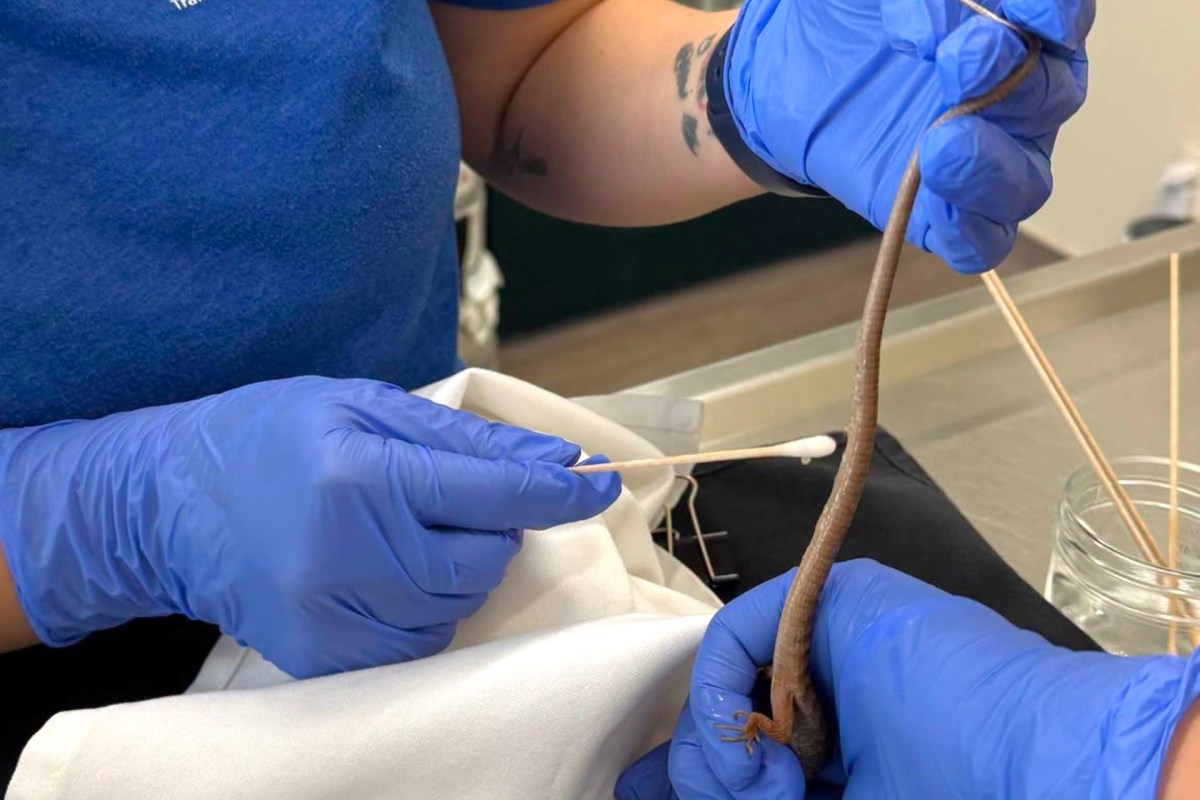
Two wild animals were rescued in Southern California after getting caught in glue traps.
Here's what to know
Pasadena Star-News reported on Pasadena Humane returning a juvenile rattlesnake and a Southern Alligator Lizard back into the wild after glue traps left them dangerously stuck.
The local Southern Alligator Lizard arrived at the rescue center with about three-quarters of its body attached to a glue trap. Removing the adhesive and freeing the reptile took staff two full days, after which they released it.
The young rattlesnake came from a foothill-area home, where residents had tossed glue traps at it to immobilize it. Staff took extra precautions handling the venomous snake, using anesthesia, and spent about two hours using cornmeal and mineral oil to work off the adhesive, and then used a warm bath to clear the rest. It was released back into the wild after two nights, once it was moving, coiling, and rattling normally.
These two were lucky. Not every animal caught in a glue trap gets that second chance.
More background
Pasadena Humane said reptiles are far from the only creatures caught by these devices. Birds, kittens, and other animals have also been brought in after getting stuck.
TCD Picks » Quince Spotlight
💡These best-sellers from Quince deliver affordable, sustainable luxury for all




According to Eduardo Ochoa-Guijarro, who oversees Pasadena Humane's humane exclusion program, glue traps meant for mice and rats are indiscriminate and can capture any animal that crosses them.
The organization said the danger often starts with just a small patch of contact, but an animal's frightened struggle to escape can spread the adhesive across much more of its body. By that stage, the animal may be fully immobilized and suffer severe harm, including broken bones.
Glue traps have been banned and restricted in many communities and cities because they can cause long bouts of suffering if the animals aren't rescued right away. If not found, they can die from stress, pain, dehydration, or starvation, making them inherently inhumane.
What can be done?
Prevention is key. Secure food scraps and trash, clean grills after use, remove standing water, reduce outdoor clutter, and keep branches and shrubs away from the house to make your home and yard less inviting.
Humane exclusion measures prevent animals from getting inside homes. Sealing entry points, securing food sources, and using wildlife-conscious prevention strategies can reduce conflict without harming non-target animals.
Where can I learn more?
These articles show how much wildlife outcomes hinge on human decisions. They also track the range of responses, from hands-on rescue work to bigger conservation and control efforts.
• In Louisiana, biologists released a rare batch of hatchlings as restoration efforts continued.
• In Florida, officials offered cash prizes during a major invasive python roundup in the Everglades.
• In Essex County, volunteer rescuers freed a woodchuck in danger at the sheriff's department.
Across very different situations, it's a useful reminder that humane choices matter both before an animal is in trouble and after it's found.

Get TCD's free newsletters for easy tips, smart advice, and a chance to earn $5,000 toward home upgrades. To see more stories like this one, change your Google preferences here.







