


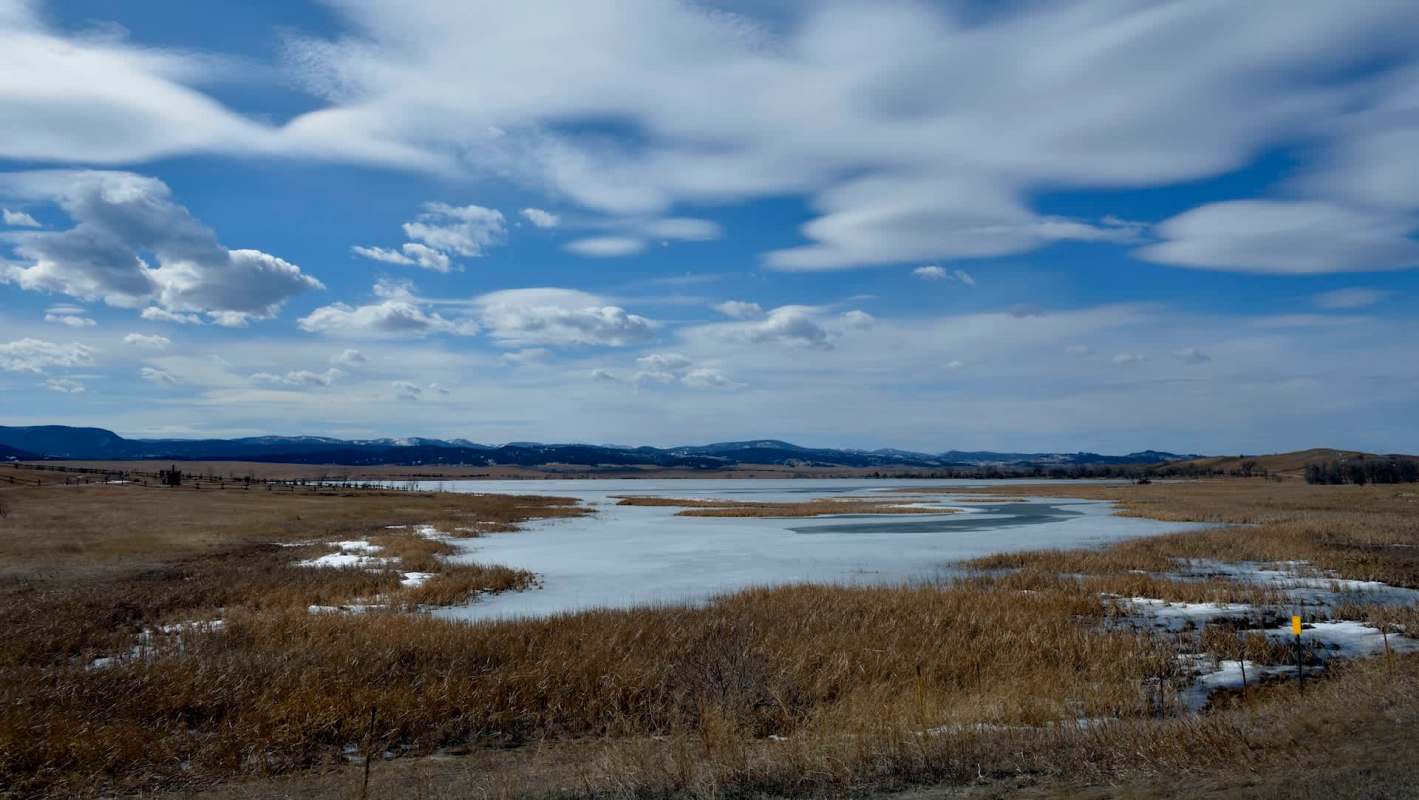
A South Dakota lake that normally covers 215 acres has dwindled to a strip of water just inches deep, underscoring the state's growing water challenges.
Here's what to know
Exposed lake bottom dominates the view from a fishing pier at Bear Butte State Park near Sturgis.
Meeting the water needs of South Dakota's growing population is becoming harder as prolonged drought coincides with increased demand from homes, businesses, and farms, according to South Dakota News Watch.
With available supplies already committed under existing water rights contracts or groundwater reserves dwindling, some rural water systems in eastern South Dakota have no capacity to serve new customers.
Communities supplied by the Big Sioux Aquifer, including those around Sioux Falls, are facing shortages, too. In western South Dakota, wells serving ranches and homesteads are running low or dry, and parts of the Black Hills' Spring Creek have stopped flowing.
Jay Gilbertson, who manages the East Dakota Water Development District, warned that water withdrawals cannot keep increasing indefinitely. "It's definitely a statewide issue," Gilbertson said. "If we continue to draw too much water, we're going to be in trouble."
TCD Picks » Quince Spotlight
💡These best-sellers from Quince deliver affordable, sustainable luxury for all




More background
Bear Butte Lake normally reaches a depth of 15 feet and supports walleye, crappie, catfish, and waterfowl. With no spring or creek feeding it, the lake depends on precipitation.
South Dakota Game, Fish and Parks fisheries supervisor Jeremy Kientz pointed to low precipitation as the main cause of the lake's depletion.
Demand for underground water supplies is also growing. According to U.S. Geological Survey data cited in the report, fewer than a dozen municipal wells drew from aquifers in four major Black Hills counties in 1960. That number has since grown to nearly 100.
Increasingly severe drought threatens lives and livelihoods by straining drinking-water supplies essential to public health and community safety.
What's being done?
Water systems are pursuing expansions that could total $13 billion over several decades, according to South Dakota News Watch.
Projects to deliver more Missouri River water to eastern South Dakota are underway or in planning, while a proposed pipeline serving the Black Hills is under study.
South Dakota News Watch reported that Rapid City Republican State Senator Helene Duhamel sponsored Senate Bill 231 during the 2026 legislative session. The measure passed, establishing a Water Infrastructure Development Fund with $3 million in state funding for loans and grants for rural water projects.
Duhamel said she plans to seek additional funding during the 2027 session, potentially drawing on contractors' excise taxes or unclaimed property money.
South Dakota News Watch reported that water experts are calling for conservation and reuse of water supplies until pipeline projects come online.
State Representative Mike Derby co-chaired a legislative work group that held two meetings to brief lawmakers on water systems and emerging shortages.
"Water is life, and there's nothing more basic," Duhamel said. "It's also the fuel for economic development because if we want to grow this state, we can't do it without water."
Where can I learn more?
Drought is straining water supplies for communities and farms well beyond South Dakota.
• Rapid City extended year-round watering rules after Pactola Reservoir moved to alert status.
• A Colorado town feared losing its water supply after a river ran dry.
• A Massachusetts city considered buying water with its main reservoir only 20% full.
• An eastern Montana rancher turned to portable tanks for cattle as drought dried water sources.
• Drought exposed a dry lakebed at North Carolina's Lake Townsend, where a resident filmed.

Get TCD's free newsletters for easy tips, smart advice, and a chance to earn $5,000 toward home upgrades. To see more stories like this one, change your Google preferences here.







