


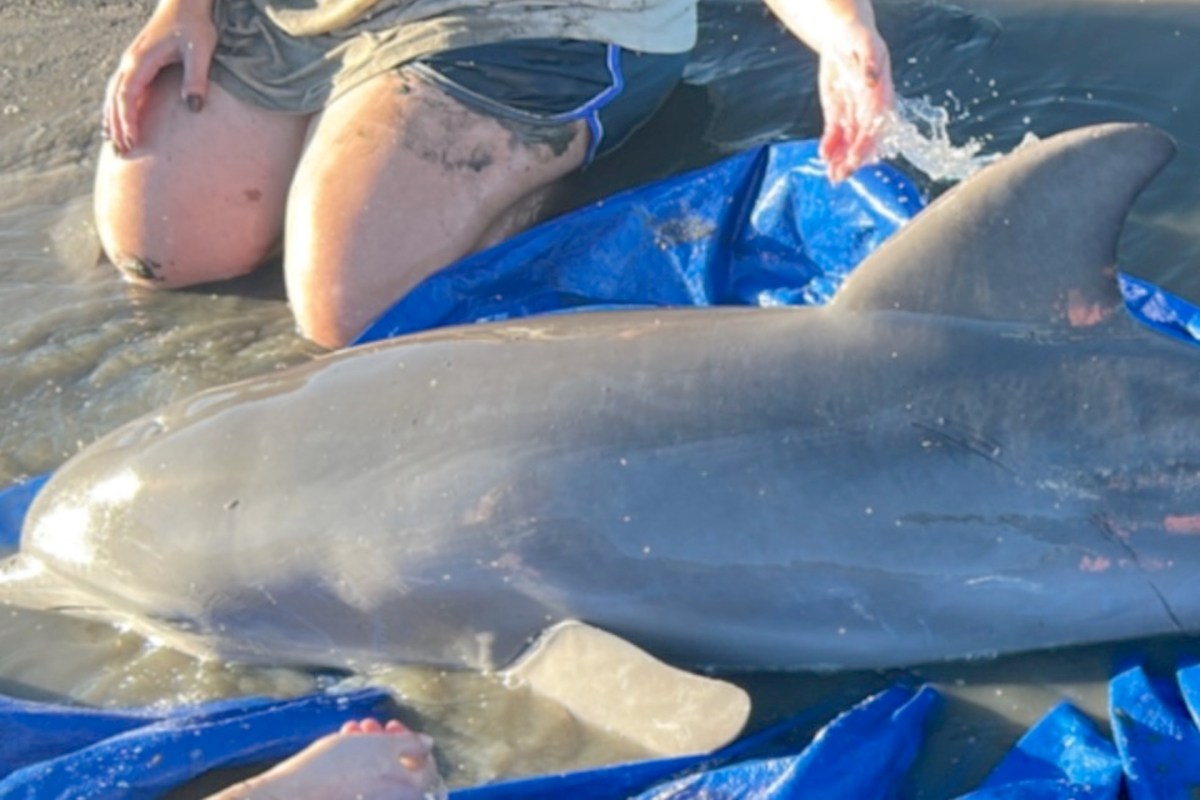
A stranded bottlenose dolphin was in a precarious position with daylight fading fast. Happily, trained volunteers were able to free the juvenile and help it back to sea.
Here's what to know
After receiving a report of a stranded dolphin, the Lowcountry Marine Mammal Network (@lowcountry.marine.mammals) sent four volunteers to a sandbar near Ridgeland, South Carolina, on Nov. 8. Receding water had left the animal stranded there. Moultrie News reported that the incident was LMMN's second dolphin rescue of the day.
Volunteers Ariel Avant, Alyssa Marian, Elliot Rousseau, and Jack Harvey kept the dolphin's skin wet while they waited for the tide to rise. They received additional help from Amber Kuehn, a volunteer for Hilton Head Island's team, who arranged a stretcher for the response.
As the tide rose, the team helped the dolphin off the sandbar and back to sea.
"Good Job, Crew!" an Instagram user remarked.
More background
Volunteers had been deployed along South Carolina's coast for four marine mammal strandings over a 10-day period, according to Moultrie News.
TCD Picks » Quince Spotlight
💡These best-sellers from Quince deliver affordable, sustainable luxury for all




The successful live rescue was a reason to celebrate after LMMN had previously received a report of a dead dolphin in the area. The previous week, the organization — South Carolina's only marine mammal stranding team with federal authorization — had also responded to a deceased humpback whale, whose cause of death is still under investigation.
In addition to rescuing live animals, responders document deceased marine mammals to gather information that helps guide efforts to protect them.
The LMMN team measured and photographed the deceased dolphin for its records.
What can be done?
Trained volunteers across South Carolina help LMMN assist stranded animals and gather critical scientific information. Residents should seek guidance from authorized stranding responders before approaching a marine mammal or trying to push it or return it to the water, LMMN advises. Federal law protects these animals.
The Lowcountry Marine Mammal Network takes reports of stranded, injured, or deceased marine mammals along South Carolina's coastline at 1-800-922-5431.

Get TCD's free newsletters for easy tips, smart advice, and a chance to earn $5,000 toward home upgrades. To see more stories like this one, change your Google preferences here.







