


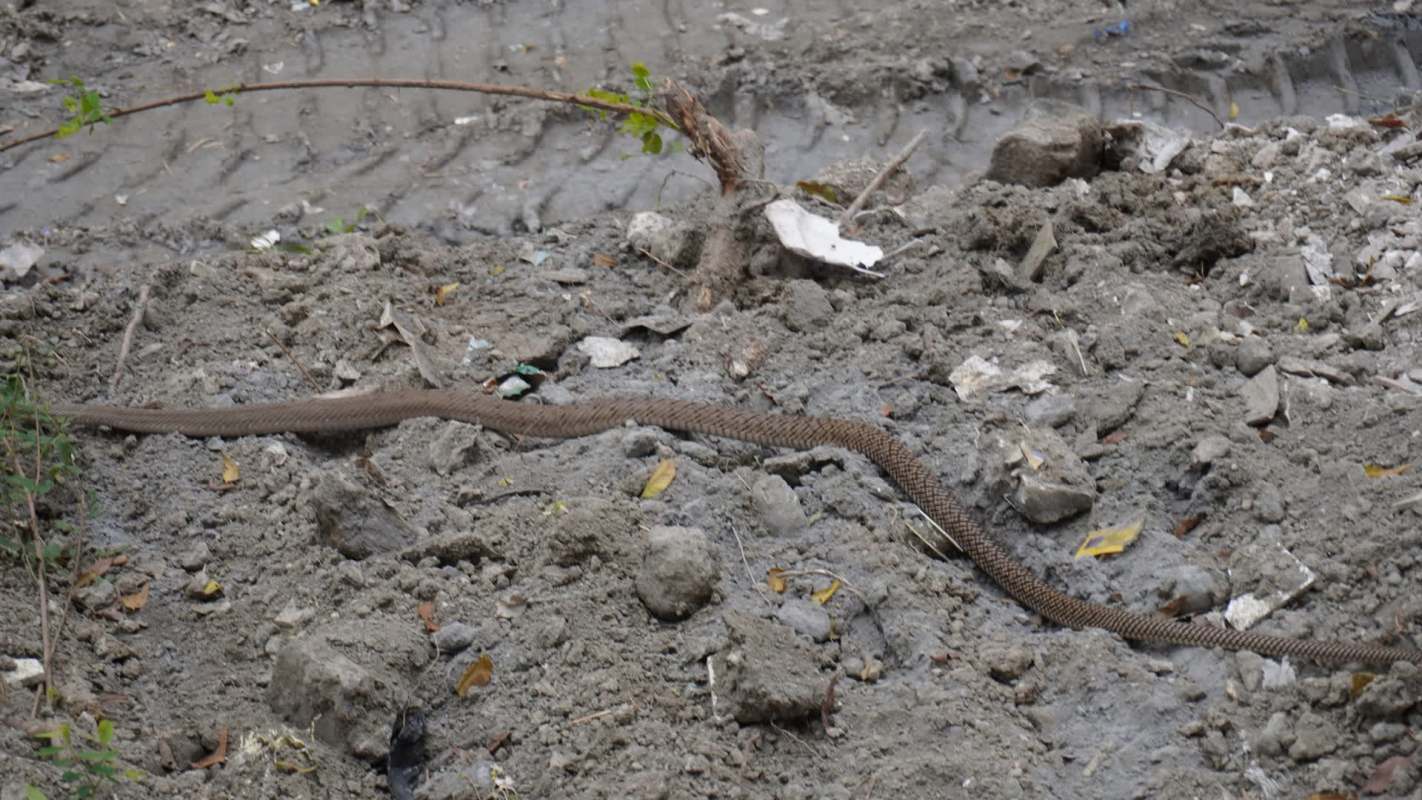
Residents of a village in Kashmir, India, have said snakes have all but disappeared from roads where they were once a common sight in the wild, while encounters with the slithering animals have surged in nearby towns.
Here's what to know
Hassanoor residents used to see snakes every day, and now sightings are down to once a year. At the same time, rescuers in nearby Srinagar have said snake encounters are increasing in gardens, homes, and other spaces dominated by people, as Greater Kashmir reported.
People in the village said several factors may be driving that decline, including expanding orchards, pesticide runoff, household waste, and traffic on a concrete bridge that snakes once crossed regularly.
A south Kashmir forest ranger, Muhammad Altaf, told Greater Kashmir, "Three or four years ago, I would have argued that some people just don't notice the change. But now it is everywhere. The vanishing."
But they haven't disappeared entirely from the region. Wildlife SOS — one of South Asia's largest rescue organizations — said sightings and rescues have been rising in Srinagar and elsewhere in the Valley.
Greater Kashmir, citing Wildlife SOS's monthly rescue summaries, reported that the Jammu and Kashmir program carried out 21 reptile rescues in May, including Himalayan trinket snakes, Levantine vipers, and Indian rat snakes, and handled 20 rescues across the region in August.
TCD Picks » Quince Spotlight
💡These best-sellers from Quince deliver affordable, sustainable luxury for all




More background
Snakes help control rodent populations and maintain balance in food webs, meaning their disappearance from one landscape — or relocation into another — can carry consequences for biodiversity.
Nisar Itoo, who lives in Hassanoor village in Anantnag, said his parents used to warn him about snakes on the walk to school, and many families still view them as a danger to children and livestock.
That fear means snakes are often killed as soon as they appear near a house, along an orchard path, or by an irrigation channel.
Aaliya Mir, Jammu and Kashmir Program Head for Wildlife SOS, said, "In a lot of places, people still see snakes as a threat or enemies that must be removed. Some areas now rarely have certain species because they have been killed off over time. This has been happening for a very long time."
What's being done?
To reduce harm, Wildlife SOS is rescuing snakes and trying to help residents respond more safely.
Mir said the team works to calm frightened residents, explain safer responses, and encourage people to rely on professionals instead of trying to kill snakes themselves.
Venomous species such as the Levantine viper can pose real danger, but panic-driven reactions can also cause avoidable injuries while further reducing a species that may already be under pressure.
"If this thing is not controlled in the area, then my grandchild will need to be told that once upon a time this area had snakes, but we won't have anything to show them practically," Nisar told Greater Kashmir.
Where can I learn more?
The changes seen in Kashmir echo changes seen elsewhere as development and habitat pressure alter where wildlife shows up.
• In Dhaka, Bangladesh, snakes now frequently sneak into human settlements as urbanization squeezes nearby habitat.
• In Florida, invasive pythons pose a serious threat as home encounters grow more common.
• Across parts of Africa, wildlife encounters reach boiling point as communities face mounting risks.
What happens in one place can look different in another, but as habitats change, it raises the stakes for rescue systems, public awareness, and how communities respond when wildlife appears close to home.

Get TCD's free newsletters for easy tips, smart advice, and a chance to earn $5,000 toward home upgrades. To see more stories like this one, change your Google preferences here.







