


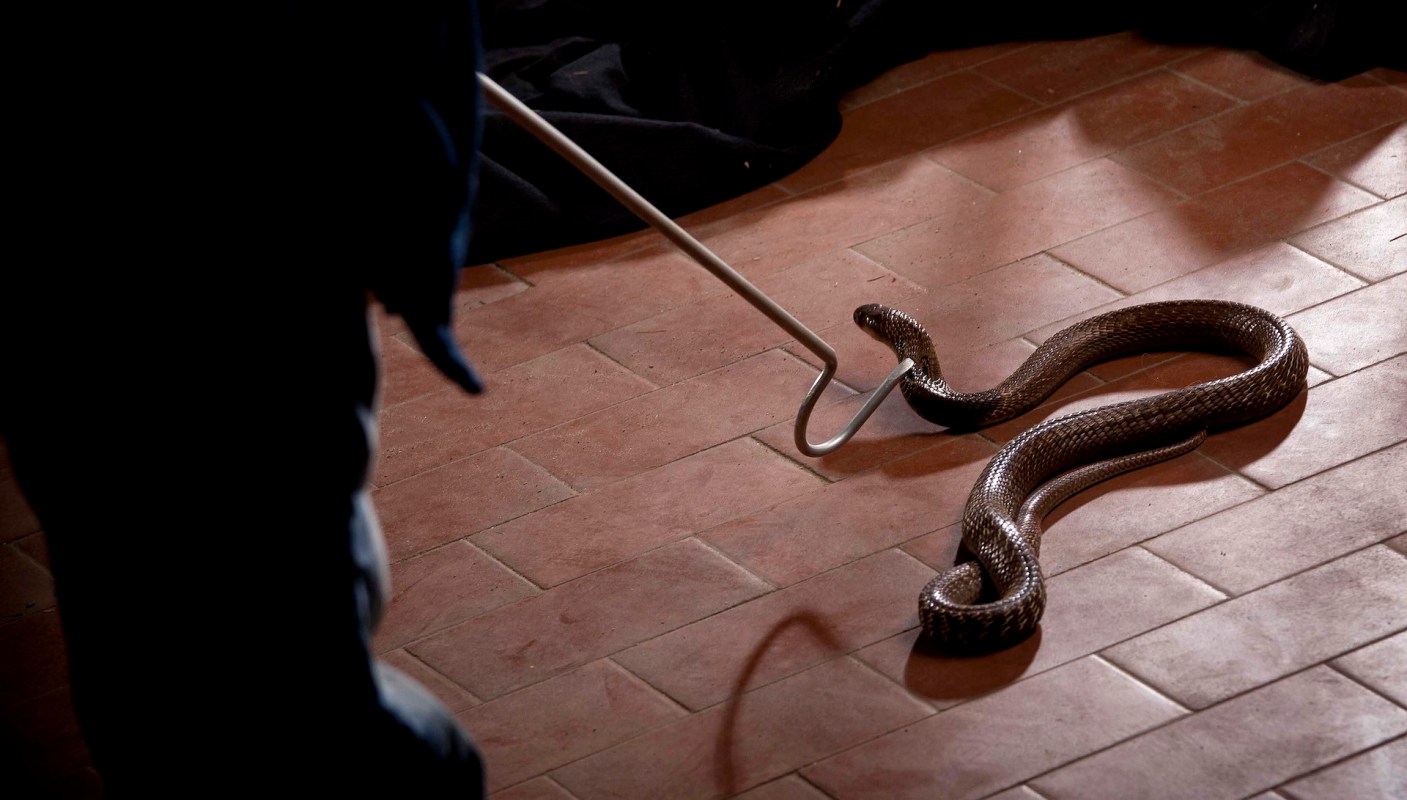
Kerala, India, handles around 40 snake rescues a day, free of charge.
Here's what to know
Kerala faces an astonishing volume of human-wildlife encounters, with nearly 40 snake rescues every day, according to The New Indian Express.
Across Kerala, many of those calls are handled by volunteers who do the work for free, removing snakes from yards, vehicles, kitchens, storerooms, and other ordinary places while trying to protect both residents and the animals.
Kerala now uses its Snake Awareness, Rescue and Protection Application (SARPA), as a key part of its response to snake sightings to give people access to a trained rescuer who can capture it and release it back into its habitat.
Since the program began in August 2020, forest department figures show 105,696 sighting reports and 87,708 rescues. Some of the snakes handled through the program are protected under Schedule I and II of the Wildlife Protection Act.
Mission SARPA nodal officer Muhammad Anvar Yunus said, "Keralam's dense settlements and proximity to natural habitats mean encounters with snakes are common. A snake inside a house or compound can trigger fear, leading to attempts to kill it. Instead, (via SARPA) residents alert the rescue network, following which a certified volunteer reaches the spot, captures the snake and relocates it to a suitable habitat. The system has helped shift focus from eliminating snakes to managing encounters with them safely."
TCD Picks » Quince Spotlight
💡These best-sellers from Quince deliver affordable, sustainable luxury for all




More background
The New Indian Express reported that SARPA's statewide network of 2,952 certified volunteers helps the system respond quickly when snake sightings trigger panic. They go to places they may not know, sometimes deal with venomous species, and pay their own travel costs, all while offering the service free to the public.
What's being done?
Forest department officials say the state is considering added support for rescuers, including a travel allowance to offset the cost of reaching rescue sites and an insurance scheme that reflects the risks of the work.
A volunteer from Palakkad told The New Indian Express, "We are taught to rescue a snake scientifically and without risk. However, there is still some risk involved while dealing with venomous snakes. We also request providing snake catching kits to all certified volunteers."
Where can I learn more?
Similar encounters are playing out elsewhere, from cobra removals inside Indian homes to growing concern over snakebites as temperatures climb. They also highlight the overlap between rescue work and conservation when dangerous animals need to be moved carefully and returned to the wild.
• In Telangana, India, an Indian cobra relocation turned a frightening home encounter into a safe release.
• Across India, rising temperatures and snakebites are raising fears of a worsening public health crisis.
• In the Philippines, rescuers freed an injured python and a water monitor after earlier captivity.
• In Louisiana, conservationists released rare pine snake hatchlings to rebuild a species under pressure.
Each case points to the same basic lesson: when people and snakes share space, trained rescue, safe relocation, and long-term conservation all matter.

Get TCD's free newsletters for easy tips, smart advice, and a chance to earn $5,000 toward home upgrades. To see more stories like this one, change your Google preferences here.







