


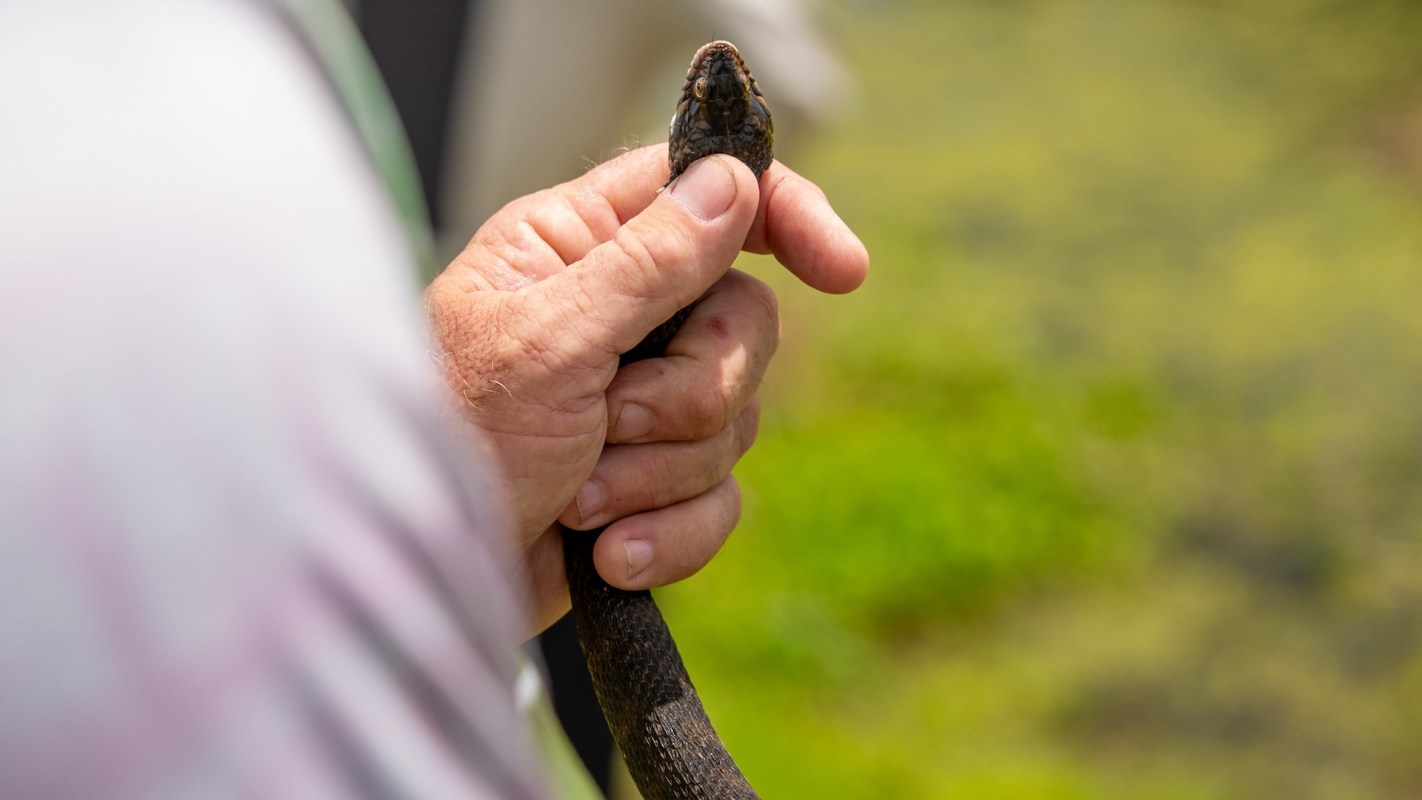
At 83, volunteer reptile wrangler Douglas Lemmons still responds when snakes and other reptiles turn up around Kern County, California. He has volunteered for more than 70 years and doesn't plan to stop.
Here's what to know
According to KBAK, Lemmons began removing snakes when he was about 10. He has continued that volunteer work in and around Kern County for more than seven decades.
During the Vietnam War, he removed snakes to protect fellow soldiers while serving in the U.S. Army. As a child, he became interested in reptiles after deciding the warnings he heard from adults were wrong.
"They told me the only good snake was a dead snake and to kill all snakes before they killed me, and I found out that they lied to me," Lemmons recalled.
The snakes he encounters most often are "gopher snakes and rattlesnakes."
Lemmons still gets calls from homes, businesses, and parks, and nearby counties have also reached out when they couldn't find anyone willing to deal with a venomous snake.
TCD Picks » Quince Spotlight
💡These best-sellers from Quince deliver affordable, sustainable luxury for all




Warmer temperatures have brought more requests for help.
"I've been averaging at least one or two calls a day for the past thirty days," he told KBAK in July.
More background
Lemmons said a big part of the work is preventing unnecessary snake deaths and helping people understand the role reptiles play in the environment.
Most of the calls Lemmons receives come from everyday places such as homes, businesses, and public parks, not remote wilderness. However, his calls are not limited to snakes. Lemmons also deals with lizards, tarantulas, scorpions, black widows, and centipedes. If he isn't licensed to handle an animal, such as a bird or raccoon, he refers people to licensed wildlife rehabilitators.
He also volunteered for six years at the California Living Museum, where he served as the zoo's first curator for reptiles and small mammals and helped with exhibits and animal care throughout the facility.
What can be done?
Lemmons' goal on each call is to keep people safe without harming the animal or disrupting the surrounding ecosystem.
When someone reports a snake, he tells them to stay back and not approach it so it does not disappear before he arrives.
The way he removes a snake depends on the species. Lemmons often picks up nonvenomous snakes by hand, while he handles venomous ones with a specialized clamp designed to hold them safely without causing injury.
Once he has the snake, he checks it for injuries, then returns it to a safe spot close to where it was found.
"I release them right back in, you know, the same general area, away from the roads and the residential area and livestock, so that the snakes can do their job in nature," he said.
Lemmons warns people not to try to kill or grab a snake themselves. He is available at all hours as a volunteer and does not charge for removals, though he will accept donations to offset costs.
After decades of rescues, his mission remains as much about education as removal.
"I hope they stop killing the snakes," Lemmons told the outlet. "I hope they pass the word on their children, and not pass on their phobias to their children … It's better to educate them and let them learn to be safe instead of to kill all the snakes that they find."
Where can I learn more?
Similar snake encounters have played out well beyond Kern County.
• Across the Mid-South, snake calls surged 50% as reptiles slipped through gaps into homes.
• In Florida, alarming discoveries in homes underscored a growing threat from invasive pythons.
• During a Delhi monsoon, snakes showed up in local communities.

Get TCD's free newsletters for easy tips, smart advice, and a chance to earn $5,000 toward home upgrades. To see more stories like this one, change your Google preferences here.







