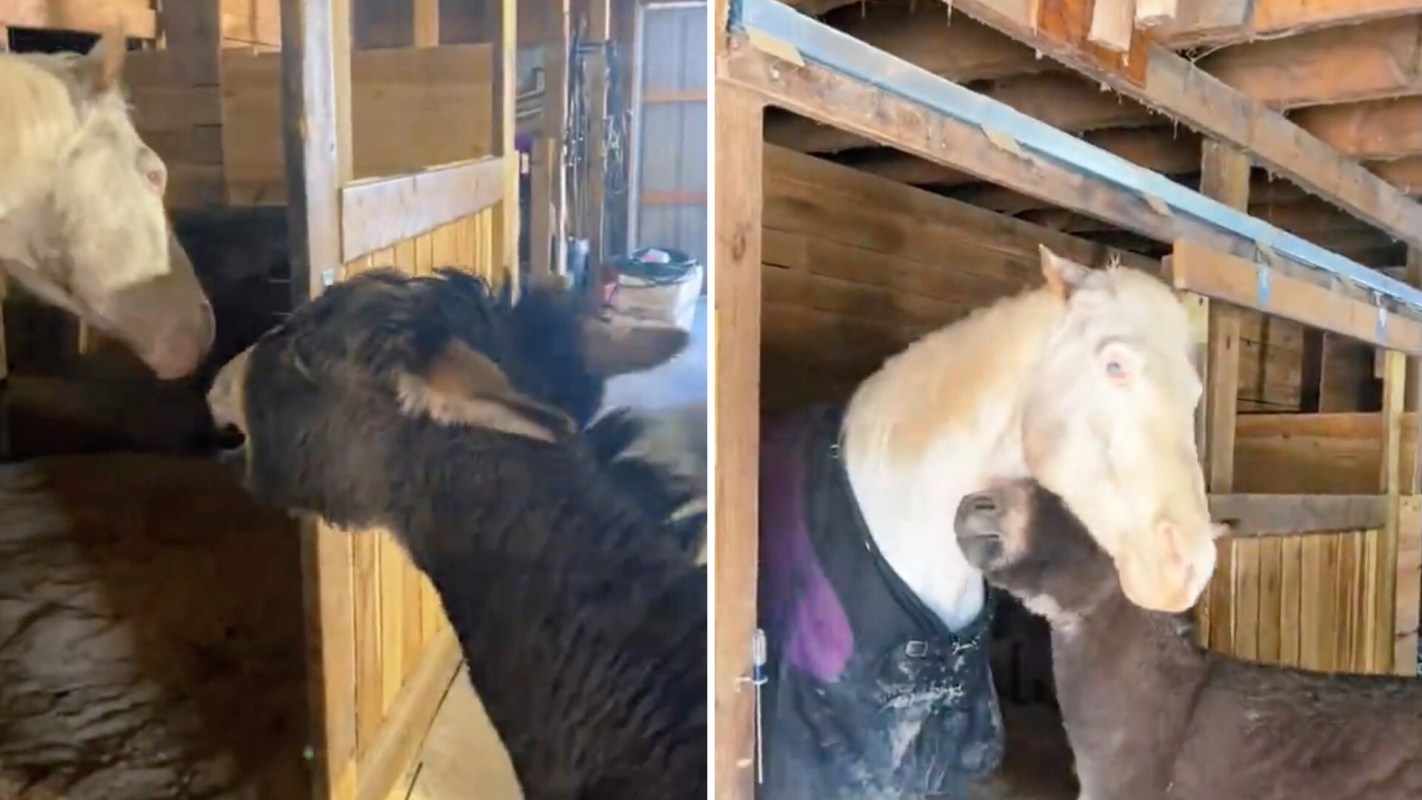
Petey is not just another animal on the farm. The little donkey has become a source of comfort and guidance for Luna, a blind horse who relies on his soft voice and steady presence to help her make her way outside.
What happened?
PetHelpful recently shared the story of Petey, describing the donkey as Luna's "Seeing Eye Donkey."
The clip shows Luna coming out of her stall and heading toward the snowy yard with Petey beside her. Rather than moving off without her, he seems to call to her gently and wait for her pace, helping her follow along safely before they continue their outing.
@peteytheseeingeyedonkey Petey letting Luna the blind horse know it's time to go outside #Peteytheseeingeyedonkey #Lunatheblindhorse #bray #donkeysoftiktok ♬ Stories 2 - Danilo Stankovic
One commenter wrote, "I've never heard a donkey use a gentle voice. It's so sweet!"
Another added, "Donkeys are amazing, and they don't get enough credit."
Petey does not seem interested in running off on his own; he wants Luna included too.
TCD Picks » Good Store Spotlight
Get 10% off your next purchase with code TCD10


Why does it matter?
Petey and Luna's bond shows how intelligent, social, and emotionally aware animals can be, especially when they have the chance to form close relationships.
For blind animals, companionship can be especially important. Vision loss can be disorienting, but many animals can still live safe, happy, full lives with the right routines, environment, and support. A calm animal companion may help reduce stress and build confidence.
Donkeys are sometimes underestimated compared with horses or dogs. They are widely known for being affectionate, observant, and protective, and some even serve as guardians for other animals on farms.
What can I do?
For anyone caring for a horse with vision loss, safety and consistency are key. A smaller stall or corral can help during the adjustment period, giving the horse time to build confidence before moving back into larger spaces.
Keeping feed, water, and barriers in predictable places can make daily life easier. Calm verbal cues, gradual introductions to new environments, and secure fencing may help a blind horse navigate more easily and with less stress.
Animal companions can also make a difference when they are a good fit. Petey's example shows how another animal's presence may offer reassurance, routine, and guidance. Of course, each horse is different, so owners should work closely with a veterinarian or equine professional before making changes.

Get TCD's free newsletters for easy tips, smart advice, and a chance to earn $5,000 toward home upgrades. To see more stories like this one, change your Google preferences here.