


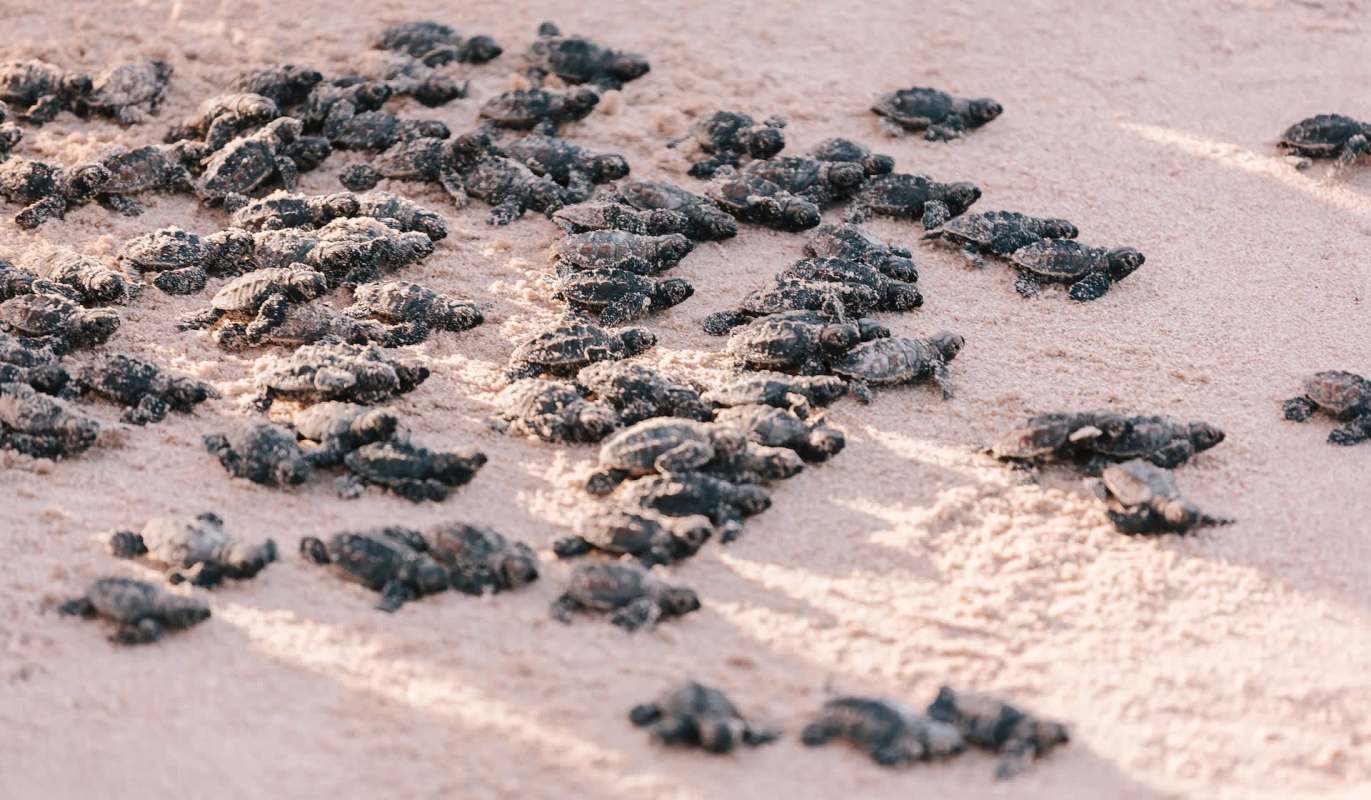
It's shaping up to be an exceptional year for sea turtles on Boca Raton's shoreline in Florida.
According to Good Good Good, teams from Gumbo Limbo Nature Center and Florida Atlantic University have recorded 42 leatherback sea turtle nests in the area, setting a local record and offering welcome news for one of the world's most endangered marine species.
What's happening?
From late spring into early fall, nesting season turns beaches across the Americas into crucial habitat for sea turtles, with mothers coming ashore to lay eggs and hatchlings later making their first journey to the sea.
That pattern has been especially striking in Boca Raton this year, where endangered leatherbacks are having an unusually strong season.
Palm Beach County beaches make up about half of Florida's leatherback nests, according to the Fish and Wildlife Conservation Commission, and Boca Raton has contributed heavily to that total.
Gumbo Limbo Nature Center has documented 42 nests so far, more than twice its typical yearly average and the highest number ever recorded locally.
TCD Picks » Quince Spotlight
💡These best-sellers from Quince deliver affordable, sustainable luxury for all




Among sea turtles, leatherbacks are the giants. As Good Good Good observed, they can weigh up to 1,500 pounds, and they're the only species without scales or a hard shell.
They also migrate extraordinary distances, traveling more than 10,000 miles each year between feeding and nesting grounds.
Why does it matter?
Even with this strong showing, leatherbacks still contend with major threats, including fishing bycatch, hunting, and egg destruction.
Scientists have reported that the species is declining globally, and Pacific leatherbacks are at especially high risk of extinction.
In Boca Raton, researchers and students are working to improve hatchlings' odds by monitoring nests, posting signs and boundaries around them, and studying beach conditions.
The chances remain slim: only about 1 in 1,000 sea turtle hatchlings is expected to survive to adulthood in the wild.
Healthier turtle populations can signal healthier coastal ecosystems, and protecting nests helps preserve the beaches and wildlife that residents, students, and visitors care deeply about.
What are people saying?
For Dr. Jeanette Wyneken, an FAU biological sciences professor and director of the FAU Marine Science Laboratory, the scale of the season is simple to describe: "It's huge."
"To go all the way up to 42 nests means there's a lot of turtles nesting this year, which is good news for that species," she told WFLX News.
Researchers are also hopeful that timing could help this year's hatchlings.
Emily Turla, laboratory coordinator at the FAU Marine Lab and a Ph.D. student studying integrative biology, told WFLX, "What's exciting is that many of these nests were laid earlier in the season when temperatures weren't as high."
"I'm hopeful we'll see strong hatching success and a lot of baby turtles getting their chance out in the ocean."

Get TCD's free newsletters for easy tips, smart advice, and a chance to earn $5,000 toward home upgrades. To see more stories like this one, change your Google preferences here.







