


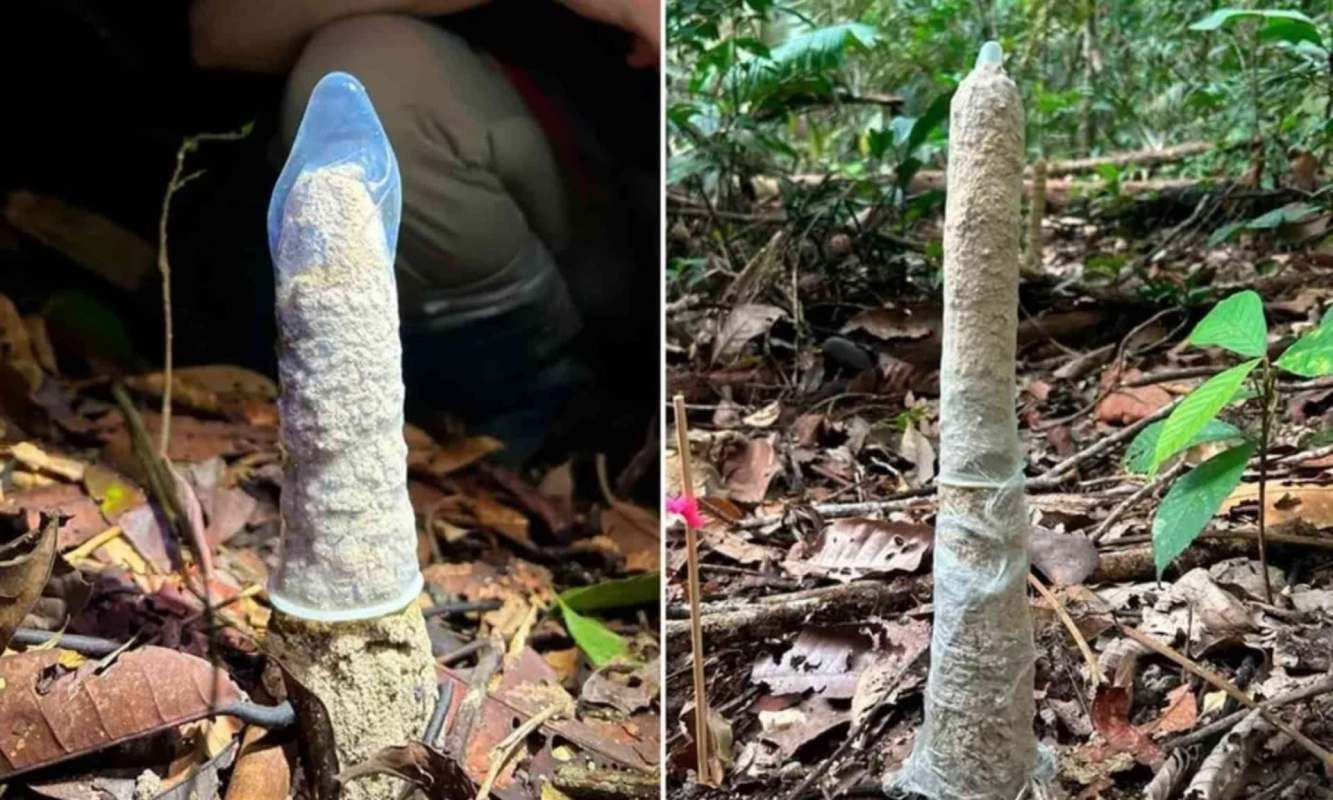
Creativity is a must when doing fieldwork in the Amazon. That's why Brazilian researchers turned to condoms of all things to uncover clues about cicadas and their bizarre clay towers.
Earth.com recently detailed the use of the unusual tools in a study on Amazonian architect cicadas published in Biotropica in February.
The research focused on the mysterious clay towers built by the insects in the rainforest. Researchers wanted to know what purpose the structures served the cicadas in their final stage of development as nymphs underground.
One purpose appears to be protection from ants. The study showed that eight times fewer ants were on the towers than on the ground floor.
The team also hypothesized that the clay towers could be helpful to the nymphs' respiration. To put that theory to the test, they placed condoms — yes, condoms — over the towers to seal the structures from outside air. This allowed the researchers, who broke the seal the following day, to observe how the cicadas would respond.
Previous research indicated that cicadas perform daily maintenance on their towers, and that was found to be the case here. However, this latest study provides further insight into why each tower is unique.
TCD Picks » Quince Spotlight
💡These best-sellers from Quince deliver affordable, sustainable luxury for all




"Larger towers showed faster growth after the seal was removed, while smaller ones rebuilt less by the next morning," according to Earth.com, which noted that the condoms created some "respiratory stress for insects still underground" by blocking airflow. "More clay and more internal space may have buffered stale air, giving bigger structures a better margin under stress."
There remains the unanswered question of why taller clay structures proved superior at handling the condom's airflow restriction. It could be the height, but it also might be variations in soil, moisture, or a more powerful cicada builder.
Getting to the bottom of that will take further research — which may require even more unlikely tools than the 40 condoms used in this study.

Get TCD's free newsletters for easy tips, smart advice, and a chance to earn $5,000 toward home upgrades. To see more stories like this one, change your Google preferences here.







