


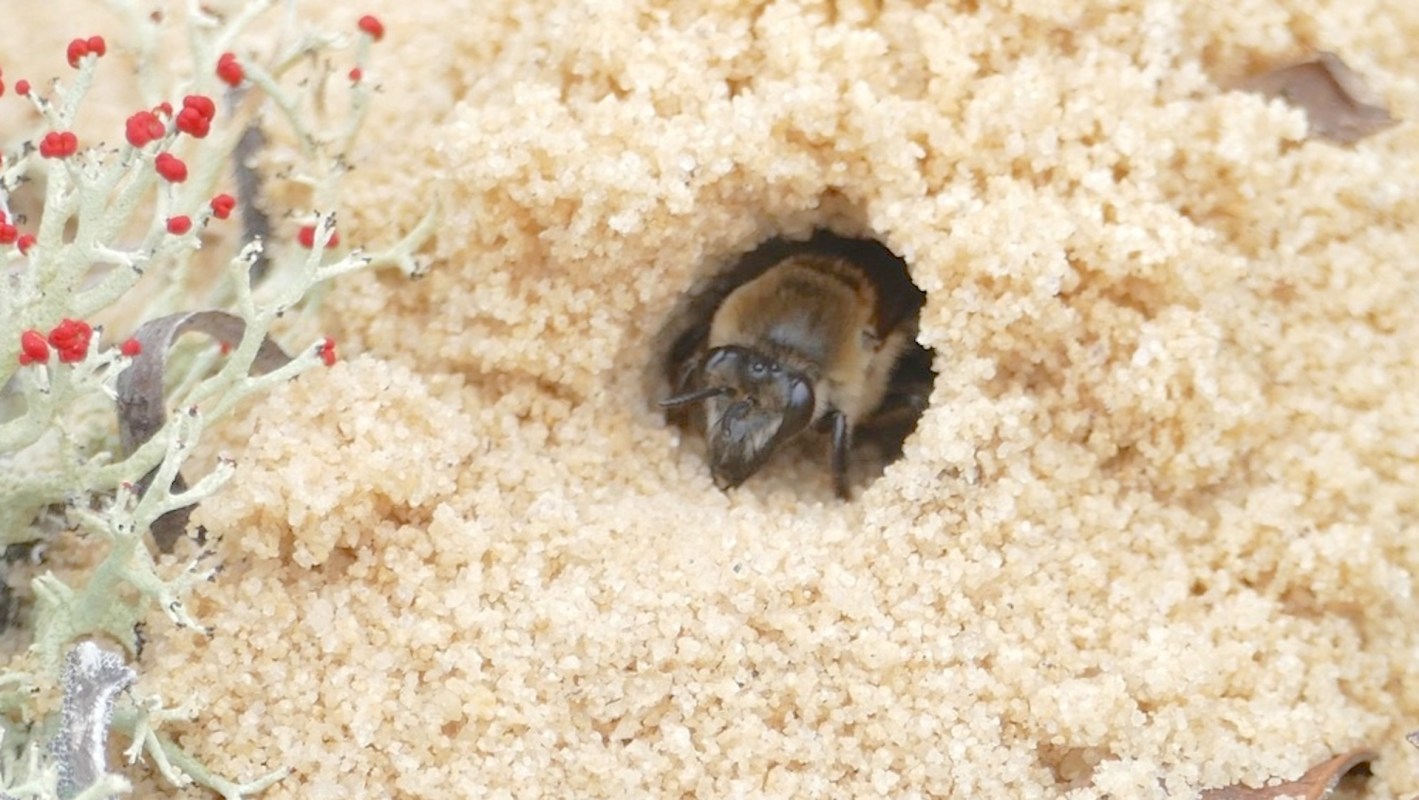
South Carolina has its first documented sandhill cellophane bee, an uncommon species that also stands out for making little dirt mounds.
What happened?
In a post on Instagram, the South Carolina Department of Natural Resources announced the state's first record of the sandhill cellophane bee, The State reported. The agency said Dirk Stevenson of Altamaha Environmental Consulting found it earlier this year on an SCDNR property.
One trait that sets this bee apart is its nesting behavior; SCDNR says it uses small ground shelters that resemble ant hills.
It feeds mainly on black titi, also called buckwheat tree, and early-flowering blueberries, tying its survival closely to a specific habitat and seasonal bloom cycle.
Why does it matter?
With this first South Carolina record, the bee's known range now extends beyond southern Mississippi, southeastern Georgia, and northern Florida. That gives conservationists another clue as they work to understand where the species lives and what it needs to survive.
NatureServe Explorer lists habitat loss among the threats facing the species, including damage linked to climate change. More frequent and severe storms, along with fire suppression, can disrupt the sandy nesting areas these bees rely on. Protecting those habitats could help preserve a pollinator that is both uncommon and largely docile, not aggressive.
TCD Picks » Quince Spotlight
💡These best-sellers from Quince deliver affordable, sustainable luxury for all




What are people saying?
SCDNR told followers that "Sandhill cellophane bees are known to be active only during the winter to early spring and are found nesting in sandy sites near shrub bogs or cypress swamps."
The agency also highlighted how recently the insect entered scientific records, saying it has "only been scientifically described since 2016."
Conservation data from NatureServe Explorer points to habitat loss and climate-related pressures as key risks to the bee's future in the region.

Get TCD's free newsletters for easy tips, smart advice, and a chance to earn $5,000 toward home upgrades. To see more stories like this one, change your Google preferences here.







