


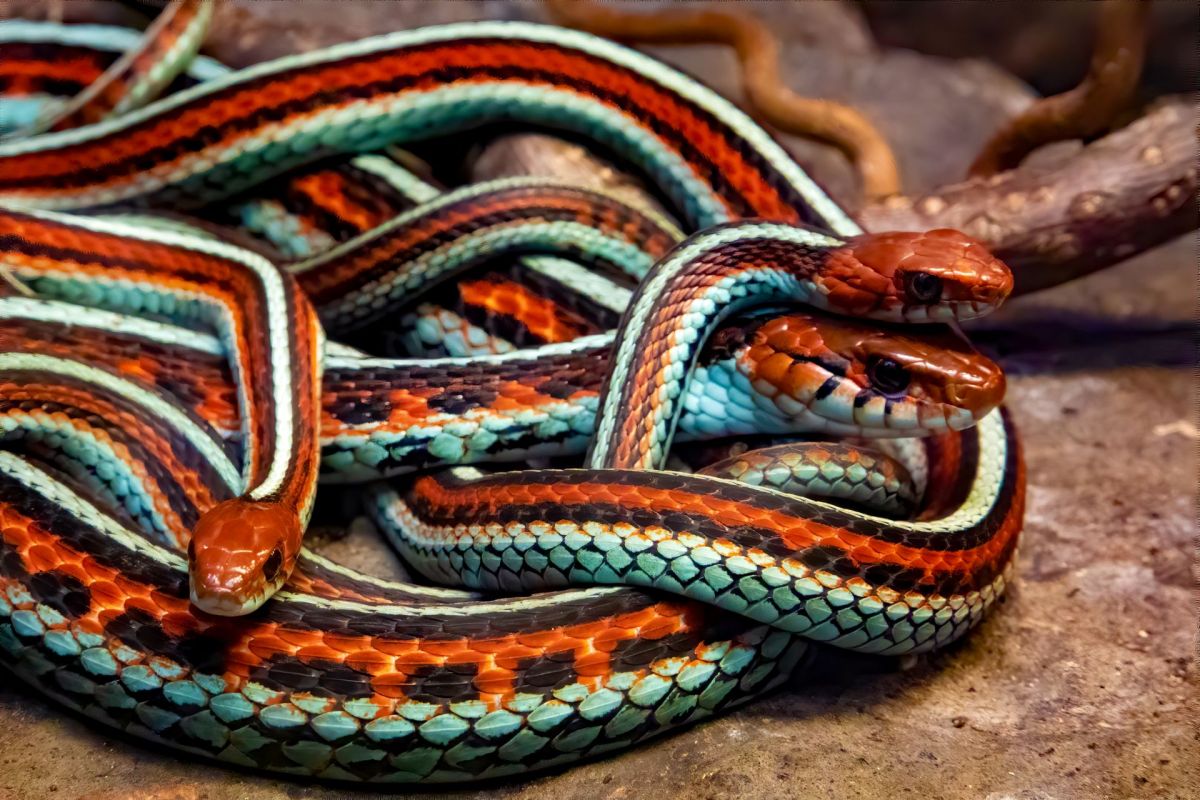
Conservationists added 62 snakes to the wild population of a California species listed as endangered since 1967 — a milestone in efforts to reverse its decline.
Here's what to know
The young San Francisco garter snakes came from the San Francisco Zoo, making this the conservation effort's first release of zoo-born snakes, Popular Science reported.
The species is only established in San Mateo and Santa Cruz counties. Conservationists chose sites across San Mateo County for the release.
The U.S. Fish and Wildlife Service included the reptile among its earliest endangered species listings. Researchers now estimate its wild population at a scant few thousand.
San Francisco garter snakes face continued threats from factors like limited genetic diversity, poaching, droughts, and disease.
"Seeing these young snakes returning to the wild represents years of research, collaboration, habitat restoration and careful conservation work," Midpeninsula Regional Open Space District biologist Karine Tokatlian said in a San Francisco Zoo statement.
TCD Picks » Quince Spotlight
💡These best-sellers from Quince deliver affordable, sustainable luxury for all




"This first release is an important step toward building healthy, resilient populations that can sustain themselves over the long term."
More background
The San Francisco garter snake's relatively large eyes help it remain active during the day. This brightly colored reptile can reach 18 to 55 inches in length, per Popular Science.
The snake can kill prey like smaller reptiles and rodents with its bite, but it is essentially harmless to people. It has no fangs and produces only mildly toxic saliva.
Young snakes in the conservation program spend time in captivity before entering the wild. Conservationists use this practice, called head-starting, to help the vulnerable reptiles survive.
This gives the snakes protection early in life and delays their exposure to threats in their natural habitats.
What's being done?
The San Francisco Zoo kept the young snakes after birth, and conservationists returned their mothers to their habitats.
According to Popular Science, the head-starting effort began in 2025 with several pregnant females brought in from a healthy preserve in California's Midpeninsula.
About one-third of the young snakes were released where their mothers had lived. The other two-thirds went to sites where breeding populations particularly needed greater genetic diversity.
Zoologists helped select the release locations by genetically testing each young snake. Biologists are still tracking the snakes in this first head-started group.
The zoo has welcomed over 130 additional San Francisco garter snakes. It's tentatively planning another release for 2027.
"This species is special in many ways, but unfortunately its critical status is not unique," said Midpeninsula Regional Open Space District wildlife ecologist Ariel Starr, as Popular Science relayed. "The success of this project and the associated research will not only benefit the San Francisco garter snake but will also hopefully inform the recovery of many imperiled reptile species."

Get TCD's free newsletters for easy tips, smart advice, and a chance to earn $5,000 toward home upgrades. To see more stories like this one, change your Google preferences here.







