


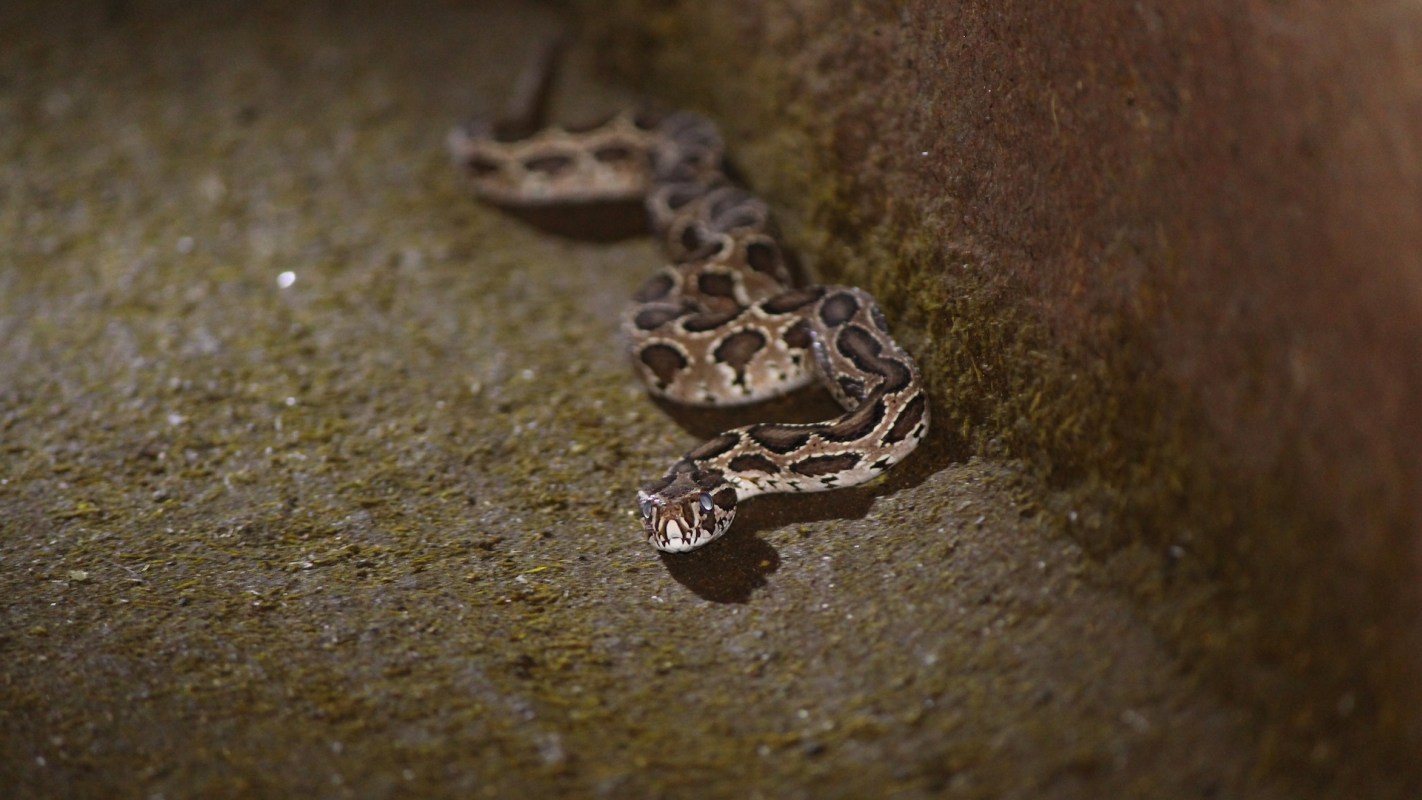
A highly venomous Russell's viper turned up in an unlikely place in Mumbai: the basement of a metro station complex in the dense business district of Bandra-Kurla Complex.
After drinking from a bottle, the weakened snake was revived enough to produce a hiss that rescuers likened to a pressure cooker.
What happened?
Officials from MSF Security spotted the snake in Basement-2 of the BKC Metro Line 3 station at 7:47 a.m.
After finding the reptile curled up in a corner near a wall, they alerted wildlife rescuers.
As The Free Press Journal reported, snake rescuer Atul Kamble went to the site after the incident was relayed to Mumbai forest officials and the local control room.
The animal was identified as a Russell's viper, locally known as "ghonas," and estimated to be between two and two-and-a-half feet long.
TCD Picks » Quince Spotlight
💡These best-sellers from Quince deliver affordable, sustainable luxury for all




Rescuers said the viper's stillness suggested it had been drained by several days of intense heat before the rains set in.
In an unusual step during the operation, a bottle was held near its mouth, and the snake immediately started drinking.
The water appeared to perk the snake up. It soon began hissing loudly, with rescuers describing the sound as "resembling the whistle of a pressure cooker."
The team then secured it in a container and later released it into the wild under Forest Department guidelines.
Why does it matter?
A venomous snake in a metro basement poses an obvious threat to workers, commuters, and the animal itself. Heavy rain can flood burrows and drive snakes into buildings, walkways, and other human-made spaces, while extreme heat can leave animals stressed, weakened, and disoriented.
Human development is also part of the equation. Expanding construction, paved-over landscapes, and habitat disruption can reduce the safe spaces wildlife depends on for shelter and movement.
As BBC Future has explained, encounters between people and wild animals often increase when development fragments habitats and changing environmental conditions push animals into closer contact with humans.
It was also not the first such rescue in BKC. On June 16, rescuers removed seven baby pythons and a wolf snake from a utility duct near the head office of the Securities and Exchange Board of India after they emerged onto a pedestrian path. Officials said those snakes were non-venomous and were also released safely.
What's being done?
Because monsoon flooding can force snakes and other animals out of hiding, rescuers said the incident also served as a chance to brief staff on snake behavior and safety during wildlife encounters.
Their advice was to stay alert, avoid panic, never try to catch or corner a snake, and instead contact trained handlers or the Forest Department helpline 1926.

Get TCD's free newsletters for easy tips, smart advice, and a chance to earn $5,000 toward home upgrades. To see more stories like this one, change your Google preferences here.







