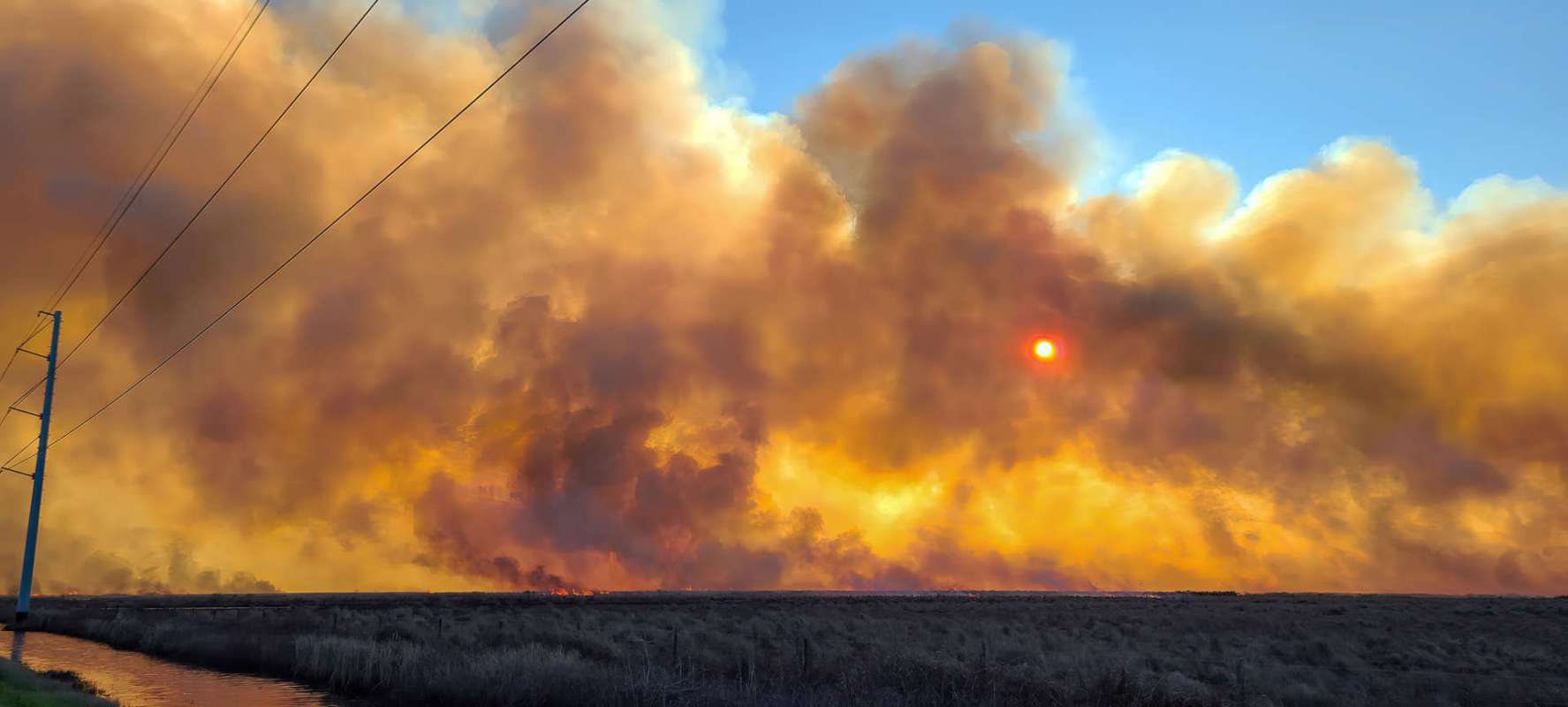
A fast-moving wildfire west of Fort Worth has grown into one of the biggest fires ever documented in North Texas, with severe dryness across the region continuing to hinder firefighting efforts.
As of Sept. 10, the Ross Fire had scorched 90,400 acres in Palo Pinto and Jack counties and was 76% contained, the Texas A&M Forest Service reported.
Here's what to know
Igniting near Palo Pinto on Aug. 24, the Ross Fire raced through parched ranchland and expanded rapidly, reaching about 50,000 acres by August 25 and topping 80,000 acres by August 26, according to KERA News. That puts it behind only the 2011 Possum Kingdom Complex Fire as the largest in the region's recorded history.
A prolonged lack of rainfall has worsened conditions. The National Weather Service says the Dallas-Fort Worth area has gone more than 53 days without measurable rain, the seventh-longest such stretch on record, and the Fort Worth office said August was the driest August ever recorded locally.
DFW's hot & dry summer is setting records! As of Sep 6, DFW has had 53 days in a row with no measurable rain, the 7th longest stretch on record. Also through Sep 6, DFW has had 42 days with highs in the 100s, the 11th most since records began in 1898 #dfwwx #txwx https://t.co/U2H6PM8Lpk
— NWS Fort Worth (@NWSFortWorth) September 7, 2026
And according to the U.S. Drought Monitor, as of Sept. 8, nearly three-quarters of the state (74%) was experiencing drought conditions, with much of North Texas facing extreme or exceptional drought conditions.
KERA News also reported that an initial damage survey found at least 157 structures had been destroyed, including 18 occupied buildings. Smoke moving east and southeast has also hurt air quality across North Texas.
TCD Picks » Quince Spotlight
💡These best-sellers from Quince deliver affordable, sustainable luxury for all




What's being done?
The firefighting effort has included nearby rural fire departments, the Texas A&M Forest Service, and local crews from across the Dallas-Fort Worth area. The Texas A&M Forest Service said responders have focused on protecting lives, shielding communities and key structures, slowing the fire's advance, and strengthening containment lines.
For people outside the immediate fire zone, smoke and extreme heat may pose the most immediate risks. State environmental regulators also advised children, older adults, and people with respiratory conditions to stay indoors when smoke drifts into their area.
Where can I learn more?
The Ross Fire is unfolding under the same drought and heat conditions that have fueled destructive wildfires well beyond Palo Pinto and Jack counties. The articles below offer more context on how those pressures can tax firefighting efforts, impact air quality, and stretch recovery long after flames first spread.
• Across the Carolinas, heightened fire risk across drought-stricken landscapes underscored warnings now facing Texas.
• Nationwide, wildfire smoke exposure is worsening air quality for millions far from flames.
• In the Texas Panhandle, waves of smoke amidst an 800,000-acre wildfire exhausted crews through winter.

Get TCD's free newsletters for easy tips, smart advice, and a chance to earn $5,000 toward home upgrades. To see more stories like this one, change your Google preferences here.